Sun-Dried Tomato Hummus: Easy Mediterranean Dip Recipe
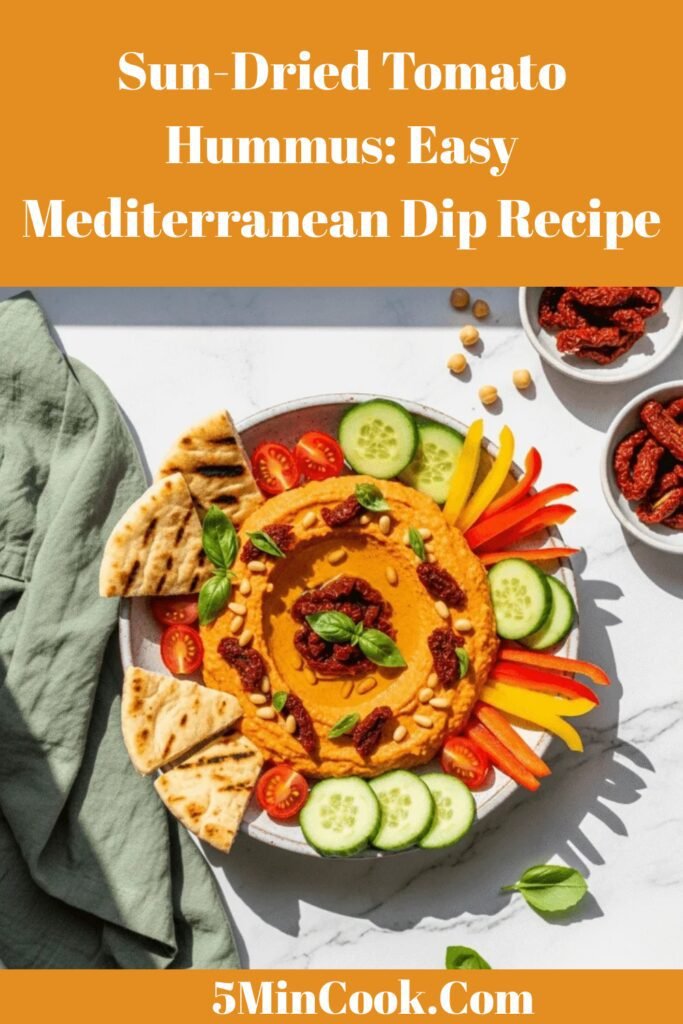
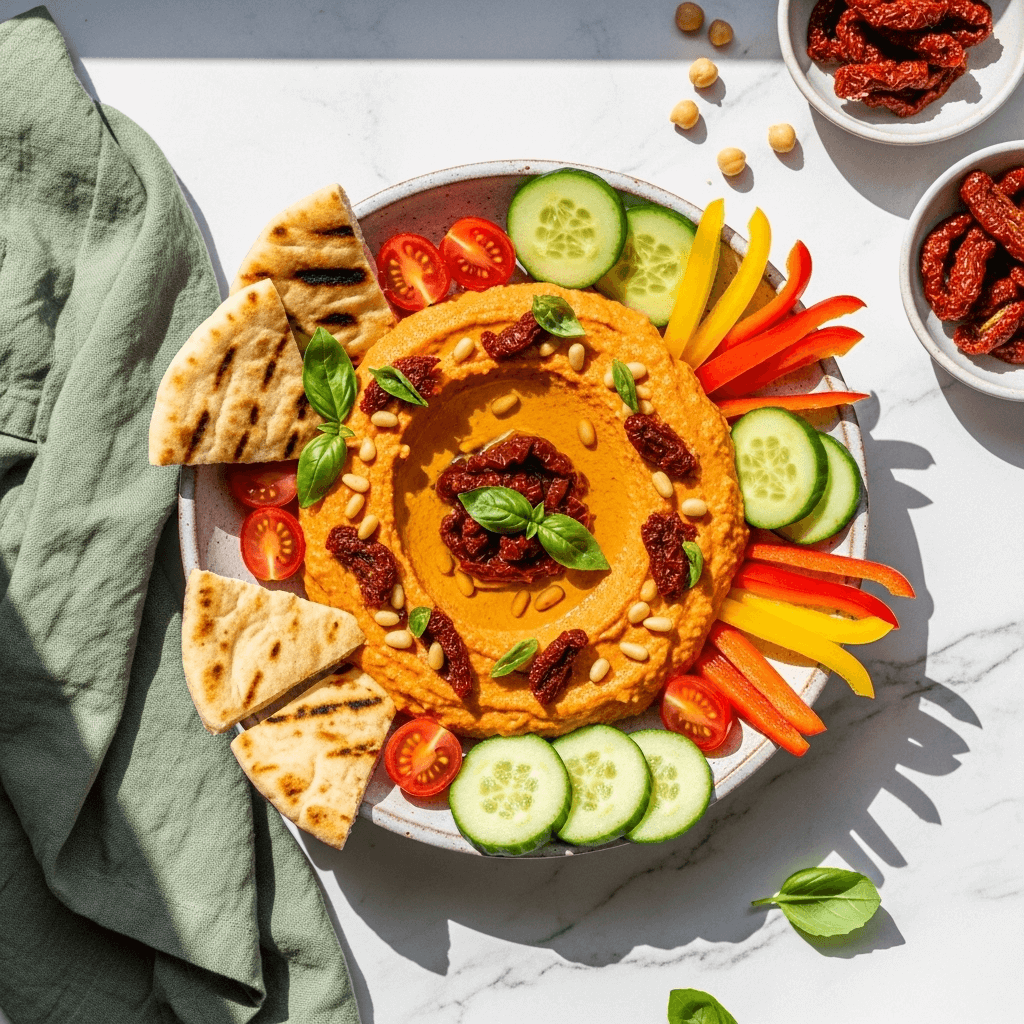
Sun-dried tomato hummus is a vibrant, flavor-packed twist on traditional chickpea hummus that brings together the creamy richness of tahini with the intense, tangy sweetness of sun-dried tomatoes. This Mediterranean-inspired dip has become a Pinterest sensation and a go-to recipe for home cooks who want to elevate their appetizer game without spending hours in the kitchen. Whether you’re hosting a casual get-together, packing lunch boxes, or simply craving a healthy snack, this sun-dried tomato hummus delivers bold flavor in every scoop.
Perfect for serving at parties, picnics, potlucks, or as part of your weekly meal prep, this homemade hummus brings restaurant-quality taste to your table in just 10 minutes. The beautiful reddish-orange hue makes it incredibly photogenic for Pinterest, while the rich, slightly sweet and savory flavor profile keeps everyone coming back for more. Serve it with pita chips, fresh vegetables, crackers, or spread it on sandwiches and wraps for an instant flavor upgrade.
History / Background
Hummus has been a staple of Middle Eastern cuisine for centuries, with its origins tracing back to ancient Egypt and the Levantine region encompassing modern-day Lebanon, Syria, Palestine, and Israel. The word “hummus” actually means “chickpea” in Arabic, and this humble legume has been cultivated in the Mediterranean basin for over 7,000 years. Traditional hummus—made from chickpeas, tahini, lemon juice, and garlic—has been enjoyed across the Middle East as both a mezze dish and a daily staple.
The innovation of adding sun-dried tomatoes to hummus is a more modern fusion, likely emerging in the 1980s and 1990s when Mediterranean cuisine gained tremendous popularity in Western countries, particularly in the United States. Sun-dried tomatoes themselves have Italian roots, where preserving summer’s bounty by drying tomatoes in the intense Mediterranean sun was a traditional preservation method used for centuries in Southern Italy.
This creative combination marries the ancient tradition of hummus-making with Italian preservation techniques, resulting in a dip that honors both cultures while creating something entirely new. The trend of flavored hummus varieties exploded in American grocery stores and restaurants in the early 2000s, and sun-dried tomato quickly became one of the most beloved variations alongside roasted red pepper and garlic hummus.
Today, sun-dried tomato hummus represents the beautiful evolution of traditional recipes, showing how global cuisines blend and inspire one another. It’s become a symbol of healthy, plant-based eating that doesn’t sacrifice flavor—a perfect representation of modern home cooking that respects tradition while embracing innovation.
Why You’ll Love This Recipe
This sun-dried tomato hummus recipe is about to become your new favorite dip, and once you taste it, you’ll understand why it’s taken Pinterest by storm. The combination of creamy chickpeas and intensely flavored sun-dried tomatoes creates a complexity that store-bought versions simply can’t match, while the homemade touch ensures you control exactly what goes into your food.
Here’s why this recipe deserves a permanent spot in your cooking rotation:
- Quick and effortless – Ready in just 10 minutes with minimal hands-on work; your food processor does all the heavy lifting
- Budget-friendly – Uses pantry staples and costs a fraction of gourmet store-bought hummus
- Naturally plant-based – Vegan, vegetarian, and packed with protein and fiber to keep you satisfied
- Incredibly versatile – Works as a dip, spread, sandwich filling, or even a pasta sauce base
- Make-ahead friendly – Actually tastes better the next day after flavors meld together
- Customizable – Easily adjust thickness, spice level, and intensity to match your preferences
- Healthier than store-bought – No preservatives, artificial ingredients, or excess sodium
- Pinterest-perfect presentation – The gorgeous color and texture photograph beautifully for social sharing
- Kid-approved – Even picky eaters love the slightly sweet, creamy flavor
- Great for meal prep – Stays fresh for up to a week, making healthy snacking effortless
Ingredient Notes
Understanding your ingredients helps you make better cooking decisions and achieve the most delicious results. Here’s what you need to know about the key players in this sun-dried tomato hummus recipe:
Chickpeas (Garbanzo Beans) – The foundation of any hummus, chickpeas provide protein, fiber, and that signature creamy texture. Canned chickpeas work beautifully and save time; just drain and rinse them well to remove excess sodium. For extra-smooth hummus, some cooks peel the chickpeas, but this step is optional. Substitute with white beans for a different flavor profile.
Sun-Dried Tomatoes – These are the star ingredient that gives this hummus its distinctive flavor and color. You can use oil-packed or dry-packed varieties; oil-packed tomatoes are softer and blend more easily, while dry-packed ones are more concentrated and intense. If using dry-packed, soak them in warm water for 15 minutes before blending. The tomatoes add umami depth and natural sweetness.
Tahini – This sesame seed paste is essential for authentic hummus texture and nutty flavor. Always stir tahini well before using, as the oil separates. If you can’t find tahini, substitute with natural peanut butter or almond butter, though the flavor will be different. Look for high-quality tahini for the best results.
Fresh Garlic – Adds that essential sharp, pungent kick that balances the sweet tomatoes. Use fresh cloves rather than jarred garlic for the brightest flavor. If you’re sensitive to raw garlic, reduce the amount or roast the cloves first for a mellower taste.
Fresh Lemon Juice – Brightens all the flavors and adds acidity that cuts through the richness. Always use fresh-squeezed lemon juice rather than bottled for the best taste. The acid also helps preserve the hummus and keeps it fresh longer.
Olive Oil – Contributes richness and silky texture. Extra virgin olive oil adds the most flavor. The oil also helps create that ultra-smooth, spreadable consistency everyone loves.
Cumin – This warm, earthy spice is traditional in hummus and complements the tomatoes beautifully. It adds depth without overpowering the other flavors. Smoked paprika makes an excellent addition or substitute.
Salt – Essential for bringing out all the other flavors. Since canned chickpeas and sun-dried tomatoes contain sodium, taste as you go and adjust accordingly.
Equipment Needed
You don’t need a fancy kitchen to make spectacular sun-dried tomato hummus. Here are the simple tools that’ll help you create this delicious dip:
- Food processor or high-powered blender – A food processor works best for achieving that ultra-smooth, creamy texture, but a good blender can work too
- Measuring cups and spoons – For accurate ingredient proportions
- Can opener – For the chickpeas (if using canned)
- Rubber spatula – To scrape down the sides of your food processor
- Serving bowl – For presenting your finished hummus
- Colander or strainer – For draining and rinsing the chickpeas
- Cutting board and knife – For prepping garlic and any garnishes
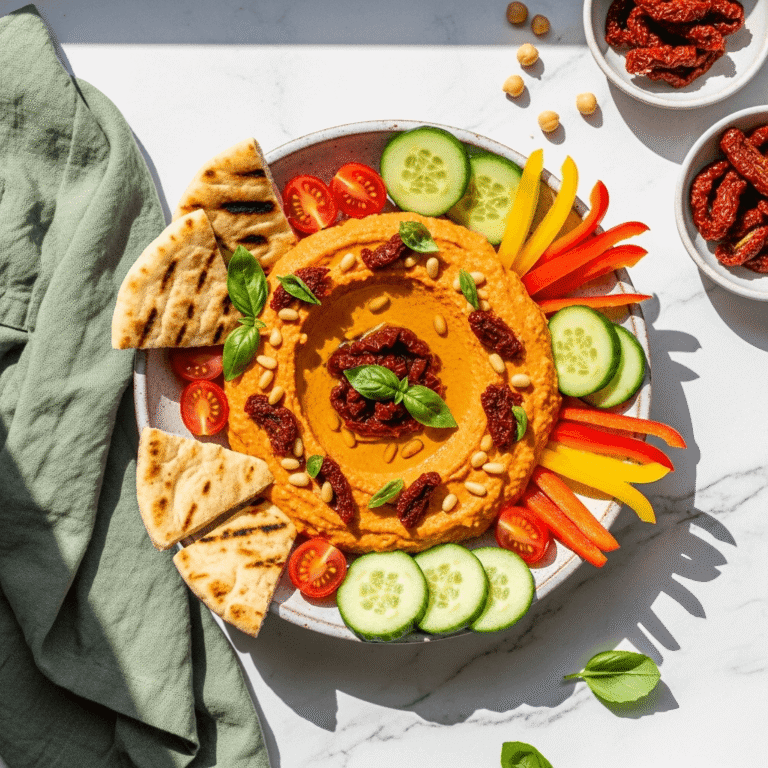
Sun-Dried Tomato Hummus
Creamy, vibrant sun-dried tomato hummus made with chickpeas, tahini, and intensely flavored sun-dried tomatoes. This easy homemade dip comes together in just 10 minutes and delivers bold Mediterranean flavor that’s perfect for snacking, entertaining, or meal prep.
- Total Time: 10 minutes
- Yield: 8 servings (about 2 cups) 1x
Ingredients
- 1 (15-ounce) can chickpeas, drained and rinsed
- ½ cup sun-dried tomatoes (oil-packed, drained, or rehydrated if using dry-packed)
- ¼ cup tahini, well-stirred
- 3 tablespoons fresh lemon juice (about 1 large lemon)
- 2 cloves garlic, peeled
- ¼ cup extra virgin olive oil, plus more for drizzling
- ½ teaspoon ground cumin
- ½ teaspoon salt (adjust to taste)
- ¼ teaspoon black pepper
- 2-4 tablespoons cold water (as needed for consistency)
- Optional garnish: fresh basil, pine nuts, extra sun-dried tomatoes, olive oil drizzle
Instructions
- Prepare the chickpeas. If you’re aiming for ultra-smooth hummus, you can optionally peel the chickpeas by gently rubbing them between your hands or a kitchen towel. Most of the skins will slip off easily. This step is optional but creates an incredibly silky texture.
- Add ingredients to food processor. Place the drained chickpeas, sun-dried tomatoes, tahini, lemon juice, garlic cloves, olive oil, cumin, salt, and pepper into your food processor.
- Blend until smooth. Process for 1-2 minutes, stopping to scrape down the sides with a rubber spatula as needed. The mixture will be thick at first.
- Adjust consistency. With the food processor running, slowly drizzle in cold water, one tablespoon at a time, until the hummus reaches your desired consistency. You want it smooth and creamy but thick enough to hold its shape. Most people prefer about 3 tablespoons of water.
- Taste and adjust seasoning. Taste your hummus and adjust salt, lemon juice, or garlic to your preference. Blend again briefly to incorporate any additions.
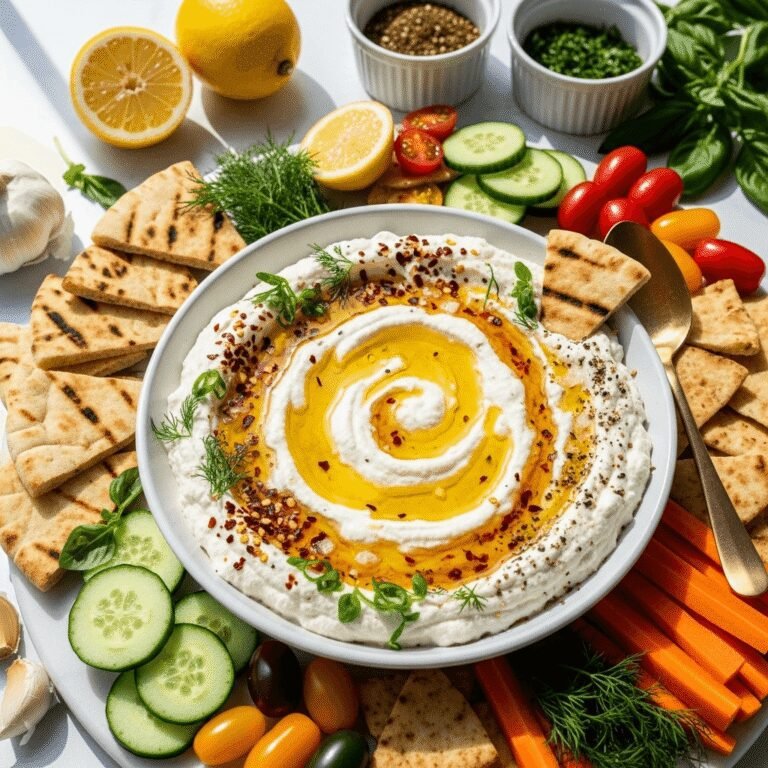
- Serve or store. Transfer the hummus to a serving bowl, create a shallow well in the center with the back of a spoon, and drizzle with extra olive oil. Garnish with fresh basil, pine nuts, or chopped sun-dried tomatoes if desired.
Notes
- Texture tip: For the creamiest hummus, let your food processor run for a full 2-3 minutes. The longer blending time breaks down the chickpeas more completely.
- Make it spicy: Add a pinch of red pepper flakes or a dash of cayenne pepper for a spicy sun-dried tomato hummus.
- Thicker hummus: Use less water; thinner hummus for spreading needs more water.
- Fresh herbs: Fresh basil pairs beautifully with the sun-dried tomatoes. Add a handful of leaves before blending for herby hummus.
- Oil from jar: If using oil-packed sun-dried tomatoes, you can use some of that flavorful oil in place of regular olive oil.
- Prep Time: 10 minutes
- Cook Time: 0 minutes
Nutrition
- Serving Size: ¼ cup
- Calories: 145
- Sugar: 2g
- Sodium: 210mg
- Fat: 10g
- Saturated Fat: 1g
- Unsaturated Fat: 8g
- Trans Fat: 0g
- Carbohydrates: 11g
- Fiber: 3g
- Protein: 4g
- Cholesterol: 0mg
Tips & Variations
Roasted Red Pepper Version: Add ½ cup roasted red peppers along with or instead of the sun-dried tomatoes for a sweeter, milder flavor.
Extra Creamy Texture: Reserve a tablespoon or two of the chickpea liquid (aquafaba) and add it instead of water for an even silkier texture.
Spicy Sun-Dried Tomato Hummus: Incorporate a jalapeño pepper, red pepper flakes, or a teaspoon of harissa paste for heat lovers.
Herbed Mediterranean Version: Blend in fresh herbs like basil, parsley, or cilantro for an extra layer of freshness.
Greek-Style: Add a handful of Kalamata olives and a sprinkle of oregano for Greek-inspired flavor.
Extra Garlicky: If you love garlic, roast a whole head and squeeze the soft cloves into the hummus for a mellower but more intense garlic flavor.
Oil-Free Option: Skip the olive oil and use more water or chickpea liquid for a lower-fat version. It won’t be quite as rich, but still delicious.
Chunky Style: Pulse the ingredients together briefly for a chunkier, more textured hummus rather than blending it completely smooth.
Pro Chef Tips
Toast your cumin. Before adding cumin to your hummus, toast it in a dry skillet for 30-60 seconds until fragrant. This releases the essential oils and creates a deeper, more complex flavor that elevates your hummus from good to extraordinary.
Use ice-cold water. When thinning your hummus, use very cold water or even add an ice cube while blending. The cold temperature helps emulsify the ingredients and creates a fluffier, airier texture similar to whipped hummus served in restaurants.
Let it rest. While you can serve your hummus immediately, letting it rest in the refrigerator for at least 30 minutes allows the flavors to meld together beautifully. The garlic mellows, the lemon brightens, and the sun-dried tomato flavor infuses throughout.
Create layers of flavor. Don’t just dump everything in at once. Process the chickpeas and tahini first until smooth, then add the remaining ingredients. This technique, used by professional chefs, creates better emulsification and smoother results.
Quality matters with tahini. Not all tahini is created equal. Look for tahini that’s runny and smooth rather than thick and separated. Lebanese and Israeli brands tend to be superior to generic grocery store versions.
Adjust acidity at the end. Professional cooks know that acidity diminishes as dishes sit. Add your lemon juice in stages, finishing with a final squeeze right before serving to ensure brightness.
Common Mistakes to Avoid
Using lukewarm chickpeas or water. Room temperature or warm ingredients can make your hummus separate and become greasy. Always use cold ingredients for the best emulsification and texture.
Not blending long enough. Many home cooks stop processing too soon. For ultra-smooth, restaurant-quality hummus, let your food processor run for at least 2-3 minutes. The longer blending time is the secret to that silky texture.
Skipping the tahini stir. Tahini separates naturally, with oil rising to the top. If you don’t stir it thoroughly before measuring, you’ll end up with inconsistent results—either too oily or too thick and bitter.
Over-salting from the start. Remember that sun-dried tomatoes and canned chickpeas already contain sodium. Always taste before adding salt, and add it gradually. You can always add more, but you can’t take it back.
Using bottled lemon juice. Fresh-squeezed lemon juice makes an enormous difference in flavor. Bottled juice tastes flat and artificial in comparison and won’t give you that bright, fresh taste that makes hummus irresistible.
Not draining and rinsing chickpeas properly. The canning liquid can make your hummus taste metallic and affect the texture. Always drain thoroughly and rinse under cold water to remove excess sodium and that “canned” flavor.
Storage & Meal Prep
Proper storage keeps your sun-dried tomato hummus fresh, safe, and delicious for days. Transfer your hummus to an airtight container and smooth the top with a spoon, then drizzle a thin layer of olive oil over the surface. This oil barrier prevents the hummus from drying out and oxidizing, which can cause browning.
Store your hummus in the refrigerator for up to 7 days. The flavors actually improve and deepen after a day or two as the garlic mellows and the sun-dried tomatoes infuse throughout. Before serving chilled hummus, let it sit at room temperature for 15-20 minutes and give it a good stir, as cold temperatures cause the olive oil to solidify and the texture to stiffen.
For the best meal prep strategy, make a big batch on Sunday and portion it into individual containers with cut vegetables for grab-and-go snacks throughout the week. Hummus is perfect for packing in lunch boxes—it’s protein-rich, doesn’t require refrigeration for a few hours, and pairs with so many foods.
If your hummus thickens too much in the fridge, don’t worry. Simply stir in a tablespoon or two of cold water or olive oil to restore the creamy consistency. You can also briefly blend it again in the food processor with a splash of water.
Make-Ahead & Freezer Notes
Sun-dried tomato hummus is an excellent make-ahead option that actually benefits from resting time. Prepare it up to 4 days in advance and store it in the refrigerator in an airtight container. The flavors will meld and intensify, creating an even more delicious dip than when freshly made.
For longer storage, hummus freezes beautifully for up to 3 months. Portion it into freezer-safe containers or heavy-duty freezer bags, leaving about half an inch of space at the top for expansion. Press out as much air as possible to prevent freezer burn. You can freeze it in small portions (½ cup each) for convenient single servings, or freeze a large batch to thaw as needed.
To thaw frozen hummus, transfer it to the refrigerator and let it defrost slowly overnight. Avoid thawing at room temperature, which can affect food safety. Once thawed, the texture might be slightly separated, but a good stir or quick pulse in the food processor will bring it back to its creamy glory. You may need to add a tablespoon of olive oil or water to restore the perfect consistency.
For best results when serving previously frozen hummus, let it come to room temperature and give it a vigorous stir. Refresh the flavors with a squeeze of fresh lemon juice and a drizzle of new olive oil. Garnish as you would fresh hummus, and your guests will never know it was frozen.
Pro tip: Freeze hummus in ice cube trays for perfect portion control. Once frozen, pop the cubes into a freezer bag. You can thaw just the amount you need for a single serving or snack.
Serving Suggestions
Sun-dried tomato hummus is incredibly versatile and pairs beautifully with a wide range of foods. Here are some delicious ways to serve this Mediterranean favorite:
Classic Dippers: Warm pita bread (cut into triangles), pita chips, naan bread, lavash crackers, bagel chips, pretzels, or your favorite multigrain crackers.
Fresh Vegetables: Carrot sticks, cucumber slices, bell pepper strips (red, yellow, and orange are especially pretty), cherry tomatoes, celery sticks, broccoli florets, cauliflower florets, snap peas, and radishes.
Sandwich and Wrap Spread: Use as a flavorful spread on sandwiches, wraps, paninis, or burgers instead of mayo. It’s particularly delicious on a Mediterranean veggie wrap with spinach, cucumber, feta, and olives.
Bowl Builder: Add a generous scoop to grain bowls, Buddha bowls, or falafel bowls. It pairs wonderfully with quinoa, brown rice, or couscous.
Brunch Board: Include it on your brunch spread alongside bagels, smoked salmon, cream cheese, sliced tomatoes, and red onion for a Mediterranean twist.
Appetizer Platter: Create a stunning mezze platter with your hummus as the centerpiece, surrounded by olives, stuffed grape leaves, feta cheese cubes, marinated artichoke hearts, roasted red peppers, and warm pita.
Pasta Sauce: Thin it with a bit of pasta water and toss with warm pasta, cherry tomatoes, fresh basil, and pine nuts for a quick, healthy dinner.
Pizza Base: Spread it on pizza dough instead of tomato sauce, then top with mozzarella, arugula, and prosciutto for a gourmet pizza experience.
FAQs Section
Q: Can I make sun-dried tomato hummus without tahini?
A: Yes, though tahini is traditional and provides authentic flavor and texture. You can substitute with natural peanut butter, almond butter, or cashew butter. The flavor will be different but still delicious. Some people use Greek yogurt for a tangy, creamy alternative, though this makes it non-vegan.
Q: Why is my hummus bitter?
A: Bitterness usually comes from tahini or raw garlic. Make sure your tahini is fresh (old tahini turns bitter), and consider reducing the garlic or roasting it first. The chickpea skins can also contribute bitterness, so peeling them can help. Adding an extra squeeze of lemon juice or a pinch of sugar can balance bitterness.
Q: How can I make my hummus smoother and creamier?
A: Several techniques help: peel the chickpeas, blend for a full 3-4 minutes (much longer than you think), use ice-cold water, and ensure your tahini is well-stirred and pourable. Adding the water slowly while the processor runs also helps create a fluffier, whipped texture. Some cooks add a pinch of baking soda to canned chickpeas and warm them briefly to soften further.
Q: Can I use dried chickpeas instead of canned?
A: Absolutely! Cook 1 cup of dried chickpeas (which yields about 3 cups cooked) according to package directions until they’re very soft and almost falling apart. Overcooked chickpeas actually make smoother hummus. Reserve some cooking liquid to use instead of water for the best texture and flavor.
Q: My hummus is too thick. How do I fix it?
A: Simply thin it out by blending in cold water, one tablespoon at a time, until you reach your desired consistency. Alternatively, use olive oil, chickpea liquid (aquafaba), or fresh lemon juice. Remember that hummus thickens when chilled, so make it slightly thinner than your target consistency.
Q: What’s the difference between oil-packed and dry-packed sun-dried tomatoes?
A: Oil-packed tomatoes are preserved in olive oil with herbs and are softer, ready to use, and more expensive. Dry-packed are more concentrated, need rehydration (soak in warm water for 15 minutes), are more intense in flavor, and are more budget-friendly. Both work beautifully in hummus.
Q: Is hummus healthy?
A: Yes! Hummus is packed with plant-based protein, fiber, healthy fats, vitamins, and minerals. Chickpeas provide complex carbohydrates that keep you full longer, while tahini offers calcium and healthy omega fats. It’s naturally vegan, gluten-free, and cholesterol-free. Just watch portion sizes, as it is calorie-dense due to the tahini and olive oil.
Conclusion
There you have it—your new go-to recipe for sun-dried tomato hummus that’s bursting with Mediterranean flavor, incredibly easy to make, and endlessly versatile. Whether you’re meal prepping for the week ahead, entertaining friends, or simply treating yourself to a healthy snack, this homemade dip delivers restaurant-quality taste in just 10 minutes with minimal cleanup.
The beauty of this recipe lies in its simplicity and adaptability. Once you’ve mastered the basic technique, you can experiment with different flavor combinations, adjust the texture to your preference, and create your own signature hummus variations. The vibrant color and bold flavor make it absolutely Pinterest-worthy, and the nutritional benefits mean you can feel good about every delicious bite.
Don’t forget to drizzle that beautiful olive oil on top, add your favorite garnishes, and snap a photo before diving in—this gorgeous dip deserves to be shared! We’d love to see your creations and hear how you customized this recipe. Share your photos on Pinterest, tag us in your social media posts, and let us know in the comments below what you served with your sun-dried tomato hummus.
Now grab your food processor and those sun-dried tomatoes, and get ready to make the best hummus you’ve ever tasted. Your taste buds (and your Pinterest followers) will thank you!