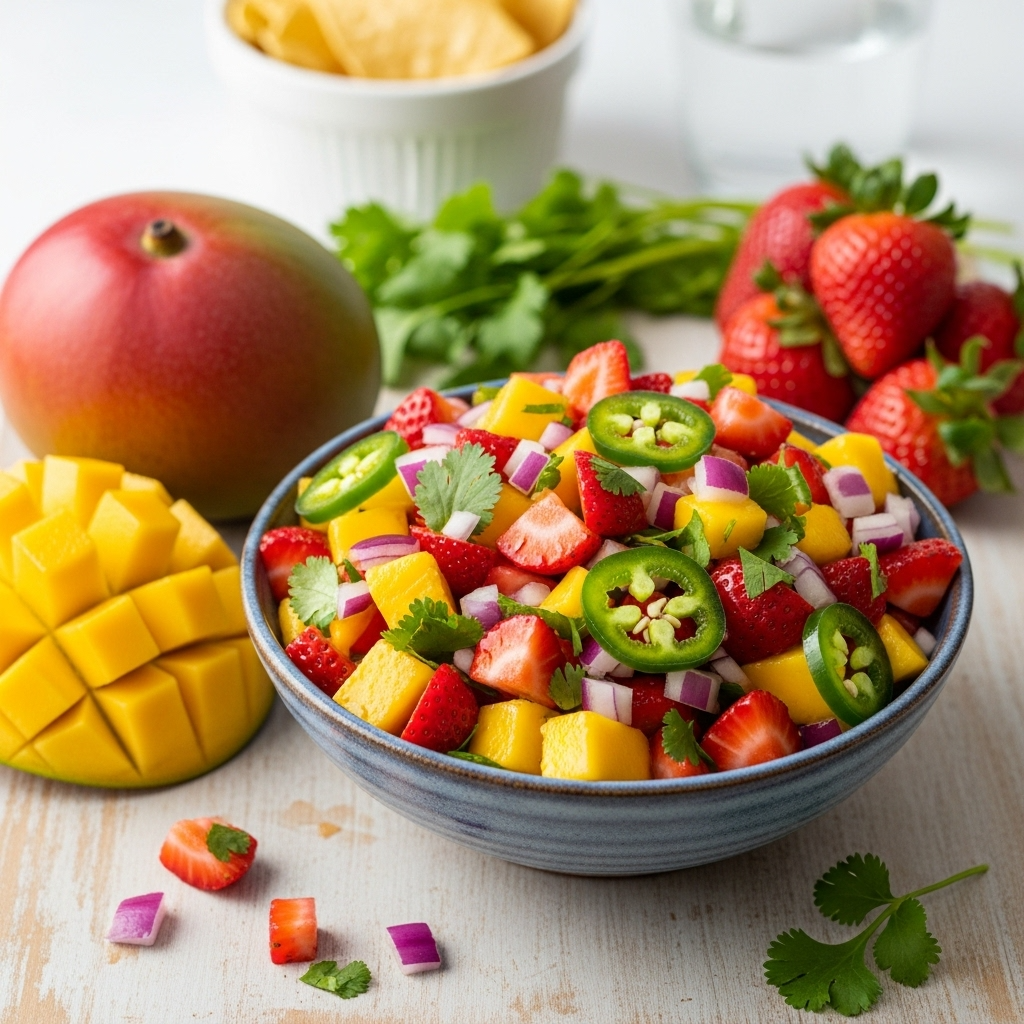
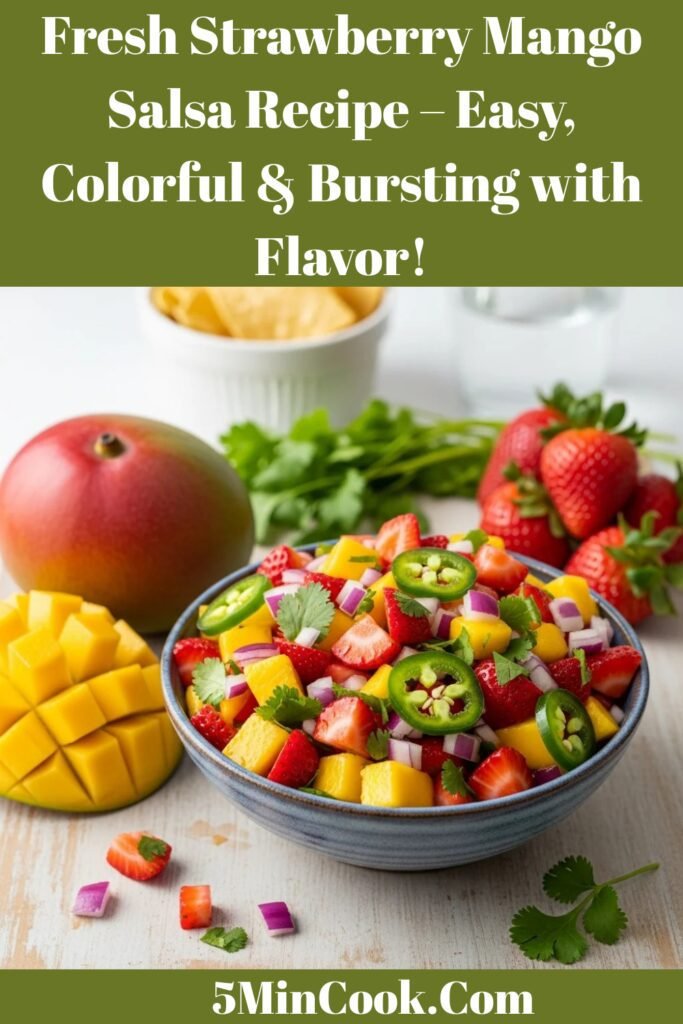
Fresh Strawberry Mango Salsa Recipe – Easy, Colorful & Bursting with Flavor!
If you’re looking for a vibrant, refreshing side dish that screams summer on a plate, this Strawberry Mango Salsa is your new go-to recipe! This fruity salsa combines the natural sweetness of ripe strawberries and juicy mangoes with a kick of jalapeño, a squeeze of fresh lime, and aromatic cilantro to create a flavor explosion that works beautifully with so many dishes.
Unlike traditional tomato-based salsas, this fruit salsa brings a tropical twist that’s perfect for backyard barbecues, poolside gatherings, Cinco de Mayo parties, or any time you want to add a pop of color and freshness to your table. Serve it with crispy tortilla chips as an appetizer, spoon it over grilled chicken or fish for a light summer dinner, or use it as a topping for tacos—the possibilities are endless!
What makes this recipe especially appealing is how incredibly easy it is to throw together. There’s no cooking involved, just simple chopping and mixing, which means you can have this gorgeous salsa ready in about 15 minutes. Plus, it’s naturally gluten-free, dairy-free, and vegan, making it a crowd-pleaser for guests with various dietary preferences. The combination of sweet and spicy, along with that bright citrus punch, creates a taste that’s both familiar and excitingly different.
History / Background
Fruit salsas represent a beautiful evolution of traditional Mexican cuisine meeting modern culinary creativity. While classic salsas have been a cornerstone of Mexican cooking for centuries—dating back to the Aztecs who combined tomatoes, chili peppers, and ground squash seeds—the concept of fruit-based salsas is a more contemporary innovation that emerged in the United States during the late 20th century.
The rise of fusion cuisine in the 1980s and 1990s, particularly in California and the Southwest, led creative chefs to experiment with non-traditional salsa ingredients. They began incorporating tropical fruits like mango, pineapple, and papaya, creating vibrant accompaniments that complemented grilled seafood and poultry perfectly. These fruit salsas quickly became popular at upscale restaurants before making their way into home kitchens across America.
The strawberry mango salsa specifically gained traction as home cooks embraced the idea that salsas didn’t have to be savory. The pairing of strawberries and mangoes is particularly brilliant because both fruits peak during similar seasons, and their flavors complement rather than compete with each other. Strawberries bring a familiar sweetness with a hint of tartness, while mangoes contribute a lush, tropical richness.
This recipe also reflects our modern understanding of flavor balance—the interplay between sweet (fruit), spicy (jalapeño), sour (lime juice), and fresh (cilantro and red onion). It’s a perfect example of how American home cooking has embraced global flavors while making them accessible and easy to prepare. Today, fruit salsas like this one are staples at summer gatherings, appearing on Pinterest boards and food blogs as colorful, photogenic dishes that taste as good as they look.
Why You’ll Love This Recipe
This easy strawberry mango salsa recipe is about to become your warm-weather obsession, and here’s why: it delivers restaurant-quality flavor with minimal effort, uses ingredients you can find at any grocery store, and looks absolutely stunning on your table. Whether you’re an experienced cook or just starting your culinary journey, this recipe is forgiving, flexible, and incredibly rewarding.
Here’s what makes this salsa irresistible:
- Ready in 15 minutes – No cooking required, just fresh chopping and gentle mixing
- Naturally healthy – Packed with vitamin C, fiber, and antioxidants from fresh fruit
- Versatile – Works as a dip, topping, side dish, or even a dessert accompaniment
- Budget-friendly – Especially when strawberries and mangoes are in season
- Crowd-pleasing – The sweet-spicy combination appeals to both kids and adults
- Make-ahead friendly – Actually tastes better after the flavors meld in the fridge
- Allergen-friendly – Naturally gluten-free, dairy-free, vegan, and paleo
- Instagram-worthy – Those vibrant colors make for perfect food photos
- Customizable – Easy to adjust the heat level or swap ingredients based on preference
This recipe is perfect for those moments when you want something special without spending hours in the kitchen. It’s the kind of dish that makes you look like a culinary genius while requiring minimal skill or time investment.
Ingredient Notes
Let’s talk about what goes into this beautiful homemade fruit salsa and why each ingredient matters. The beauty of this recipe is in its simplicity—you need just seven fresh ingredients to create something truly spectacular.
Strawberries: Choose ripe, red strawberries that smell sweet and fragrant. They should be firm enough to dice cleanly but ripe enough to be juicy. Fresh strawberries are essential here—frozen won’t provide the right texture. If strawberries aren’t in season, you could substitute with diced fresh pineapple for a different tropical twist.
Mango: Look for mangoes that yield slightly to gentle pressure and have a sweet aroma near the stem. Honey or Ataulfo mangoes are particularly good because they’re less fibrous and very sweet. If you’re unsure how to cut a mango, there are plenty of tutorials online, but essentially you’ll cut the flesh away from the flat pit in the center. In a pinch, you could use fresh peaches or nectarines as a substitute.
Red Onion: This adds a sharp, savory element that balances the sweetness. Red onion is milder and prettier than white or yellow onion. Dice it very finely so you get little pops of flavor rather than overwhelming chunks. If raw onion is too strong for you, soak the diced pieces in cold water for 10 minutes, then drain—this removes some of the bite.
Jalapeño Pepper: This is your heat source, but it’s completely adjustable. The seeds and white membranes contain most of the heat, so removing them gives you mild warmth while leaving them in brings more fire. For less heat, use just half a jalapeño or substitute with a milder pepper like poblano. For more heat, add a serrano pepper or a pinch of cayenne.
Fresh Cilantro: This herb brings a fresh, citrusy note that brightens everything. If you’re one of those people who thinks cilantro tastes like soap (it’s genetic!), substitute with fresh mint or basil, which will give a different but equally delicious flavor profile.
Lime Juice: Always use fresh lime juice—bottled just doesn’t have the same bright, acidic punch. The lime juice not only adds flavor but also helps prevent the fruit from browning too quickly. You’ll need about 2 limes for this recipe.
Salt: A small amount of salt enhances all the other flavors and makes the sweetness of the fruit pop. Don’t skip this—it’s the secret ingredient that makes everything taste more vibrant.
Equipment Needed
One of the best things about this fresh fruit salsa is that you don’t need any special kitchen gadgets or fancy equipment. Here’s what you’ll use:
- Sharp Chef’s Knife – Essential for clean, precise dicing of the fruit and vegetables
- Cutting Board – Preferably a large one to give you plenty of workspace
- Medium Mixing Bowl – To combine all your ingredients (glass or ceramic works great)
- Citrus Juicer or Reamer (optional) – Makes extracting lime juice easier, though you can squeeze by hand
- Measuring Cups and Spoons – For accurate measurements
- Wooden Spoon or Spatula – For gentle mixing that won’t mash the fruit
- Storage Container with Lid – For refrigerating leftovers
That’s it! No food processor, no appliances, just simple knife skills and a bowl. This is hands-on cooking at its finest, and there’s something deeply satisfying about creating something beautiful with just your hands and fresh ingredients.
Print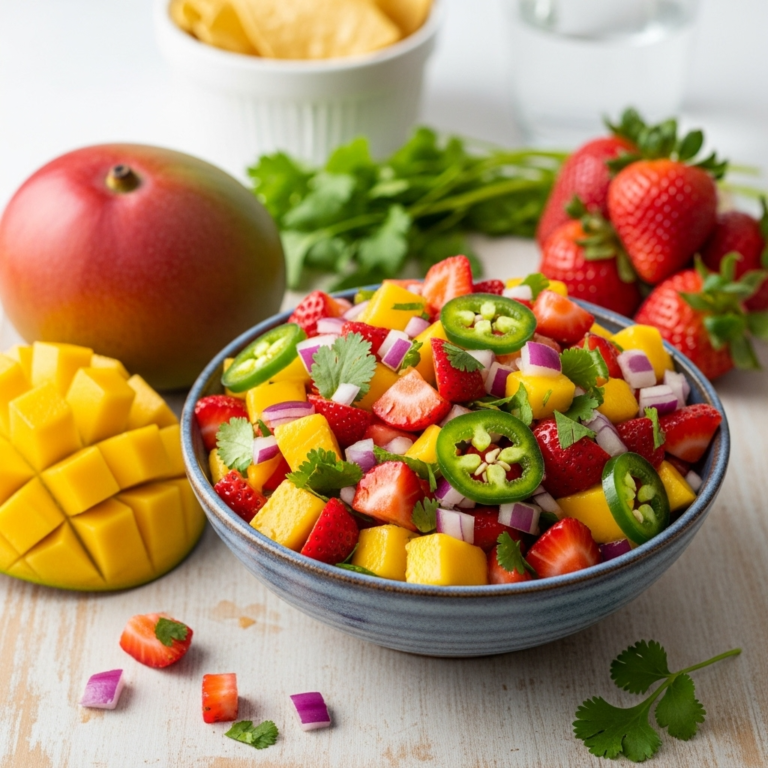
Strawberry Mango Salsa Recipe
This vibrant Strawberry Mango Salsa combines sweet strawberries, juicy mangoes, spicy jalapeño, and fresh cilantro with a zesty lime dressing. Perfect for serving with chips, topping grilled meats, or adding a tropical twist to tacos!
- Total Time: 15 minutes
- Yield: 6 servings (about 3 cups) 1x
Ingredients
- 1½ cups fresh strawberries, hulled and diced (about 10-12 medium strawberries)
- 1½ cups fresh mango, diced (about 1 large or 2 small mangoes)
- ⅓ cup red onion, finely diced
- 1 jalapeño pepper, seeded and finely minced (adjust to taste)
- ¼ cup fresh cilantro, chopped
- Juice of 2 fresh limes (about 3-4 tablespoons)
- ¼ teaspoon salt (or to taste)
Instructions
- Prepare Your Fruit: Wash the strawberries thoroughly and pat them dry with paper towels. Hull the strawberries by removing the green tops and white core, then dice them into small, uniform pieces about ¼-inch in size. Place them in your mixing bowl.
- Cut the Mango: Stand your mango on its end and slice down both sides of the flat pit. Score the flesh in a crosshatch pattern without cutting through the skin, then push the skin inside out and slice the cubes away from the skin. Dice into pieces similar in size to your strawberries and add to the bowl.
- Dice the Aromatics: Peel and very finely dice the red onion—you want tiny pieces that will distribute throughout the salsa without overwhelming any single bite. Cut the jalapeño in half lengthwise, remove the seeds and membranes (unless you want extra heat), and mince it as finely as possible. Add both to the bowl.
- Add Fresh Herbs: Roughly chop the cilantro, including some of the tender stems which have plenty of flavor. You don’t need to mince it perfectly—a rough chop gives nice texture. Add to the mixing bowl.
- Dress and Season: Squeeze the fresh lime juice directly over all the ingredients, making sure to catch any seeds. Sprinkle the salt evenly over the top.
- Mix Gently: Using a wooden spoon or rubber spatula, fold all the ingredients together gently. You want to combine everything evenly without mashing the fruit. The mixture should look colorful and chunky.
- Rest and Serve: For best flavor, cover and refrigerate for at least 15-30 minutes before serving. This allows the flavors to meld beautifully. Give it a gentle stir before serving, and taste to adjust salt or lime juice if needed.
Notes
- Ripeness Matters: Make sure your fruit is ripe but still firm. Overripe fruit will turn mushy and make your salsa watery.
- Adjust Heat Level: Start with half a jalapeño if you’re heat-sensitive. You can always add more, but you can’t take it away!
- Prevent Browning: The lime juice helps keep fruit from oxidizing, but this salsa is best enjoyed within 2 days.
- Drainage: If your salsa becomes watery after sitting, simply drain off excess liquid before serving.
- Serving Size: Each serving is approximately ½ cup, perfect with about 8-10 tortilla chips.
- Prep Time: 15 minutes
- Cook Time: 0 minutes
Nutrition
- Serving Size: ½ cup (approximately 85g)
- Calories: 45
- Sugar: 8g
- Sodium: 100mg
- Fat: 0g
- Saturated Fat: 0g
- Unsaturated Fat: 0g
- Trans Fat: 0g
- Carbohydrates: 11g
- Fiber: 2g
- Protein: 0g
- Cholesterol: 0mg
Tips & Variations
The beauty of this strawberry mango salsa recipe is how easily you can customize it to suit your taste preferences or use what you have on hand. Here are some delicious ways to make this recipe your own:
Heat Level Adjustments: For a milder version, omit the jalapeño entirely and add a pinch of black pepper for subtle warmth. For spice lovers, leave the jalapeño seeds in, add a second jalapeño, or include a diced serrano pepper for serious heat.
Fruit Variations: Try adding diced fresh pineapple, peaches, or even watermelon for different flavor profiles. A combination of mango, pineapple, and strawberry creates an ultra-tropical version. Fresh blueberries can add a gorgeous color contrast too.
Herb Swaps: If you’re not a cilantro fan, fresh mint brings a cool, refreshing quality that pairs beautifully with the fruit. Thai basil offers an interesting anise-like flavor, while regular basil provides Italian-inspired freshness.
Add Crunch: Toss in some diced cucumber or jicama for extra crunch and a refreshing element. These vegetables absorb the lime dressing beautifully and add textural contrast.
Citrus Variations: Substitute half the lime juice with fresh orange juice for a sweeter, less acidic version. A tiny splash of orange liqueur (like Grand Marnier) can elevate this for adult gatherings.
Savory Boost: Add a tablespoon of finely diced bell pepper (red, yellow, or orange) for additional color and a subtle sweet pepper flavor. A tiny pinch of cumin can also add interesting depth.
Sweet Version: For serving with desserts or over ice cream, omit the onion and jalapeño, and add a tablespoon of honey and a pinch of cinnamon instead.
Pro Chef Tips
Want your homemade strawberry mango salsa to taste like it came from a high-end restaurant? Here are professional techniques that make all the difference:
Uniform Dice Matters: Take the time to cut everything into similar-sized pieces. This isn’t just about aesthetics—uniformly sized pieces ensure you get a perfect balance of flavors in every bite. Aim for a ¼-inch dice for the best texture.
The Ice Water Trick: After dicing your red onion, soak the pieces in ice water for 10 minutes, then drain and pat dry. This removes the harsh sulfuric compounds that make onions painfully sharp, leaving only sweet, mild onion flavor. This is a game-changer for raw onion preparations.
Lime Zest Boost: Before juicing your limes, use a microplane to remove some zest (just the green part, not the bitter white pith). Add about ½ teaspoon of lime zest to the salsa for an extra citrus punch that’s incredibly aromatic.
Room Temperature Before Serving: Take your salsa out of the refrigerator about 15 minutes before serving. Cold fruit doesn’t release its flavors as well as room-temperature fruit, and you’ll notice a significant improvement in taste.
Salt in Stages: Add half the salt initially, mix, and let it sit for a few minutes. Taste, then add more if needed. Salt draws out moisture from the fruit, so adding it gradually helps you find the perfect balance without making the salsa watery.
Fresh Grinding: If you have whole coriander seeds, toast a few lightly and crush them to add to the salsa along with the cilantro. This adds a sophisticated, complex layer that complements the fresh cilantro beautifully.
The Resting Period is Crucial: While you can eat this salsa immediately, letting it rest for 30 minutes to an hour allows the flavors to marry. The onion mellows, the jalapeño distributes its heat evenly, and the lime juice brightens everything. Patience is rewarded here.
Common Mistakes to Avoid
Even with a recipe this simple, there are a few pitfalls that can turn your perfect salsa into a disappointing mess. Here’s what to watch out for:
Using Unripe or Overripe Fruit: This is the #1 mistake. Unripe strawberries are tart and hard, while overripe ones turn to mush. The same goes for mangoes—too firm and they’re flavorless, too soft and they’ll disintegrate. Fruit should be ripe, fragrant, and yield slightly to pressure but still hold its shape when diced.
Cutting Pieces Too Large: Chunky salsa might sound rustic and appealing, but pieces larger than ½-inch make it difficult to scoop with chips and create an unbalanced flavor experience. Some bites will be all mango, others all onion. Keep your dice small and consistent.
Adding Too Much Liquid: Don’t be tempted to add extra lime juice “for good measure.” Too much acid will make the salsa soupy and overwhelm the delicate fruit flavors. Stick to the recipe amounts and adjust only after tasting.
Not Draining Watery Salsa: Sometimes despite your best efforts, natural fruit juices will accumulate at the bottom of your bowl. Don’t serve it swimming in liquid—use a slotted spoon to serve, or gently drain excess juice before transferring to a serving bowl.
Preparing Too Far in Advance: While this salsa benefits from resting time, making it more than 4-6 hours ahead causes the fruit to break down and become mushy. The colors also dull, and excess water pools. For best results, make it the same day you plan to serve it.
Over-Mixing: Treating your salsa like you’re making guacamole and really working it will bruise the fruit and create an unappealing mushy texture. Fold gently, as if you’re folding egg whites into a batter—your goal is to combine, not to break down.
Storage & Meal Prep
Proper storage ensures your fresh strawberry mango salsa stays vibrant and delicious for as long as possible. Here’s everything you need to know:
Refrigerator Storage: Transfer your salsa to an airtight container with a tight-fitting lid. Glass containers work best because they don’t absorb odors or stain. Press a piece of plastic wrap directly onto the surface of the salsa before sealing the lid—this minimizes air exposure and prevents browning. Stored properly, your salsa will keep for 2-3 days in the refrigerator.
Signs of Spoilage: After a couple of days, you’ll notice the fruit releasing more liquid and the colors becoming less vibrant. The strawberries may start to look slightly gray, and the texture will become softer. If you notice any off smells, mold, or significant discoloration, it’s time to discard it.
Drainage Before Re-Serving: If liquid has accumulated at the bottom of your container, simply pour it off or use a slotted spoon to serve. You can also gently press the salsa with paper towels to absorb excess moisture, then fluff it back up with a fork.
Meal Prep Strategy: If you want to prep ahead for a party, you can dice all your ingredients in advance and store them separately in airtight containers. Keep the strawberries, mangoes, and aromatics in separate containers, then combine them with the lime juice and salt about 2 hours before serving. This prevents premature breakdown while still allowing the flavors to meld.
Refreshing Day-Old Salsa: If your salsa has been sitting for a day and tastes a bit flat, refresh it with a squeeze of fresh lime juice, a pinch of salt, and a tablespoon of freshly chopped cilantro. Mix gently and let it sit for 10 minutes—this can bring back much of its original vibrancy.
Make-Ahead & Freezer Notes
While this salsa is best enjoyed fresh, life gets busy and sometimes you need options. Here’s what works and what doesn’t:
Make-Ahead Timeline: You can prepare this salsa up to 6 hours in advance and it will actually improve in flavor as it sits. The sweet spot is 2-4 hours after making it—the flavors have melded beautifully but the fruit is still firm and colorful. Beyond 6 hours, the texture begins to suffer noticeably.
Freezing Fresh Salsa: Unfortunately, this is not a freezer-friendly recipe. Fresh fruit has high water content, and when frozen and thawed, the ice crystals rupture the cell walls, turning your beautiful crisp salsa into a mushy, watery mess. The strawberries especially will break down completely. If you have leftovers you can’t finish, consider alternative uses rather than freezing.
Creative Leftover Solutions: If your salsa is getting too soft to serve as a dip, don’t throw it away! Puree it in a blender with a little water and freeze it in ice cube trays to add to smoothies. You can also simmer it down into a quick fruit compote for serving over pancakes, yogurt, or ice cream. Another option is to blend it with a little olive oil and vinegar to create a fruity salad dressing.
Planning for Parties: If you’re making this for a large gathering, prepare a big batch but serve it in smaller portions. Refill the serving bowl from your refrigerated container as needed. This keeps the salsa on the table looking fresh and prevents the entire batch from sitting out at room temperature for hours.
Serving Suggestions
This versatile tropical fruit salsa pairs beautifully with so many dishes. Here are some delicious ways to serve it:
Classic Chip and Dip: Serve with crispy tortilla chips (white, yellow, or multi-grain all work great), plantain chips, or pita chips for a crowd-pleasing appetizer. Arrange the chips around a colorful bowl of salsa for a stunning presentation.
Grilled Protein Topping: Spoon this salsa over grilled chicken breasts, blackened fish (especially mahi-mahi or salmon), grilled shrimp, or even steak. The sweet-spicy-fresh combination cuts through rich proteins perfectly and adds beautiful color to your plate.
Taco Tuesday Star: Use it as a topping for fish tacos, shrimp tacos, chicken tacos, or even carnitas. It adds brightness and freshness that balances heavier ingredients like cheese and sour cream.
Brunch Companion: Serve alongside scrambled eggs, omelets, or breakfast burritos for a fresh, fruity morning twist. It’s especially good with dishes that include avocado or black beans.
Burger Upgrade: Skip the ketchup and pile this salsa on top of turkey burgers, chicken burgers, or even beef burgers for a gourmet touch. It’s particularly excellent on burgers with pepper jack cheese.
Salad Topper: Add a few spoonfuls to a grilled chicken salad, mixed green salad, or even a quinoa bowl for a pop of flavor and color. It acts as both a topping and a light dressing.
Dessert Option: For a unique dessert, serve this salsa (make it without the onion and jalapeño for a sweeter version) over vanilla ice cream, cheesecake, or pound cake with a dollop of whipped cream. The fruit salad-meets-salsa concept is surprisingly delicious in sweet applications.
Complete Meal Ideas:
- Grilled fish with strawberry mango salsa, cilantro lime rice, and black beans
- Chicken fajitas with the salsa, guacamole, and warm flour tortillas
- Baked sweet potato topped with the salsa and a sprinkle of queso fresco
- Tortilla chip nachos with this salsa as the fresh topping instead of traditional pico de gallo
FAQs Section
Can I make this salsa without cilantro?
Absolutely! Cilantro has a very distinct flavor that some people love and others can’t stand (it’s actually genetic). If you’re in the “cilantro tastes like soap” camp, substitute with fresh mint for a cool, refreshing flavor, or try fresh basil for an Italian-inspired twist. You can also simply omit the herb entirely—the salsa will still be delicious, just a bit less aromatic.
How do I know when my mango is ripe enough?
A ripe mango should yield slightly to gentle pressure when you squeeze it, similar to a ripe avocado. It should also have a sweet, fragrant smell near the stem end. The skin color isn’t always a reliable indicator since different mango varieties have different color patterns, but generally, you’ll see more yellow/orange and less green as the mango ripens. If your mango is rock-hard, let it sit on the counter for a few days until it softens. If you need to use it immediately and it’s not quite ripe, it will still work but won’t be as sweet or flavorful.
Can I use frozen fruit to make this salsa?
While fresh fruit is absolutely best for optimal texture and flavor, you can use frozen fruit in a pinch. However, you must thaw it completely and drain off all the excess liquid—frozen fruit releases a lot of water when thawed. Pat the fruit dry with paper towels before dicing. The texture won’t be quite as crisp and fresh-tasting, but it can work when fresh fruit is out of season or unavailable. Just know that your salsa will have a softer, more jammy consistency.
Is this salsa spicy?
As written, this salsa has a mild to medium heat level that most people find very pleasant—just a gentle warmth in the background that doesn’t overpower the sweet fruit. The recipe calls for seeding the jalapeño, which removes most of the heat. If you want it completely mild, just omit the jalapeño entirely or use just a tiny amount. If you love heat, leave the seeds in or add an extra jalapeño or a serrano pepper. The beauty of this recipe is that you control the spice level completely.
What’s the best way to dice a mango?
The easiest method is the “hedgehog” technique: Stand the mango upright and slice down vertically on either side of the flat pit, getting as close to the pit as possible. You’ll end up with two large halves. Take one half and score the flesh in a crosshatch pattern without cutting through the skin—imagine you’re making a grid. Then push the skin from underneath so the mango pops out in cubes, and slice those cubes away from the skin. Repeat with the other half. You can also carefully cut the remaining fruit away from the pit. There are great video tutorials online if you’re a visual learner!
Can I double or triple this recipe for a party?
Yes! This recipe scales up beautifully. If you’re serving a crowd, just multiply all the ingredients proportionally. One tip for large batches: mix everything in a large bowl or even a large food storage container with a lid, which makes it easier to stir without fruit flying everywhere. Just remember that larger batches will release more liquid as they sit, so plan to drain any excess before serving. For a party, consider making the salsa earlier in the day so the flavors have time to develop, then drain and refresh with a sprinkle of fresh cilantro right before serving.
What should I do if my salsa tastes too sweet or too tart?
Flavor balance is everything in this recipe! If your salsa tastes too sweet (maybe your fruit was very ripe), add a little more lime juice and a pinch of salt to balance it. If it’s too tart or acidic, add a tiny drizzle of honey or agave nectar—start with just ½ teaspoon, mix, taste, and add more if needed. You can also add a bit more diced mango or strawberry to dilute the acidity. The jalapeño and onion also contribute to balance, so if your salsa tastes one-dimensional, make sure you haven’t skimped on these savory elements.
Conclusion
There you have it—your complete guide to making the most gorgeous, flavorful Strawberry Mango Salsa that’ll have everyone asking for the recipe! This vibrant dish proves that sometimes the simplest recipes are the most impressive. With just a handful of fresh ingredients and 15 minutes of your time, you can create something that looks like it came from a fancy restaurant but tastes even better because you made it yourself.
What I love most about this salsa is how it brings people together. Whether you’re serving it at a backyard barbecue, bringing it to a potluck, or just making it for a weeknight dinner to brighten up some grilled chicken, it always gets rave reviews. The combination of sweet, spicy, tangy, and fresh creates a flavor experience that’s both comforting and exciting—familiar yet special.
Don’t be afraid to experiment with this recipe and make it your own. Try different fruit combinations, adjust the heat level to match your preferences, or find new creative ways to serve it. The foundation is solid, but there’s plenty of room for your personal touch.
Now it’s your turn! I’d love to hear how your strawberry mango salsa turns out. Did you serve it with chips, or did you get creative and try it on something unexpected? Did you adjust the recipe to make it your own? Drop a comment below and let me know! And if you loved this recipe, please share it on Pinterest so other home cooks can discover it too—just click that little red pin button! Your shares help keep this blog going and allow me to create more delicious recipes for you.
Happy cooking, and here’s to filling your kitchen (and your table) with fresh, vibrant, absolutely delicious food! 🍓🥭