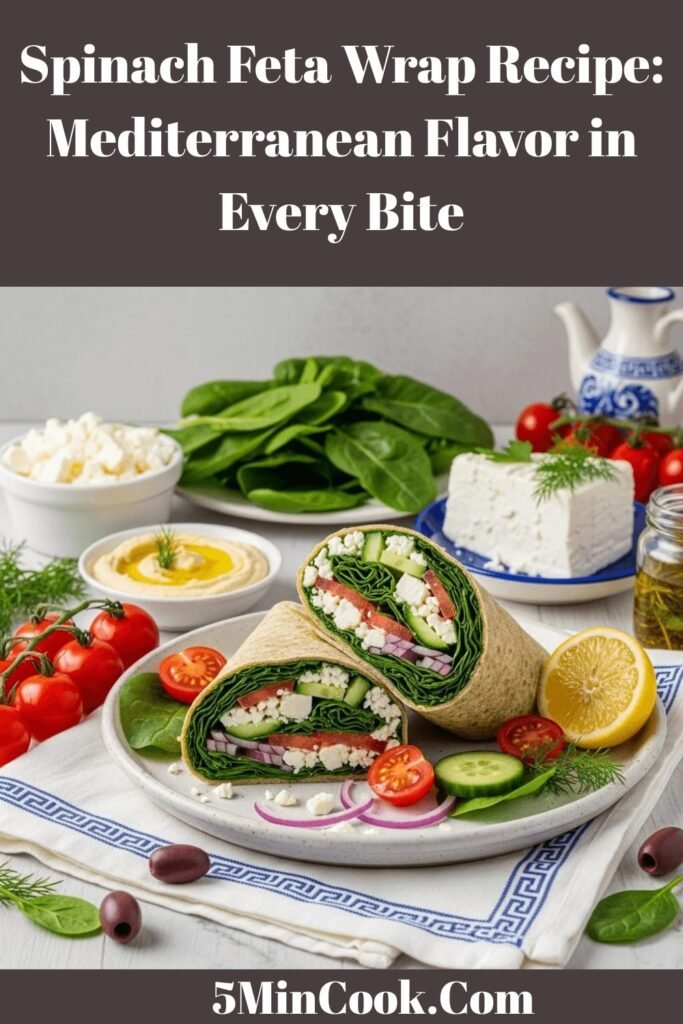
Spinach Feta Wrap Recipe: Mediterranean Flavor in Every Bite
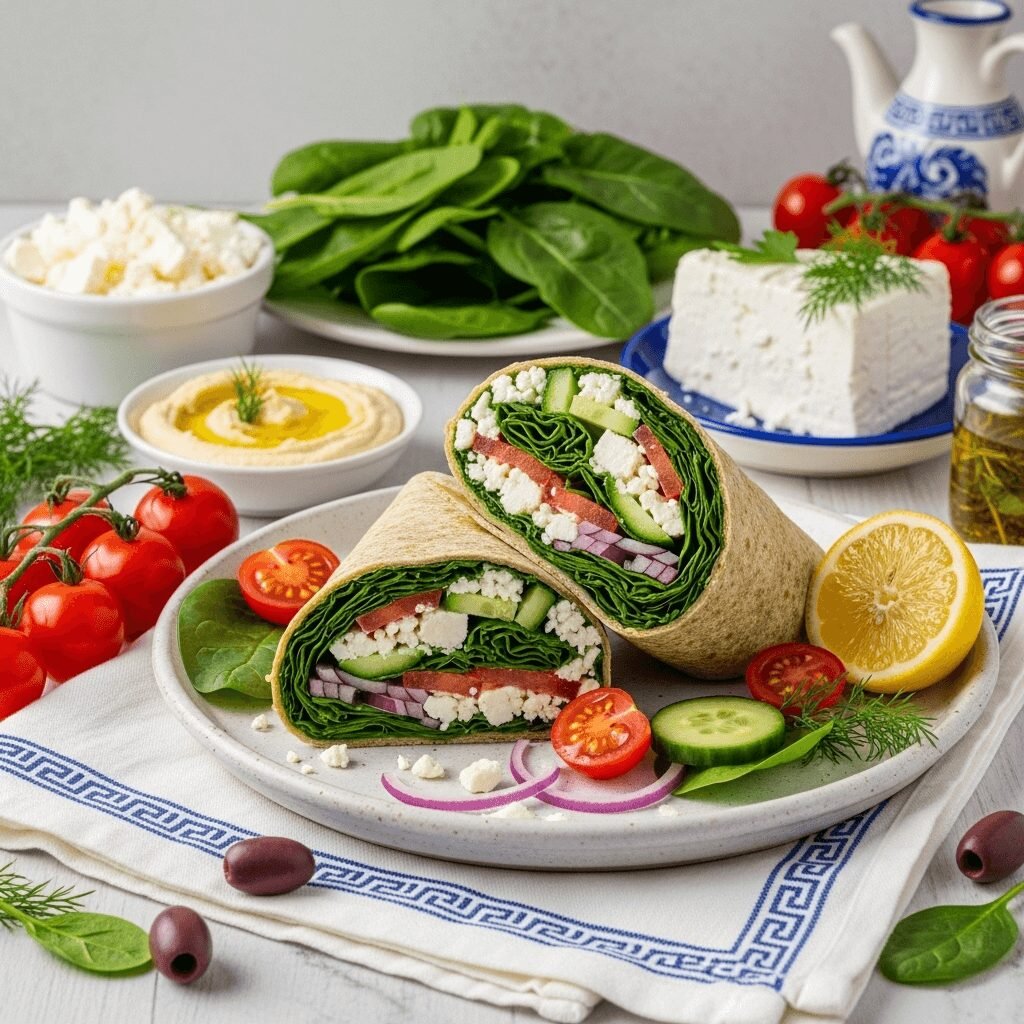
The spinach feta wrap is a deliciously Mediterranean-inspired meal that combines tender fresh spinach, tangy crumbled feta cheese, and flavorful herbs all wrapped up in a soft tortilla for the perfect handheld lunch or dinner! This Greek-style wrap features the classic pairing of spinach and feta—a combination that’s been beloved in Mediterranean cuisine for centuries—along with fresh vegetables, aromatic herbs, and your choice of protein, creating a satisfying meal that’s both nutritious and bursting with flavor. The combination of earthy spinach, salty-tangy feta, and bright Mediterranean flavors creates an irresistible taste experience that feels both healthy and indulgent. This easy spinach feta wrap is perfect for countless occasions: pack it for work lunches where you need something satisfying and flavorful, make it for quick weeknight dinners when you’re craving Mediterranean flavors, prepare it for meal prep Sundays to have delicious grab-and-go lunches ready, serve it at gatherings where everyone loves those Greek-inspired flavors, enjoy it as a post-workout meal with excellent protein and nutrients, or whip it up when you want something that tastes gourmet but takes just 15 minutes to make. The beauty of this healthy Mediterranean wrap lies in its perfect balance—it’s substantial enough to keep you full for hours, packed with vegetables and protein, loaded with bold Mediterranean flavors, and comes together in minutes with minimal cooking required. Whether you’re a Mediterranean food lover, someone seeking healthier lunch options, a vegetarian looking for satisfying meals, or simply a wrap enthusiast who appreciates incredible flavor, this spinach and feta wrap recipe delivers amazing taste, satisfying texture, beautiful nutrition, and genuine satisfaction in every single delicious bite!
History / Background
The spinach feta wrap represents a beautiful modern adaptation of ancient Mediterranean flavors, particularly drawing from Greek culinary traditions where spinach and feta have been paired together for thousands of years. To truly appreciate this wrap, we need to explore the rich history of these ingredients and how they’ve been combined throughout the ages.
Spinach has been cultivated for over 2,000 years, originating in ancient Persia (modern-day Iran) before spreading throughout the Mediterranean region and eventually worldwide. The Greeks and Romans adopted spinach enthusiastically, incorporating it into their cuisines. In Greek cooking specifically, spinach became a cornerstone ingredient, prized for its versatility, nutrition, and ability to pair beautifully with other Mediterranean staples.
Feta cheese has an even longer history, with evidence suggesting it’s been made in Greece for over 6,000 years. The name “feta” comes from the Italian word “fetta” (slice), though the cheese itself is distinctly Greek. Traditional feta is made from sheep’s milk or a mixture of sheep’s and goat’s milk, brined to create its signature tangy, salty flavor. It was mentioned in Homer’s Odyssey, and the method of making it in brine has remained largely unchanged for millennia. Feta received Protected Designation of Origin status in 2002, meaning authentic feta must be made in Greece using traditional methods.
The pairing of spinach and feta is most famously seen in spanakopita, the iconic Greek savory pastry made with layers of flaky phyllo dough filled with spinach, feta, onions, and herbs. This dish has been a Greek staple for centuries, served at family gatherings, celebrations, and everyday meals. The combination works so beautifully because the earthy, slightly bitter spinach perfectly balances the salty, tangy richness of feta cheese.
The wrap format itself, as we’ve seen with other wraps, emerged in American cuisine during the 1990s as part of the health-conscious eating movement. Mediterranean cuisine was gaining enormous popularity during this time, driven by research showing the health benefits of the Mediterranean diet—rich in vegetables, olive oil, whole grains, and moderate dairy. The Mediterranean diet became recognized as one of the healthiest eating patterns in the world.
The specific combination of spinach, feta, and wrap likely emerged in the late 1990s and early 2000s as cafes and delis began offering Mediterranean-inspired wraps alongside their traditional sandwich offerings. Fast-casual chains embraced these flavors, and home cooks followed suit. The spinach feta wrap offered a way to enjoy those beloved Greek flavors in a convenient, portable format perfect for modern lifestyles.
Food bloggers and Pinterest users in the 2010s further popularized the spinach feta wrap as an ideal meal prep option and healthy lunch choice. It embodied everything people were seeking: Mediterranean flavors (considered exotic yet familiar), vegetarian-friendly protein, plenty of vegetables, and genuine satisfaction without heaviness.
Today, the spinach feta wrap represents the successful fusion of ancient Mediterranean traditions with contemporary American convenience culture. It honors the timeless pairing of spinach and feta while adapting it for busy modern lives, proving that some flavor combinations are truly eternal.
Why You’ll Love This Recipe
This spinach feta wrap recipe takes that iconic Greek flavor combination and shows you exactly how to create a perfectly balanced, restaurant-quality wrap at home! While it might seem straightforward—spinach, feta, tortilla—there are actually specific techniques that elevate this from basic to exceptional: properly preparing fresh spinach so it’s tender without being watery, incorporating feta so it’s evenly distributed and flavorful, adding complementary ingredients that enhance rather than overwhelm, and assembling everything so each bite delivers that perfect Mediterranean flavor.
What makes this particular approach to the easy Mediterranean wrap special is the attention to flavor layering and texture balance. We’re not just tossing ingredients together—we’re thinking about how to bring out the best in the spinach, how to let the feta shine without being too salty, how to add brightness and freshness with herbs and vegetables, and how to create a wrap that’s cohesive, delicious, and satisfying from first bite to last.
Here’s why this healthy spinach wrap will become your new favorite meal:
- Ready in 15 Minutes – Quick enough for busy weeknights, impressive enough for guests
- Naturally Vegetarian – Protein-rich without any meat required
- Mediterranean Diet-Friendly – Aligns with one of the world’s healthiest eating patterns
- Incredibly Flavorful – Bold, satisfying taste that doesn’t feel like “diet food”
- Perfect for Meal Prep – Holds up beautifully for 2-3 days refrigerated
- Budget-Friendly – Spinach and feta are affordable and go far
- Kid-Approved – Many children love the mild, familiar flavors
- Protein-Packed – Feta cheese provides satisfying protein
- Customizable – Easy to adjust ingredients to your taste
- Gluten-Free Option – Use gluten-free tortillas
- Low-Carb Option – Make it with lettuce leaves instead
- Restaurant-Quality at Home – Tastes like something you’d pay $12 for at a cafe!
Ingredient Notes
This wrap uses simple Mediterranean ingredients where quality really shines!
Fresh Spinach: The star green! Baby spinach is tender and mild, perfect for raw or lightly wilted. Mature spinach has more flavor and texture—if using, remove thick stems. Amount: About 2 cups per wrap. Preparation: Can be used raw for crunch, or lightly sautéed for a more traditional spanakopita-style flavor. Tip: If sautéing, cook just until wilted and squeeze out excess moisture! Substitution: Kale (massage first), arugula (peppery), or Swiss chard.
Feta Cheese: The signature flavor! Traditional Greek feta (sheep’s milk) has the most authentic tangy flavor and crumbly texture. Bulgarian feta is creamier and milder. Amount: About ⅓ cup crumbled per wrap. Quality matters: Block feta you crumble yourself tastes much better than pre-crumbled (which often contains anti-caking agents). Tip: If feta is too salty, soak in milk or water for 10 minutes, then drain! Substitution: Goat cheese for creaminess, ricotta salata for milder flavor, or for vegan, use tofu feta.
Large Tortillas: Your wrap foundation! Whole wheat tortillas are traditional and hold up well to moisture. Spinach or herb tortillas complement the flavors beautifully. White flour tortillas are softer and milder. Size: Use large 10-12 inch “burrito-size” tortillas. Gluten-free: Many excellent gluten-free wraps available. Low-carb: Use large lettuce leaves!
Aromatics & Vegetables: Red onion adds sharpness (soak in cold water to mellow if desired). Garlic brings aromatic depth. Tomatoes add juiciness (pat dry!). Cucumber provides refreshing crunch. Bell peppers offer sweet crunch and color.
Herbs: Fresh dill is classic with Greek flavors—bright and slightly anise-like. Fresh parsley adds freshness. Oregano (dried or fresh) is quintessentially Greek. Mint brings unexpected brightness (very Greek!).
Olive Oil: Extra virgin olive oil adds fruity, peppery Mediterranean flavor and helps spinach wilt if cooking.
Optional Add-Ins:
- Kalamata olives for briny, salty pops
- Sun-dried tomatoes for sweet-tart intensity
- Grilled chicken for extra protein
- Chickpeas for plant-based protein
- Hummus as a spread
- Lemon juice for brightness
- Pine nuts or walnuts for crunch
- Red pepper flakes for heat
Equipment Needed
This simple recipe requires minimal kitchen tools!
- Large skillet (if sautéing spinach)
- Knife (for chopping vegetables and herbs)
- Cutting board
- Paper towels (for drying spinach and vegetables)
- Small bowl (for crumbling feta)
- Tongs or spatula (if cooking spinach)
- Measuring cups and spoons
- Plate (for assembling wraps)
- Microwave or skillet (for warming tortillas)
- Plastic wrap or parchment paper (for wrapping finished wraps)
That’s it! Minimal equipment for maximum flavor.
Print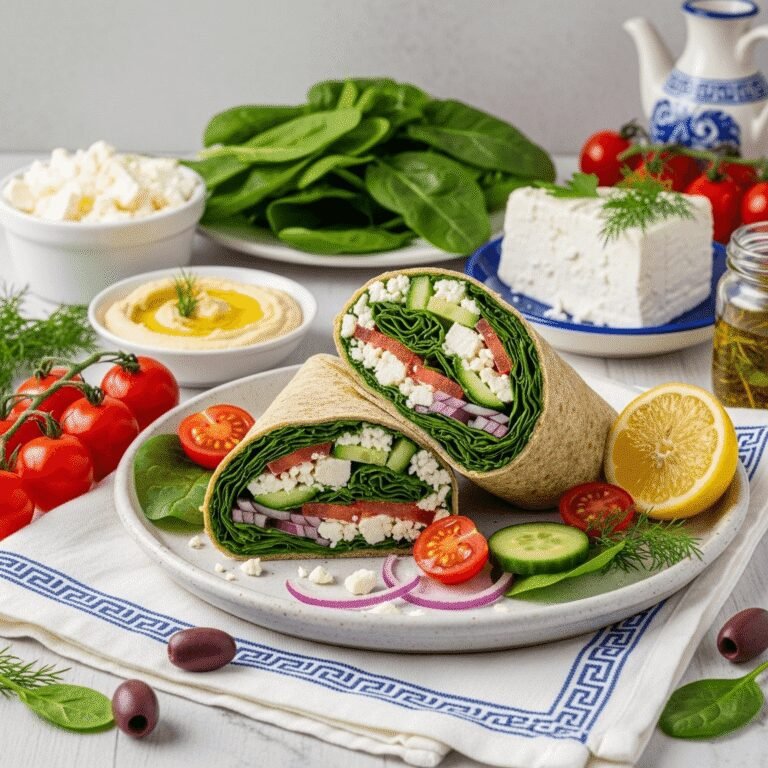
Spinach Feta Wrap Recipe
Easy spinach feta wrap with tender spinach, tangy feta cheese, fresh vegetables, and Mediterranean herbs wrapped in a soft tortilla. A Greek-inspired lunch ready in just 15 minutes!
- Total Time: 15 minutes
- Yield: 2 wraps 1x
Ingredients
For the Wraps:
- 2 large tortillas (10-12 inch, whole wheat, spinach, or gluten-free)
- 4 cups fresh baby spinach (or 3 cups mature spinach, stems removed)
- ⅔ cup feta cheese, crumbled (about 3-4 ounces)
- 1 tablespoon olive oil (if sautéing spinach)
- 1 clove garlic, minced (optional, for sautéed version)
- ¼ cup red onion, thinly sliced
- ½ cup cherry tomatoes, halved and patted dry
- ¼ cucumber, thinly sliced
- 2 tablespoons fresh dill, chopped (or 1 tablespoon parsley)
- ½ teaspoon dried oregano
- Salt and black pepper to taste
- 2-3 tablespoons hummus (optional, for spreading)
- Squeeze of fresh lemon juice
Optional Add-Ins:
- ¼ cup Kalamata olives, pitted and halved
- 2 tablespoons sun-dried tomatoes, chopped
- ¼ cup chickpeas
- 2 tablespoons pine nuts, toasted
Instructions
Prepare the Spinach (Choose Method):
Option 1 – Raw Spinach (Quickest):
- Wash and Dry: Rinse fresh spinach thoroughly under cold water. Dry completely using a salad spinner or by patting with paper towels. Roughly chop if leaves are large.
Option 2 – Sautéed Spinach (More Traditional):
- Sauté: Heat olive oil in a large skillet over medium heat. Add minced garlic (if using) and cook for 30 seconds until fragrant. Add spinach in batches, stirring with tongs until wilted, about 2-3 minutes total. The spinach will reduce significantly in volume.
- Remove Excess Moisture: Transfer cooked spinach to a colander or plate lined with paper towels. Let cool for 2-3 minutes, then squeeze gently to remove excess liquid. This step is crucial for preventing soggy wraps! Roughly chop the cooked spinach.
Prepare Other Vegetables:
- Prep Vegetables: Slice red onion thinly (soak in cold water for 10 minutes if you want to mellow the bite, then drain and pat dry). Halve cherry tomatoes and place on paper towels to absorb excess moisture. Thinly slice cucumber and pat dry. Chop fresh herbs.
- Prepare Feta: If using block feta, crumble it into small pieces with your fingers or a fork. If feta is too salty for your taste, rinse briefly under cold water or soak in milk for 10 minutes, then drain.
Assemble the Wraps:
- Warm Tortillas: Warm tortillas for 10-15 seconds in the microwave (wrapped in a damp paper towel) or for 20-30 seconds per side in a dry skillet over medium heat. This makes them pliable and easier to roll.
- Lay Out Tortilla: Place one warmed tortilla on a clean work surface or plate.
- Add Spread (Optional): If using hummus, spread 1-2 tablespoons in a thin layer over the center of the tortilla, leaving a 2-inch border.
- Layer Spinach: Add half of the spinach (raw or cooked) in a horizontal line across the center of the tortilla, leaving 2-3 inches clear on each side and about 3 inches clear at the bottom.
- Add Feta: Sprinkle half of the crumbled feta cheese over the spinach (about ⅓ cup).
- Add Vegetables: Layer on half of the red onion, cherry tomatoes, and cucumber slices.
- Add Herbs and Seasonings: Sprinkle with fresh dill (or parsley), dried oregano, a pinch of salt (go light—feta is salty!), black pepper, and a squeeze of fresh lemon juice.
- Add Optional Ingredients: If using olives, sun-dried tomatoes, chickpeas, or nuts, add them now.
- Fold and Roll: Fold the bottom edge up and over the filling, pulling tight to enclose. Fold in the left and right sides, then continue rolling away from you, keeping tension so it stays tight. The final roll should seal at the top.
- Slice and Serve: Cut the wrap in half diagonally with a sharp knife. Serve immediately, or wrap tightly in plastic wrap or parchment paper.
- Repeat: Make the second wrap with remaining ingredients.
Notes
- Moisture Control: If using sautéed spinach, squeezing out excess moisture is essential for preventing soggy wraps.
- Raw vs. Cooked: Raw spinach gives a fresh, crunchy texture. Cooked spinach offers more traditional Greek flavors and softer texture.
- Feta Saltiness: Taste your feta before using. If very salty, rinse or soak briefly. Add minimal extra salt.
- Lemon Brightness: A squeeze of fresh lemon juice brightens all the flavors—don’t skip it!
- Storage: Wraps keep wrapped tightly in the fridge for 1-2 days. Raw spinach version stays crunchier longer.
- Make it Heartier: Add grilled chicken, chickpeas, or quinoa for extra protein and substance.
- Prep Time: 10 minutes
- Cook Time: 5 minutes
Nutrition
- Serving Size: 1 wrap
- Calories: 340
- Sugar: 5g
- Sodium: 680mg
- Fat: 16g
- Saturated Fat: 7g
- Unsaturated Fat: 8g
- Trans Fat: 0g
- Carbohydrates: 35g
- Fiber: 5g
- Protein: 14g
- Cholesterol: 35mg
Tips & Variations
Classic Spanakopita-Style: Sauté spinach with garlic and onions, add extra feta, pine nuts, and a beaten egg mixed in with the spinach before wrapping for authentic spanakopita flavors.
Mediterranean Chicken: Add grilled chicken breast strips seasoned with oregano and lemon for a heartier, protein-packed meal.
Vegan Spinach Wrap: Use tofu feta (crumbled firm tofu marinated in lemon juice, olive oil, and salt) and add tahini or hummus for creaminess.
Spicy Greek: Add sliced pepperoncini peppers, a drizzle of hot sauce, or red pepper flakes for a spicy kick.
Sun-Dried Tomato Version: Add chopped sun-dried tomatoes and use sun-dried tomato hummus for intense, sweet-savory flavor.
Breakfast Spinach Wrap: Add scrambled eggs or a fried egg to the spinach and feta for a protein-rich breakfast option.
Lemon Herb: Add extra fresh herbs (dill, mint, parsley), more lemon juice and zest for bright, herbaceous flavor.
Protein-Packed: Add chickpeas or white beans along with the feta for plant-based protein boost.
Creamy Greek: Mix feta with a little Greek yogurt or cream cheese before adding to create a creamier filling.
Lettuce Wrap: For low-carb, use large romaine or butter lettuce leaves instead of tortillas.
Pro Chef Tips
The Spinach Squeeze: Professional cooks know that removing excess moisture from spinach is absolutely critical, especially if sautéing it. After cooking, transfer spinach to a clean kitchen towel or several layers of paper towels, let it cool slightly, then twist and squeeze firmly. You’ll be amazed how much liquid comes out! This single step prevents 90% of soggy wrap disasters.
Crumble Your Own Feta: Restaurant chefs always use block feta and crumble it themselves rather than buying pre-crumbled. Pre-crumbled feta contains anti-caking agents that affect texture and flavor. Block feta is creamier, more flavorful, and worth the 30 seconds of crumbling time. Store leftover feta in its brine to keep it fresh and moist.
The Salt Balance: Feta is naturally quite salty, so professional cooks taste it before adding any additional salt to the wrap. Different brands vary significantly in saltiness. Start with no added salt, taste a bite of the assembled wrap, then adjust if needed. This prevents over-salting, which is difficult to fix once done.
Warm the Tortilla Properly: Chefs know that properly warmed tortillas are game-changers. The goal is pliable and slightly steamy, not hot or crispy. Wrap tortillas in a damp (not soaking) paper towel and microwave for 10-15 seconds, or warm in a dry skillet for 20-30 seconds per side. The slight moisture from the damp towel creates steam that softens the tortilla perfectly.
Garlic Technique: When sautéing spinach with garlic, add the garlic first and cook just until fragrant (30 seconds), then immediately add spinach. This prevents the garlic from burning (which tastes bitter) while ensuring it infuses the oil and flavors the spinach. Burnt garlic ruins the whole dish—timing is everything!
Lemon at the End: Professional cooks always add fresh lemon juice at the very end, right before wrapping, never during cooking. Heat destroys the bright, fresh citrus flavors. A squeeze of fresh lemon right before rolling brings all the Mediterranean flavors to life and adds that essential brightness that makes this wrap sing.
The Tight Roll Technique: Restaurant wrap makers pull the first fold TIGHT over the filling before folding in the sides. This creates compression and a compact wrap that holds together perfectly. The key is that first fold—pull it over the filling, tuck it firmly underneath, THEN fold sides and continue rolling with maintained tension.
Common Mistakes to Avoid
Not Removing Excess Spinach Moisture: The biggest mistake! Whether using raw or cooked spinach, excess water ruins wraps by making them soggy and causing the tortilla to tear. For raw spinach, dry thoroughly after washing. For cooked spinach, squeeze firmly after cooking to remove all excess liquid. This one step is the difference between success and disappointment.
Using Too Much Feta: While feta is delicious, too much overwhelms the other flavors and makes the wrap too salty and heavy. About ⅓ cup per wrap is the sweet spot—enough for flavor in every bite without overpowering. Remember, you want balance, not a feta overload!
Wet Vegetables: Putting freshly washed, dripping wet vegetables (especially tomatoes and cucumbers) directly into wraps guarantees sogginess within an hour. Always pat vegetables completely dry with paper towels. For tomatoes, place them on paper towels for a few minutes to draw out excess moisture, then pat dry again.
Skipping the Lemon: Omitting fresh lemon juice is a huge mistake! The lemon is what brings all the Mediterranean flavors together and brightens everything. Without it, the wrap tastes flat and one-dimensional. That squeeze of fresh lemon is non-negotiable for authentic Greek flavor!
Cold Tortillas: Attempting to roll cold, stiff tortillas straight from the refrigerator results in cracked, torn wraps that fall apart. Always warm tortillas before rolling—they become soft, pliable, and cooperative. This takes just seconds but prevents massive frustration!
Overfilling: Piling too many ingredients makes wraps impossible to roll, causes everything to fall out, and creates a messy eating experience. Be generous but controlled—about 2 cups spinach, ⅓ cup feta, and moderate vegetables per wrap. You want a balanced, eatable wrap, not an overstuffed disaster!
Storage & Meal Prep
Refrigerator Storage: Store assembled wraps wrapped very tightly in plastic wrap or parchment paper in the refrigerator for up to 1-2 days. Wraps made with raw spinach tend to stay crunchier longer than those made with cooked spinach. The feta and vegetables hold up well, though tortillas may soften slightly.
Component Storage (Best for Meal Prep): For optimal freshness, store components separately:
- Cooked spinach: Squeeze dry, store in airtight container, 3-4 days
- Raw spinach: Wash, dry thoroughly, wrap in paper towels, store in container, 5-7 days
- Feta: Keep in its brine in original container or transfer to airtight container with a little brine, 2 weeks
- Vegetables: Store prepped vegetables in separate containers, 2-3 days
- Tortillas: Keep at room temperature or refrigerated
- Assemble: Fresh each morning in under 5 minutes
Lunchbox Packing: Pack wrapped wraps with a small ice pack to keep them cold. The feta stays fresh and safe when kept chilled. Remove from refrigerator about 10 minutes before eating if you prefer not ice-cold.
Freezing Note: While you can technically freeze these wraps, the texture suffers significantly. The spinach becomes watery and limp, tomatoes get mushy, and feta can become crumbly and dry. If you must freeze, use only cooked spinach (not raw), omit fresh tomatoes and cucumber, wrap very tightly, and freeze for up to 1 month. Thaw in refrigerator overnight.
Make-Ahead & Freezer Notes
Make-Ahead Excellence: This wrap is perfect for making components ahead! Sauté a batch of spinach on Sunday, portion it into containers, prep your vegetables, and have everything ready to assemble quickly throughout the week. Each assembly takes just 3-5 minutes when components are prepped.
Cooked Spinach Prep: Sautéed spinach can be made up to 4 days ahead. After cooking and squeezing dry, store in an airtight container in the refrigerator. The flavors actually develop and meld beautifully over time, making day-two and day-three wraps potentially even more delicious than day one!
Feta Storage: Block feta keeps for weeks when stored properly in its brine. You can also crumble it ahead of time and store in an airtight container for up to 5 days, though it may dry out slightly. For best results, crumble fresh each time.
Freezing Components: You can freeze cooked, squeezed-dry spinach for up to 3 months. Portion into single-use amounts, freeze in freezer bags, and thaw in refrigerator overnight before using. This is great for always having spinach ready! Feta doesn’t freeze well—it becomes crumbly and loses creaminess.
Best Strategy: Make a large batch of cooked spinach, portion it, store refrigerated for the week or freeze extras. Prep vegetables 2-3 days ahead. Assemble wraps fresh each day for optimal texture and flavor.
Serving Suggestions
Greek Salad: Serve with a classic Greek salad (tomatoes, cucumbers, olives, feta, red onion) with lemon-oregano vinaigrette.
Hummus and Veggies: Pair with extra hummus and raw vegetable sticks (carrots, bell peppers, cucumbers) for dipping.
Greek Lemon Soup: Serve with avgolemono (Greek lemon chicken soup) for a comforting Mediterranean meal.
Tzatziki Sauce: Offer tzatziki (Greek yogurt-cucumber sauce) on the side for dipping or drizzling.
Dolmas: Add stuffed grape leaves (dolmas) as a side for a full Greek mezze experience.
Roasted Chickpeas: Serve with crispy roasted chickpeas seasoned with za’atar or Greek spices.
Fresh Fruit: Pair with fresh watermelon, grapes, or sliced oranges for a refreshing Mediterranean touch.
Pita Chips: Add baked pita chips or whole wheat crackers with olive tapenade.
Beverage Pairings: Serve with iced mint tea, lemonade, sparkling water with cucumber, or Greek white wine for adults.
Pasta Salad: Greek pasta salad with olives, tomatoes, and feta complements beautifully.
FAQs Section
Q: Can you use frozen spinach for spinach feta wraps?
A: Yes! Frozen spinach works great, especially for the cooked version. Thaw completely, then squeeze out ALL excess moisture—frozen spinach holds a lot of water. You’ll need about 10 ounces frozen spinach (thawed and squeezed) to equal 4 cups fresh. The texture will be slightly different (less crisp) but the flavor is excellent and it’s very convenient.
Q: Is it better to use raw or cooked spinach?
A: Both work beautifully—it’s personal preference! Raw spinach offers fresh, crunchy texture and takes zero cooking time. Cooked spinach provides more traditional Greek spanakopita flavors, softer texture, and you can fit more spinach (it wilts down significantly). Try both and see which you prefer! Many people love the convenience of raw spinach for quick lunches.
Q: How do you keep spinach feta wraps from getting soggy?
A: Three essential steps: 1) If using cooked spinach, squeeze out ALL excess moisture after cooking; 2) Pat all fresh vegetables (tomatoes, cucumbers) completely dry; 3) Don’t use too much wet ingredients like hummus or tzatziki—a thin layer is plenty. Following these steps keeps wraps fresh for 1-2 days refrigerated!
Q: Can you make spinach feta wraps vegan?
A: Absolutely! Replace feta with vegan feta (tofu-based or nut-based), or use crumbled firm tofu seasoned with lemon juice, nutritional yeast, salt, and oregano. Use tahini or hummus for creaminess. The spinach, vegetables, and herbs remain the same. It’s equally delicious!
Q: What can I use instead of feta cheese?
A: For similar tangy flavor, try goat cheese (creamier and milder), ricotta salata (firmer, less tangy), or halloumi (firmer, great grilled). For completely different profiles, mozzarella is mild and melty, or cream cheese is rich and spreadable. Each changes the character but all work well with spinach!
Q: How long do spinach feta wraps last in the fridge?
A: Properly wrapped (tightly in plastic wrap or parchment), spinach feta wraps last 1-2 days refrigerated. Wraps with raw spinach stay crisper longer. After 2 days, the tortilla softens significantly and vegetables may release moisture. For meal prep, assemble fresh daily from prepped components for best quality.
Q: Can you heat up spinach feta wraps?
A: While traditionally served cold or room temperature, you CAN warm them! Wrap in foil and heat in a 350°F oven for 10 minutes, or place in a skillet over medium heat for 2-3 minutes per side (no foil). The feta will soften and become even creamier. Don’t microwave—the spinach and feta don’t heat well and the tortilla gets tough.
Conclusion
And there you have it—everything you need to make the most delicious, authentic-tasting, incredibly satisfying spinach feta wrap! While this recipe might seem simple on the surface, paying attention to the details—from properly preparing the spinach to balancing the feta to adding that essential squeeze of lemon—transforms basic ingredients into something truly special and genuinely Mediterranean.
This easy Mediterranean wrap is proof that you don’t need elaborate recipes or hard-to-find ingredients to create restaurant-quality meals at home. With fresh spinach, tangy feta, and a few Mediterranean staples, you can make a lunch that tastes like it came from a Greek café, costs a fraction of buying out, and takes just 15 minutes from start to finish. It’s the kind of recipe that makes healthy eating exciting rather than boring!
Whether you’re making this healthy spinach wrap recipe for weekly meal prep, quick lunches, light dinners, Mediterranean-themed gatherings, or simply because you’re craving those incredible Greek flavors, this spinach and feta wrap delivers every single time. It’s fresh, flavorful, satisfying, nutritious, and endlessly customizable—everything a great wrap should be!
Now it’s your turn to create your own perfect Greek-inspired wrap! I’d love to hear about your experience—did you use raw or cooked spinach? What vegetables did you include? Did you try any creative variations? Share your thoughts, tips, and beautiful wrap photos in the comments below! Your feedback and creativity inspire other readers and help build our Mediterranean cooking community.
Don’t forget to save this spinach feta wrap recipe to your Pinterest boards—pin it to “Mediterranean Recipes,” “Healthy Lunch Ideas,” “Easy Wrap Recipes,” or “Vegetarian Meals” so you can find it whenever you need delicious lunch inspiration. If you know someone who loves Greek food, is looking for healthier meals, or needs easy vegetarian recipes, share this article with them. And when you make your fresh, flavorful, absolutely delicious wraps, snap a photo and tag me on social media—I absolutely love seeing your Mediterranean creations!
Now go create your own taste of Greece in a wrap—Mediterranean flavor never tasted so good!