Mango Milkshake Recipe: Creamy, Refreshing & Ready in 5 Minutes!
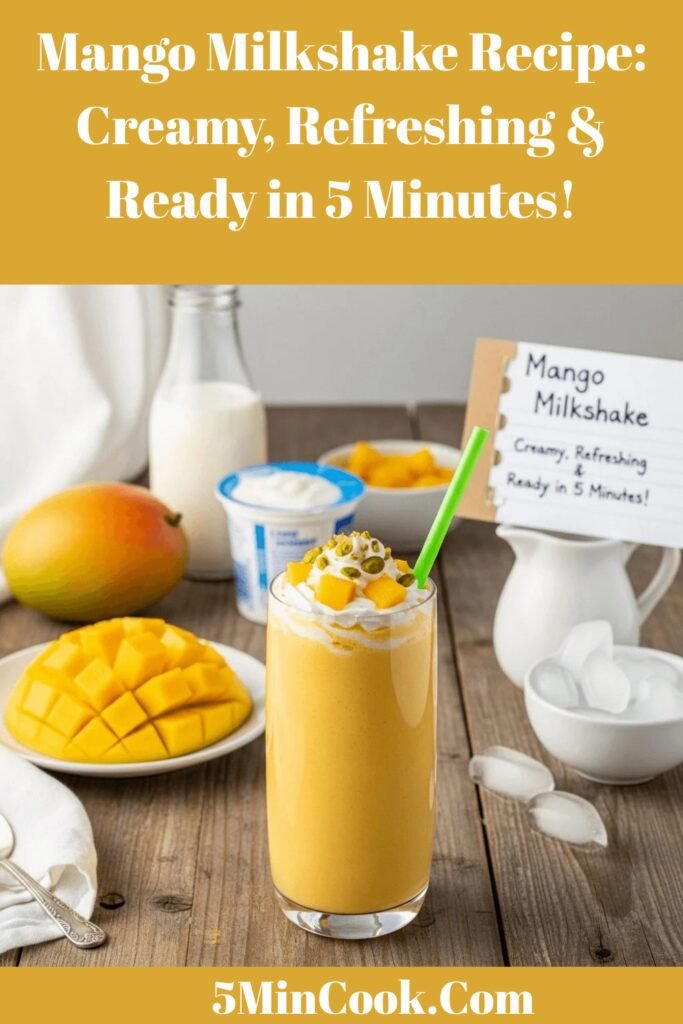
There’s nothing quite like a mango milkshake to transport you to a tropical paradise with just one sip! This creamy, vibrant, and naturally sweet beverage combines the luscious flavor of ripe mangoes with cold milk and a touch of vanilla, creating a drink that’s both refreshing and indulgent. Whether you’re using fresh mangoes or frozen chunks, this easy mango milkshake comes together in just 5 minutes and tastes like sunshine in a glass.
This homemade mango shake is the perfect treat for so many occasions—hot summer afternoons when you need instant cooling relief, weekend breakfast treats alongside pancakes or waffles, after-school snacks that kids will actually get excited about, or as a healthy dessert alternative that satisfies sweet cravings without guilt. The natural sweetness of ripe mangoes means you often don’t need to add any sugar at all, making this one of the healthiest indulgent drinks you can make at home.
What makes this fresh mango milkshake recipe so special is its incredible versatility. Serve it as a nutritious breakfast smoothie packed with vitamins and fiber, transform it into a tropical dessert by adding ice cream, make it dairy-free with coconut milk, or even spike it with rum for an adults-only poolside refreshment. The vibrant golden-orange color makes it absolutely Instagram-worthy, while the taste rivals anything you’d find at a fancy juice bar—but at a fraction of the cost!
History / Background
The mango milkshake has fascinating roots that blend ancient fruit reverence with modern beverage culture. Mangoes themselves have been cultivated for over 4,000 years, originating in South Asia, particularly in the regions of India, Myanmar, and Bangladesh. Known as the “king of fruits” across Asia, mangoes hold deep cultural significance and appear in Hindu mythology, Buddhist texts, and countless traditional celebrations.
In India, where mango cultivation began, the fruit has been enjoyed in countless forms for millennia—fresh, pickled, dried, and blended into drinks. Traditional Indian mango beverages include “aam panna” (a raw mango drink) and “mango lassi” (a yogurt-based drink), both of which predate the modern milkshake by centuries. These drinks were valued not just for their delicious taste but also for their cooling properties in India’s hot climate and their digestive benefits.
The milkshake as we know it emerged in the late 1800s and early 1900s in America, originally referring to whiskey drinks before evolving into ice cream-based treats with the invention of the electric blender. The modern blender, invented by Stephen Poplawski in 1922 and popularized by Fred Waring in the 1930s, revolutionized home beverage-making and made milkshakes accessible to everyone.
The mango milkshake represents a beautiful fusion of Eastern fruit tradition and Western milkshake culture. As mangoes became more widely available in American and European markets during the mid-20th century (thanks to improved global shipping), creative home cooks and restaurateurs began incorporating this exotic fruit into familiar Western formats. Indian restaurants in the United States and UK particularly popularized the mango milkshake, introducing it alongside mango lassi on their menus.
Today, mango milkshakes are beloved worldwide, with regional variations found across Asia, Latin America (where mangoes are equally revered), the Middle East, and Western countries. The drink has become a symbol of tropical indulgence and healthy refreshment, enjoyed by millions who appreciate its natural sweetness, vibrant color, and incredible nutritional benefits. With over 1,000 mango varieties cultivated globally and mangoes now being one of the most consumed fruits worldwide, the humble mango milkshake has become a universal language of deliciousness.
Why You’ll Love This Recipe
This easy mango milkshake recipe is about to become your go-to beverage for countless reasons. Beyond the irresistible tropical flavor, this recipe offers practical benefits that make it perfect for busy households, health-conscious eaters, and anyone who loves a delicious drink without complicated preparation.
The flavor profile is absolutely divine—imagine the natural sweetness of perfectly ripe mangoes enhanced by creamy milk, with subtle vanilla notes and a silky-smooth texture that coats your palate. Unlike artificially flavored drinks, this shake tastes authentically fruity, fresh, and clean. The mango flavor shines through brilliantly without being overwhelming, and the natural fruit sugars provide sweetness without that cloying, artificial aftertaste.
Here’s why this recipe deserves a permanent place in your kitchen repertoire:
- Ridiculously quick preparation – Literally ready in 5 minutes from start to sip, making it perfect for rushed mornings or spontaneous cravings
- Minimal ingredients required – Just 4-5 basic ingredients (mangoes, milk, ice cream or ice, vanilla, and optional sweetener) that you might already have on hand
- Naturally nutritious – Packed with Vitamin C, Vitamin A, fiber, and antioxidants from the mangoes, plus calcium and protein from the milk
- No refined sugar needed – Ripe mangoes are naturally sweet enough that additional sugar is usually unnecessary
- Kid-approved and parent-loved – Children adore the sweet, fruity flavor while parents appreciate the hidden nutrition
- Budget-friendly treat – Costs pennies per serving compared to $6-8 at juice bars or cafes
- Incredibly versatile – Works as breakfast, snack, dessert, or post-workout refreshment
- Dietary-friendly options – Easily adaptable for vegan, dairy-free, low-sugar, or keto diets with simple substitutions
- Year-round accessibility – Use fresh mangoes when in season or frozen mango chunks anytime for consistent results
- No special equipment required – Any standard blender will work perfectly fine
- Gorgeous presentation – That vibrant golden-orange color makes every glass photo-worthy and appetizing
- Customizable consistency – Make it thick like a smoothie or thin like flavored milk based on your preference
This recipe strikes that magical balance between being healthy enough for everyday consumption yet indulgent enough to feel like a special treat. Whether you’re making it for yourself as a quick breakfast, serving it to guests at a summer gathering, or using it to get your kids to consume more fruit, this mango milkshake delivers on every level.
Ingredient Notes
Creating the perfect mango shake recipe starts with understanding your ingredients and how each component contributes to the final flavor and texture. Let’s explore each element in detail so you can make informed choices and substitutions.
Fresh or Frozen Mango – The star of the show! The quality and ripeness of your mango directly impacts the final flavor. For fresh mangoes, choose fruit that yields slightly to gentle pressure, has a sweet aroma near the stem, and shows yellow-orange coloring (though some varieties remain green when ripe). Popular varieties include Alphonso (known as the “king of mangoes” with incredible sweetness), Ataulfo/Honey mangoes (creamy and non-fibrous), Kent (sweet and juicy), and Tommy Atkins (most common in US supermarkets). Frozen mango chunks work beautifully and are available year-round, often picked at peak ripeness and flash-frozen to preserve nutrients and flavor. They also create a thicker, colder shake without needing as much ice. You’ll need about 1½ cups of mango chunks (roughly 1-2 fresh mangoes or 8-10 oz frozen).
Milk – Provides creaminess, body, and smooth texture to your shake. Whole milk creates the richest, most luxurious result with its higher fat content. 2% milk offers a lighter option that still maintains good creaminess. For the absolute best flavor and texture, avoid skim milk, which produces a thin, watery shake. Each type works, but full-fat dairy delivers superior results. You’ll need about 1 cup of milk, adjustable based on desired thickness.
Vanilla Ice Cream or Ice – This is where you make an important decision about your shake style. Adding 2-3 scoops of vanilla ice cream creates a dessert-style mango milkshake that’s thick, indulgent, and ice cream parlor-worthy. Using ice instead (about 1 cup) creates a lighter, smoothie-style drink that’s more refreshing and lower in calories. Ice cream adds richness and makes the shake sweet and creamy, while ice creates a fresher, more fruit-forward flavor. Choose based on whether you want a health-focused smoothie or an indulgent treat.
Sweetener (Optional) – Perfectly ripe mangoes are naturally sweet enough that added sugar is often unnecessary. However, if your mangoes aren’t quite sweet enough, you have several options: white granulated sugar (1-2 tablespoons), honey (adds floral notes and blends easily), maple syrup (adds depth and works well with the tropical flavor), agave nectar (neutral sweetness), or condensed milk (popular in Asian-style mango shakes, adds both sweetness and extra creaminess). Always taste your mangoes first and add sweetener gradually—you can always add more but can’t remove it.
Vanilla Extract – Just ½ teaspoon of pure vanilla extract elevates the entire flavor profile, adding aromatic depth and enhancing the natural mango sweetness. Always choose pure vanilla extract over imitation for the best results.
Optional Additions: Cardamom powder (⅛ teaspoon adds an authentic Indian touch), a pinch of saffron strands (for luxury and color), lime or lemon juice (1 teaspoon brightens the flavor), Greek yogurt (¼ cup adds protein and tanginess), or a handful of ice cubes for extra thickness.
Dairy-Free Substitutions: Replace regular milk with coconut milk (adds tropical flavor), almond milk (light and nutty), oat milk (creamy and neutral), or cashew milk (rich and smooth). Use dairy-free ice cream or simply omit the ice cream and add more ice for a vegan version.
Equipment Needed
Making a perfect mango milkshake at home requires minimal equipment—most of which you probably already have in your kitchen. Here’s everything you’ll need for smooth, successful shake-making:
- High-speed blender – The most essential tool! A good blender (Vitamix, Ninja, Blendtec, KitchenAid, or even a basic countertop model) ensures your shake blends completely smooth without chunks or fibrous bits. Higher-powered blenders handle frozen mango more easily, but any blender with at least 300 watts will work.
- Sharp knife – For peeling and cutting fresh mangoes if you’re not using frozen chunks
- Cutting board – Preferably a dedicated fruit board to avoid flavor transfer
- Measuring cups – For accurately measuring milk, mango, and other ingredients
- Measuring spoons – For vanilla extract and any sweeteners
- Ice cream scoop (if using ice cream) – Makes portioning vanilla ice cream easier and neater
- Tall glasses – Clear glasses beautifully showcase the gorgeous mango color; 12-16 oz capacity is ideal
- Wide straws or spoons – Reusable extra-wide smoothie straws work perfectly, or provide long spoons for thicker shakes
- Rubber spatula – For scraping every last bit of precious mango goodness from the blender into your glass
- Optional: Fine-mesh strainer – If you prefer an ultra-smooth, pulp-free consistency (though most people love the natural texture)
That’s it! The beauty of this recipe is that it requires absolutely no cooking equipment—no pots, pans, or anything that needs washing beyond your blender and a glass.
Print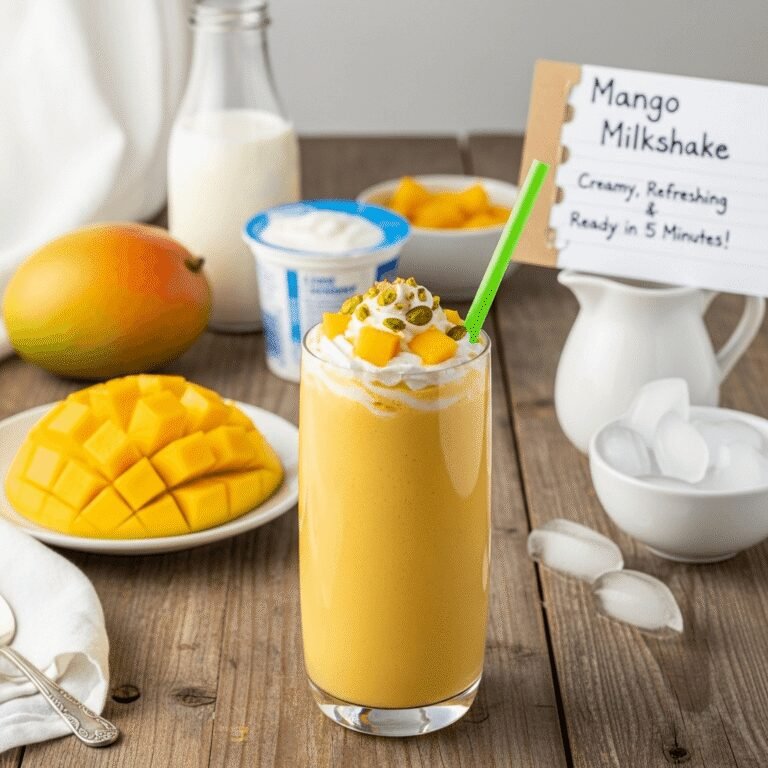
Mango Milkshake Recipe
A creamy, naturally sweet mango milkshake made with fresh or frozen mangoes, milk, and vanilla. This refreshing tropical drink is ready in just 5 minutes and tastes better than anything from a restaurant!
- Total Time: 5 minutes
- Yield: 2 servings 1x
Ingredients
For Classic Mango Milkshake:
- 1½ cups fresh mango chunks (about 1-2 ripe mangoes, peeled and cubed) OR 1½ cups frozen mango chunks
- 1 cup whole milk (or 2% milk)
- 3 scoops (about ¾ cup) vanilla ice cream OR 1 cup ice cubes
- ½ teaspoon pure vanilla extract
- 1-2 tablespoons honey or sugar (optional, only if mangoes aren’t sweet enough)
- Pinch of cardamom powder (optional, for authentic Indian flavor)
For Garnish (Optional):
- Whipped cream
- Fresh mango slices
- Mint leaves
- Chopped pistachios or almonds
- A sprinkle of cardamom
Instructions
- Prepare the mangoes: If using fresh mangoes, wash them thoroughly. Cut along both sides of the flat pit, score the flesh in a crosshatch pattern, and scoop out the cubes with a spoon. You’ll need about 1½ cups of mango chunks. If using frozen mango, no prep is needed—use them straight from the freezer.
- Check sweetness: Taste a piece of your mango to assess sweetness. If it’s perfectly ripe and sweet, you won’t need additional sweetener. If it’s slightly tart or not fully ripe, plan to add 1-2 tablespoons of honey or sugar.
- Add ingredients to blender: Place the mango chunks in your blender first (they’re heaviest and should be closest to the blades for easier blending). Add the milk, vanilla ice cream (or ice cubes), vanilla extract, and any optional sweetener or cardamom if using.
- Blend on low, then high: Start blending on low speed for 10-15 seconds to break up the mango and ice cream initially. This prevents large chunks from flying up the sides of the blender. Then increase to high speed and blend for 30-45 seconds until completely smooth and creamy. The mixture should be uniformly colored with no visible chunks or streaks.
- Check consistency: Stop the blender and check the thickness. The shake should be thick enough to coat a spoon but still pourable. If too thick, add 2-3 tablespoons more milk and pulse briefly. If too thin, add another small scoop of ice cream or a handful of ice and blend again.
- Taste and adjust: Sample your shake and adjust sweetness or flavor if needed. Remember that flavors will be slightly muted when cold, so it should taste just slightly sweeter than you want the final result.
- Serve immediately: Pour the mango milkshake into chilled glasses. The shake should pour smoothly and hold its shape slightly when poured.
- Garnish (optional): Top with a dollop of whipped cream, a fresh mango slice on the rim, a sprinkle of chopped pistachios, or a mint leaf for a beautiful presentation.
- Enjoy fresh: Serve immediately with wide straws or long spoons. Mango milkshakes are best enjoyed fresh and will begin to separate if left sitting for too long.
Notes
- Mango ripeness: The sweetness of your shake depends entirely on mango ripeness. Always choose fruit that’s fragrant, yields slightly to pressure, and shows good color.
- Frozen vs. fresh: Frozen mangoes create a thicker, colder shake and are available year-round. Fresh mangoes have slightly brighter flavor when in season.
- Thickness control: Start with less milk (¾ cup) for a thicker shake; add more gradually as needed. The ice cream-to-milk ratio determines final consistency.
- Dairy-free version: Substitute coconut milk, oat milk, or almond milk for regular milk, and use dairy-free ice cream or just add more ice.
- Sugar-free option: Skip all sweeteners and rely solely on the natural fruit sugars if your mangoes are perfectly ripe.
- Make it tropical: Add ½ cup pineapple chunks or ¼ cup coconut cream for enhanced tropical flavor.
- Protein boost: Add a scoop of vanilla protein powder or 2 tablespoons Greek yogurt for post-workout nutrition.
- Serving temperature: For best results, serve in glasses that have been chilled in the freezer for 15 minutes.
- Prep Time: 5 minutes
- Cook Time: 0 minutes
Nutrition
- Serving Size: 1 milkshake (half of recipe, made with whole milk and ice cream)
- Calories: 285
- Sugar: 42g
- Sodium: 95mg
- Fat: 8g
- Saturated Fat: 5g
- Unsaturated Fat: 2g
- Trans Fat: 0g
- Carbohydrates: 48g
- Fiber: 3g
- Protein: 7g
- Cholesterol: 30mg
Tips & Variations
Flavor Variations:
Transform your basic mango smoothie milkshake into exciting new creations with these delicious twists:
- Mango Lassi Milkshake: Replace half the milk with plain Greek yogurt and add a pinch of cardamom for an Indian-inspired drink that’s tangy and probiotic-rich
- Tropical Paradise Shake: Add ½ cup pineapple chunks and ¼ cup coconut cream for a piña colada meets mango vibe
- Mango Strawberry Milkshake: Blend in ½ cup fresh or frozen strawberries for a beautiful pink-orange swirl and berry flavor
- Mango Banana Smoothie: Add one frozen banana for extra creaminess, natural sweetness, and potassium
- Mango Coconut Shake: Use coconut milk instead of regular milk and add 2 tablespoons shredded coconut for intense tropical flavor
- Spiced Mango Shake: Add ⅛ teaspoon cardamom, a tiny pinch of cinnamon, and a few strands of saffron for a luxurious Indian-style drink
- Mango Peach Milkshake: Combine equal parts mango and peaches for a stone fruit medley
- Green Mango Smoothie: Add a handful of fresh spinach or kale for hidden vegetables (the mango flavor completely masks it!)
- Mango Turmeric Shake: Add ¼ teaspoon turmeric and a pinch of black pepper for anti-inflammatory benefits
Consistency Variations:
- Thick Smoothie Bowl Style: Use frozen mango, reduce milk to ½ cup, and blend until spoonable. Serve in a bowl with granola, coconut flakes, and fresh fruit on top
- Thin & Drinkable: Increase milk to 1½ cups for a lighter, more beverage-like consistency perfect for breakfast on-the-go
- Frappé Style: Add extra ice and blend until slushy for a Starbucks-inspired frozen drink
- Creamy Pudding Style: Use frozen mango, minimal milk (¼ cup), and blend until thick enough to eat with a spoon
Dietary Modifications:
- Vegan/Dairy-Free: Use plant-based milk (coconut, oat, or almond) and dairy-free ice cream, or skip ice cream and add avocado for creaminess
- Keto-Friendly: Use unsweetened almond milk, add avocado for creaminess, and use keto-friendly sweetener (since mangoes are higher in carbs, this is a modified version)
- Protein-Packed: Add vanilla protein powder, Greek yogurt, or silken tofu for a post-workout recovery drink
- Low-Sugar: Use only half the mango and fill with ice, avoiding additional sweeteners
- Probiotic-Rich: Replace some milk with kefir or add a spoonful of Greek yogurt for gut health benefits
Special Occasion Versions:
- Adults-Only: Add 2 oz white rum, vodka, or coconut rum for a tropical cocktail
- Dessert Deluxe: Top with whipped cream, caramel sauce, crushed graham crackers, and a cherry
- Breakfast Power Shake: Add oats, chia seeds, flax seeds, and a scoop of protein powder
Pro Chef Tips
Mango Selection Mastery:
Professional chefs know that mango selection makes or breaks this drink. The best varieties for milkshakes are Alphonso (if you can find them—they’re the gold standard), Ataulfo/Honey mangoes (small, golden, and incredibly smooth), and Kent mangoes (large, sweet, and widely available). Avoid Tommy Atkins if possible—they’re the most common variety in US supermarkets with red-green skin, but they tend to be more fibrous and less sweet than other varieties. To test ripeness, gently squeeze the mango near the stem end—it should yield slightly like a ripe avocado. The best indicator is smell: a ripe mango has an intensely sweet, fruity aroma at the stem end. Color can be misleading since some varieties stay green even when perfectly ripe.
Temperature Strategy:
Here’s a secret from smoothie shop professionals: temperature layering creates the perfect consistency. If using fresh (not frozen) mango, chill your mango chunks in the freezer for 30 minutes before blending—this keeps your shake cold without diluting it with ice. Simultaneously, freeze your serving glasses for 20 minutes. This double-cold approach ensures your shake stays at optimal temperature longer. If using frozen mango straight from the freezer, let it sit at room temperature for 5 minutes to slightly soften—this prevents your blender from struggling and creates a smoother blend.
Blending Technique:
Professional smoothie makers follow a specific blending sequence for perfect texture. Always layer ingredients in this order: liquids first (milk), then soft ingredients (ice cream or yogurt), then frozen items (mango and ice) on top. This ensures the liquid reaches the blades first, creating a vortex that pulls everything down efficiently. Start blending on the lowest speed for 10 seconds, then gradually increase to high. Blend for exactly 30-45 seconds—any longer over-aerates the shake, creating foam and making it melt faster. If you have a tamper (the stick that comes with high-powered blenders), use it to push ingredients toward the blades without stopping the machine.
Sweetness Balancing:
Professional recipe developers know that sweetness should always be assessed progressively. Mango sweetness varies dramatically based on variety, ripeness, and season. Always taste your mango first—if you can eat it happily as-is, you won’t need added sugar. The cold temperature of the shake mutes sweetness perception by about 20%, so your shake should taste slightly sweeter than you want the final result to be. Add sweetener in small increments (½ tablespoon at a time), blending and tasting between additions. Remember that ice cream already adds significant sweetness, so if using ice cream, you’ll rarely need additional sugar.
Texture Perfection:
The ideal homemade mango shake should have a silky-smooth, velvety texture without any fibrous bits or graininess. To achieve this, professional chefs recommend high-powered blenders (at least 1000 watts) that completely pulverize the mango fibers. If your mango is particularly fibrous or your blender is less powerful, strain the finished shake through a fine-mesh strainer for restaurant-quality smoothness. The trade-off is you’ll lose some fiber and nutrients, but you’ll gain a luxurious, professional texture. Alternatively, choosing naturally smooth varieties like Ataulfo mangoes eliminates this issue entirely.
Flavor Deepening:
Professional pastry chefs use a technique called “flavor layering” to create depth. Add one or more of these elements to elevate your shake from good to extraordinary: a tiny pinch of sea salt (enhances sweetness and adds complexity), ⅛ teaspoon cardamom (traditional in Indian mango drinks and adds warmth), three strands of saffron soaked in warm milk for 5 minutes (luxurious and aromatic), or 1 teaspoon lime juice (brightens the mango flavor and adds balance). These subtle additions create a more sophisticated, multi-dimensional flavor profile that tastes restaurant-quality.
Common Mistakes to Avoid
Using Unripe or Flavorless Mangoes:
The single biggest mistake home cooks make is using mangoes that aren’t ripe enough or choosing flavorless varieties. An unripe mango creates a disappointing, bland, slightly tart shake that requires excessive sugar to fix—and even then, it never tastes right. Similarly, out-of-season mangoes shipped from far away often lack flavor intensity. Solution: Always check ripeness before buying (gentle squeeze test, sweet aroma, slight give near the stem). If your fresh mangoes aren’t quite ripe, leave them at room temperature for 2-3 days in a paper bag to speed ripening. For guaranteed good flavor year-round, high-quality frozen mango chunks are often a better choice than mediocre fresh mangoes.
Adding Too Much Liquid:
Enthusiastic shake-makers often pour in too much milk, creating a thin, watery drink that tastes more like flavored milk than a proper milkshake. The consistency should be thick, creamy, and substantial—able to coat a spoon but still drinkable through a wide straw. Solution: Always start with less liquid than you think you need (start with ¾ cup milk), then add more gradually if necessary. You can always thin a shake but you cannot thicken it without adding more ice cream or mango. Remember that frozen mango releases some water as it blends, so account for this natural liquid addition.
Over-Blending:
Anxious to achieve perfect smoothness, cooks often blend their shake for 2+ minutes, thinking longer blending equals better results. Actually, over-blending has three negative effects: it incorporates too much air, creating foam instead of creaminess; it warms up the shake from friction, making it melt faster; and it can actually break down the mango’s natural pectin, making the texture slightly slimy rather than smooth. Solution: Blend for only 30-45 seconds maximum. If you still see chunks, stop the blender, scrape down the sides with a spatula, then pulse 3-4 more times rather than continuous blending.
Wrong Ice Cream Choice:
Some cooks use chocolate, strawberry, or other flavored ice creams, which compete with and muddy the pure mango flavor. Others use low-fat or “light” ice cream, which produces a thin, icy texture instead of creamy richness. Solution: Always use full-fat vanilla ice cream or premium vanilla bean ice cream. The vanilla enhances rather than competes with mango flavor, and the high butterfat content creates that luxurious, thick consistency. If you want a lighter version, skip the ice cream entirely and use ice instead—don’t compromise with low-fat ice cream, which gives you the worst of both worlds.
Not Chilling Glasses:
Serving your perfect shake in a room-temperature glass causes immediate melting around the edges, diluting the flavor and ruining the texture within minutes. The temperature differential accelerates separation and makes the drink watery. Solution: Always chill your serving glasses in the freezer for at least 15-20 minutes before making your shake. This simple step—used by every professional smoothie bar—keeps your shake at optimal temperature and consistency significantly longer. For extra fancy presentation, frost the rim by dipping it in water then sugar before freezing.
Skipping the Taste Test:
Many cooks blend everything together and serve without tasting first, only to discover the shake is too bland, too sweet, or needs more flavor. Solution: Always taste your shake before serving and adjust as needed. Add sweetener if too tart, a splash more milk if too thick, a few more mango chunks if not fruity enough, or a tiny pinch of salt if flavors taste flat. This 10-second step transforms a mediocre shake into a perfect one.
Storage & Meal Prep
Immediate Consumption Recommended:
Like most blended beverages, mango milkshakes are absolutely best consumed immediately after preparation when the texture is perfectly creamy, the temperature is ideal, and the flavors are at their peak. Fresh fruit oxidizes quickly once blended, and dairy-based drinks can separate when stored. However, life happens, and sometimes you need storage solutions!
Short-Term Storage (Same Day):
If you must store your prepared shake for a few hours, pour it into an airtight container or mason jar, filling it to the very top to minimize air exposure (oxygen causes oxidation and browning). Press plastic wrap directly onto the surface before sealing with a lid to create a barrier. Store in the coldest part of your refrigerator (back of the bottom shelf). The shake will separate and thicken considerably—before drinking, let it sit at room temperature for 5 minutes, then shake vigorously or re-blend briefly (10 seconds) to restore consistency. Texture won’t be quite as perfect as fresh, but it’s acceptable for 4-6 hours maximum.
Mango Prep-Ahead (Best Strategy):
The smartest meal prep approach is preparing just the mangoes ahead of time, not the complete shake. Peel and cube fresh mangoes, then store them in airtight containers or freezer bags. Refrigerated cubed mango lasts 3-4 days; frozen mango chunks last 3-6 months and actually work better for shakes since they’re already cold. This gives you “instant” shake ingredients ready to blend anytime—just add milk and ice cream for a fresh shake in literally 2 minutes.
Milk Portion Control:
Another meal prep hack is portioning your milk into 1-cup containers or even freezing milk in ice cube trays. Frozen milk cubes can be added directly to the blender, eliminating the need for ice and preventing dilution while keeping everything cold.
Leftover Shake Uses:
If you have leftover shake that’s too separated to drink, don’t waste it! Pour it into popsicle molds for homemade mango ice pops (kids love these!), freeze in ice cube trays to add to future smoothies, or mix it into overnight oats or chia pudding for mango-flavored breakfast dishes.
Equipment Prep:
Keep your blender jar in the freezer when not in use—a pre-chilled blender container helps keep everything cold during blending and produces better texture. Just remember to let it sit for 2-3 minutes before adding ingredients so the cold glass doesn’t crack from temperature shock.
Make-Ahead & Freezer Notes
Freezer-Friendly Components:
While you cannot make and freeze complete mango milkshakes successfully (the texture becomes icy and separated), you can absolutely prep freezer-friendly components that make shake assembly lightning-fast when cravings strike.
Pre-Portioned Mango Packs (Up to 6 Months):
The best make-ahead strategy is creating single-serving mango portions. Peel and cube 1½ cups fresh mango (enough for one shake), place in a freezer-safe bag, remove as much air as possible, label with the date, and freeze flat. Stack these flat bags in your freezer like files in a cabinet—they take minimal space and thaw quickly. When you want a shake, grab one bag, dump the frozen mango directly into your blender with milk and ice cream, and blend. This method gives you the convenience of store-bought frozen mango but at fresh mango prices when they’re in season.
Smoothie Prep Packs:
Take the portion idea further by creating complete “smoothie packs.” In each freezer bag, combine 1½ cups mango chunks, ½ banana (if using), and any mix-ins like spinach or protein powder. Label each bag with the liquid needed (e.g., “Add 1 cup milk”). These grab-and-go packs are perfect for busy mornings—just dump, blend, and drink.
Frozen Mango Cubes for Thickness:
Freeze extra mango puree in ice cube trays, then transfer the frozen cubes to freezer bags. Add 2-3 of these pure mango cubes to your shake for extra mango flavor and thickness without diluting with regular ice. These mango ice cubes are also beautiful in water or iced tea!
Can You Freeze Completed Shakes?
Technically yes, but with significant quality loss. If you must freeze a completed shake, pour it into freezer-safe containers with 1 inch of headspace (liquid expands when frozen). It will keep for up to 1 month. To serve, thaw in the refrigerator overnight, then re-blend with a splash of fresh milk to restore consistency. The texture will be grainier and less creamy than fresh, and some separation is inevitable. Honestly, freezing completed shakes isn’t worth it—stick to freezing components instead.
Best Thawing Method:
If using frozen mango that you’ve pre-portioned, you have options: use it straight from frozen for the thickest, coldest shake (requires a powerful blender); partially thaw at room temperature for 10 minutes for easier blending; or thaw completely in the refrigerator overnight for a smoother blend with less powerful blenders. Never microwave frozen mango to thaw it—this creates mushy, cooked fruit that ruins the fresh flavor.
Quick-Thaw Method:
Need a shake NOW but only have frozen mango? Place your sealed bag of frozen mango in a bowl of room temperature water for 5-7 minutes. This quick-thaws the exterior while keeping the interior cold—perfect for blending!
Breakfast Pairings:
- Warm buttery croissants or pain au chocolat – The flaky, rich pastry contrasts beautifully with the cold, fruity shake
- Toast with almond butter and banana slices – Creates a balanced breakfast with healthy fats and complex carbs
- Coconut chia pudding – Double down on tropical flavors for a vacation-worthy morning
- Fresh fruit salad – Complement the mango with papaya, pineapple, kiwi, and berries for a vitamin-packed breakfast
- Granola and yogurt parfait – The shake serves as your beverage while the parfait adds protein and crunch
- Scrambled eggs and whole wheat toast – For those who prefer savory breakfast with a sweet drink on the side
- Oatmeal with nuts and honey – The warm-cold temperature contrast is comforting and satisfying
Brunch Service:
- Serve in champagne flutes alongside your brunch spread for an elegant, alcohol-free option
- Pair with Belgian waffles, French toast, or pancakes topped with fresh berries
- Accompany eggs Benedict, quiche, or breakfast burritos as a refreshing beverage
- Set up a DIY milkshake bar alongside your brunch buffet with various toppings and mix-ins
Snack Time Companions:
- Homemade cookies – Chocolate chip, oatmeal raisin, or coconut macaroons pair wonderfully
- Banana bread or zucchini bread – Moist quick breads complement the creamy shake
- Trail mix or mixed nuts – The savory, crunchy contrast enhances the sweet, smooth shake
- Cheese and crackers – Surprisingly delightful pairing, especially with mild cheeses like brie or cream cheese
- Popcorn – Sweet-salty combinations always work; try caramel or kettle corn
Dessert Service:
- Vanilla panna cotta or crème brûlée – Elegant plated dessert with the shake as a beverage
- Tres leches cake – Double down on the creamy, dairy-forward indulgence
- Coconut cake or pineapple upside-down cake – Tropical flavor harmony
- Shortbread cookies or butter cookies – Simple, buttery cookies let the mango flavor shine
- Fresh mango sticky rice – If you want to go full tropical Thai-inspired dessert experience
Indian-Inspired Meal Pairings:
- Serve as a cooling accompaniment to spicy Indian curries, biryanis, or tandoori dishes
- Pair with samosas, pakoras, or other Indian appetizers
- Enjoy alongside dosas, uttapam, or idli for a South Indian breakfast
- Complement a thali (mixed platter) as the traditional sweet beverage component
Pool Party & Summer Gatherings:
- Set up a tropical drink station with mango milkshakes, piña coladas, and fruit punches
- Serve in mason jars with colorful paper straws for a casual, Instagram-worthy presentation
- Pair with grilled items—burgers, hot dogs, or BBQ for that classic summer cookout vibe
- Accompany with chips and salsa, guacamole, or a fresh summer salad
Kids’ Party Ideas:
- Serve in small cups with fun, colorful straws for birthday parties
- Pair with pizza, chicken nuggets, or other kid-friendly favorites
- Create a “tropical paradise” theme with mango shakes, coconut decorations, and fruit skewers
- Set up a toppings bar where kids can customize their shakes with whipped cream, sprinkles, and fruit
Adult Evening Service:
- Spike the shake with rum or vodka and serve as a dessert cocktail after dinner
- Pair with cheese and fruit plates for sophisticated entertaining
- Serve alongside dark chocolate truffles for a luxurious flavor combination
- Complement grilled seafood or Caribbean-inspired dinners
Post-Workout Refuel:
- Pair with a protein bar or hard-boiled eggs for complete post-exercise nutrition
- Serve alongside a handful of almonds or cashews for healthy fats
- Combine with whole grain crackers and hummus for balanced recovery
FAQs Section
Q: Can I make a mango milkshake without ice cream?
A: Absolutely! You have several excellent options for creating a delicious mango shake without ice cream. The simplest method is to replace the ice cream with 1 cup of ice cubes, which creates a lighter, smoothie-style drink that’s refreshing and lower in calories. For added creaminess without ice cream, try adding ¼ cup Greek yogurt, ½ frozen banana, or 2 tablespoons of coconut cream. Some people also add a small piece of avocado (about ¼ of one) for incredible creaminess without affecting the flavor. Another option is freezing your milk in ice cube trays and using frozen milk cubes instead of ice—this keeps everything cold without dilution. The shake will be less dessert-like and more health-focused, but still absolutely delicious with prominent mango flavor.
Q: What’s the best type of mango to use for milkshakes?
A: The best mangoes for milkshakes are varieties that are naturally sweet, smooth-textured, and non-fibrous. Alphonso mangoes (also called Hapus) are considered the gold standard—they’re incredibly sweet, aromatic, and have a buttery smooth texture with minimal fibers. However, they’re seasonal, expensive, and can be hard to find outside specialty Indian grocery stores. Ataulfo mangoes (also called Honey or Champagne mangoes) are your next best choice—they’re small, golden yellow, widely available in US supermarkets, extremely sweet, and have that same smooth, non-fibrous texture. Kent mangoes are also excellent—large, sweet, juicy, and readily available. If possible, avoid Tommy Atkins mangoes (the most common variety with red-green skin) as they tend to be more fibrous and less sweet, though they’ll work in a pinch. For year-round consistency and convenience, high-quality frozen mango chunks are often superior to mediocre fresh mangoes, as they’re picked at peak ripeness and flash-frozen.
Q: How can I make my mango milkshake thicker?
A: There are several professional techniques for achieving an extra-thick creamy mango milkshake. First, reduce the milk quantity—start with just ½ cup instead of 1 cup. Second, use frozen mango instead of fresh, as frozen fruit creates natural thickness without dilution. Third, add more ice cream—use 4 scoops instead of 3 for maximum richness. Fourth, add ice cubes (4-5 cubes) which thicken the shake as they blend. Fifth, try adding ½ frozen banana, which creates incredible creaminess and thickness without strongly affecting the mango flavor. Sixth, ensure your ice cream is very cold and hasn’t softened too much—slightly harder ice cream creates thicker shakes. Finally, blend for slightly less time (just until smooth) to avoid incorporating too much air, which can make shakes foamy rather than thick. If your shake is already made but too thin, simply add another scoop of ice cream or a handful of ice and pulse briefly to thicken.
Q: Can I use mango juice instead of fresh mango?
A: While technically possible, using mango juice instead of actual mango pieces produces a dramatically inferior result that tastes more like flavored milk than a proper milkshake. Fresh or frozen mango provides natural fiber, body, pectin, and authentic fruit flavor that juice simply cannot replicate. Mango juice is often heavily processed, contains added sugars, and lacks the fresh, bright taste of real fruit. The texture will also be much thinner and less satisfying. If you absolutely cannot access fresh or frozen mango, a better compromise would be using mango purée (available in cans or pouches at Indian or Latin grocery stores), which retains more of the fruit’s natural body and flavor than juice. However, for the best homemade mango milkshake, always opt for real mango chunks—either fresh when in season or frozen year-round.
Q: Is mango milkshake healthy?
A: A mango milkshake can definitely be part of a healthy diet when made thoughtfully, though it depends on your ingredients and portion size. On the positive side, mangoes are nutritional powerhouses—rich in Vitamin C (one cup provides 76% of your daily needs), Vitamin A, fiber, antioxidants, and beneficial plant compounds that support immune function, eye health, and digestion. The milk provides calcium, protein, Vitamin D, and other essential nutrients. If you make your shake with whole milk and no added sugar (relying solely on the mango’s natural sweetness), and use ice instead of ice cream, you get a nutrient-dense beverage with around 180-200 calories per serving that could serve as a complete breakfast or substantial snack. However, if you add ice cream and additional sweeteners, the calorie count jumps to 300-400+ per serving with significant added sugar, making it more of an occasional treat than an everyday beverage. To maximize health benefits, use frozen mango (no additives), low-fat or plant-based milk, skip the ice cream in favor of ice or banana, add Greek yogurt for protein, and avoid adding sugar. This creates a nutritious smoothie that’s genuinely healthy rather than dessert masquerading as breakfast.
Q: Why does my mango milkshake separate or become watery?
A: Separation and wateriness happen for several reasons. First, over-blending incorporates too much air, causing the shake to separate into layers—foam on top, liquid on bottom. Blend for only 30-45 seconds maximum. Second, using low-quality, low-fat ice cream or milk creates a thin base that separates easily; always use full-fat dairy for stability. Third, the natural water content in mangoes is released during blending—if your mangoes are very ripe or watery, they’ll contribute excess liquid. Fourth, temperature fluctuations cause separation—serving in warm glasses or letting the shake sit too long at room temperature accelerates this process. Fifth, some separation is natural over time as the denser ingredients settle. To prevent these issues: use cold glasses, serve immediately after blending, choose premium full-fat ice cream, blend minimally, and if you need to store the shake briefly, give it a vigorous shake or quick re-blend before serving to re-combine. Adding a small piece of frozen banana or a spoonful of Greek yogurt can also help stabilize the mixture and prevent separation.
Q: Can I make mango milkshake dairy-free or vegan?
A: Absolutely! Vegan mango milkshakes are incredibly easy to make and taste just as delicious as traditional versions with the right substitutions. Replace regular milk with your favorite plant-based alternative—coconut milk adds wonderful tropical flavor and natural richness; oat milk provides creamy, neutral sweetness; cashew milk is smooth and mild; or almond milk works for a lighter version. For the ice cream component, use high-quality dairy-free ice cream (brands like So Delicious, Oatly, Ben & Jerry’s non-dairy, or Coconut Bliss work beautifully), or skip ice cream entirely and add ½ frozen banana plus ½ cup ice for natural creaminess. You can also add ¼ ripe avocado for incredible smoothness without affecting the mango flavor. Coconut cream (2-3 tablespoons) is another excellent choice for richness. Ensure your vanilla extract is alcohol-based (most are naturally vegan) and skip any honey if using, opting for maple syrup or agave instead. The result is a luscious, tropical shake that’s completely plant-based but doesn’t taste like it’s missing anything!
Q: How ripe should my mangoes be for the best milkshake?
A: For the absolute best mango shake recipe, your mangoes should be fully ripe but not overripe. Perfect ripeness is indicated by several signs: the mango yields gently to pressure when squeezed (like a ripe avocado), has a sweet, fruity aroma near the stem end, shows its variety-appropriate color (yellow-orange for most types, though some stay greenish when ripe), and the skin may have some light wrinkling. When you cut into it, the flesh should be bright orange-yellow, juicy but not mushy, and easily slice away from the pit. Slightly underripe mangoes work in a pinch but will require additional sweetener and won’t have that intense, aromatic mango flavor. Overripe mangoes (very soft, possibly with brown spots or fermented smell) should be avoided as they create an off-flavor and overly mushy texture. If your mangoes aren’t quite ripe, store them at room temperature in a paper bag with an apple or banana (the ethylene gas speeds ripening) for 2-3 days. Once ripe, refrigerate to pause ripening or use immediately. For foolproof results year-round, high-quality frozen mango chunks are picked at peak ripeness and often deliver better, more consistent flavor than imperfect fresh mangoes.
Conclusion
There you have it—everything you need to create the most incredible, restaurant-quality mango milkshake right in your own kitchen! This tropical treasure of a drink proves that the simplest recipes are often the most spectacular. With just a handful of wholesome ingredients, five minutes of your time, and a good blender, you can transform humble mangoes into pure liquid sunshine that rivals anything from a fancy smoothie bar.
What makes this easy mango shake recipe so special is its beautiful versatility. Serve it as a nutritious breakfast smoothie packed with vitamins to fuel your morning, blend it into an indulgent dessert milkshake for weekend treats, customize it with your favorite mix-ins and flavors to create your signature version, or multiply the recipe to serve a crowd at your next summer gathering. However you choose to make it, you’re guaranteed a drink that tastes like a tropical vacation in a glass.
The natural sweetness of ripe mangoes, combined with creamy milk and a hint of vanilla, creates a flavor profile that appeals to everyone from picky toddlers to discerning adults. And knowing that you’re getting real fruit nutrition alongside that incredible taste makes every sip even more satisfying. Plus, once you realize how affordable and simple homemade mango milkshakes are compared to buying them out, you’ll never look at overpriced café shakes the same way again!
I absolutely love hearing about your kitchen adventures and seeing your beautiful creations, so please don’t keep your mango milkshake success to yourself! Drop a comment below telling me how your shake turned out—did you try any of the variations? What toppings did you use? Did your kids (or your inner child!) go crazy for it? Share your tips, tricks, and experiences to help inspire fellow home cooks in our community.
And if you loved this recipe as much as I think you will, please share it on Pinterest so other mango lovers can discover it too! That gorgeous golden-orange shake is absolutely pin-worthy and deserves to be seen. You’ll be doing your friends and followers a huge favor by introducing them to this easy, delicious recipe. Don’t forget to follow me for more tropical drink recipes, smoothie creations, and simple kitchen wins that make home cooking a joy.
Now grab those mangoes and get blending—your perfect, creamy, dreamy mango milkshake is just minutes away! Here’s to bringing a little tropical paradise into your everyday life, one delicious sip at a time. Cheers! 🥭