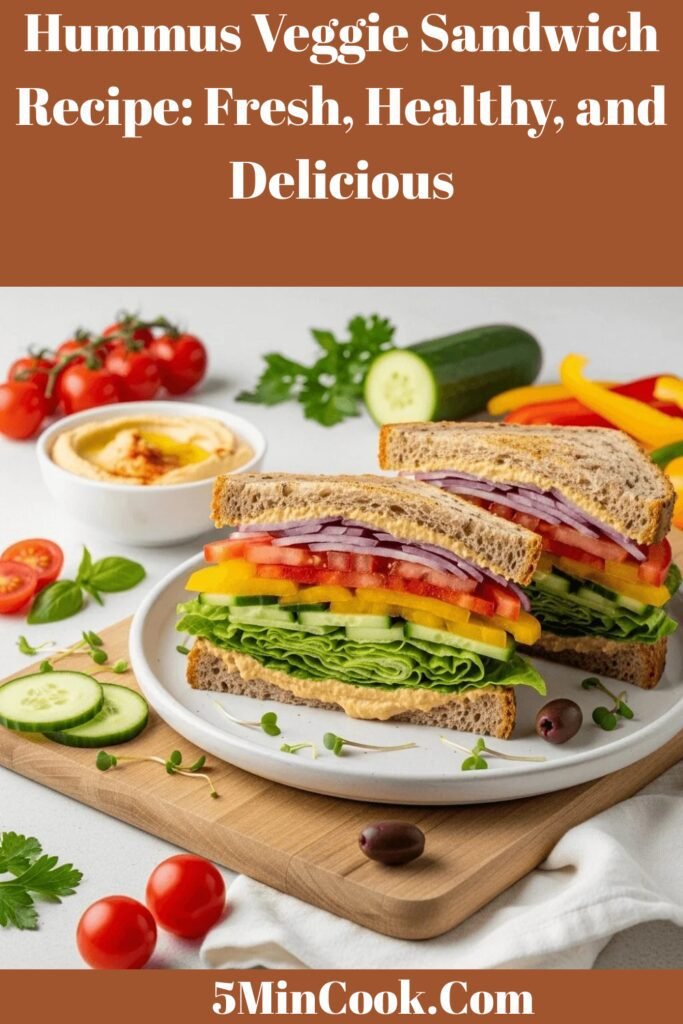
Hummus Veggie Sandwich Recipe: Fresh, Healthy, and Delicious
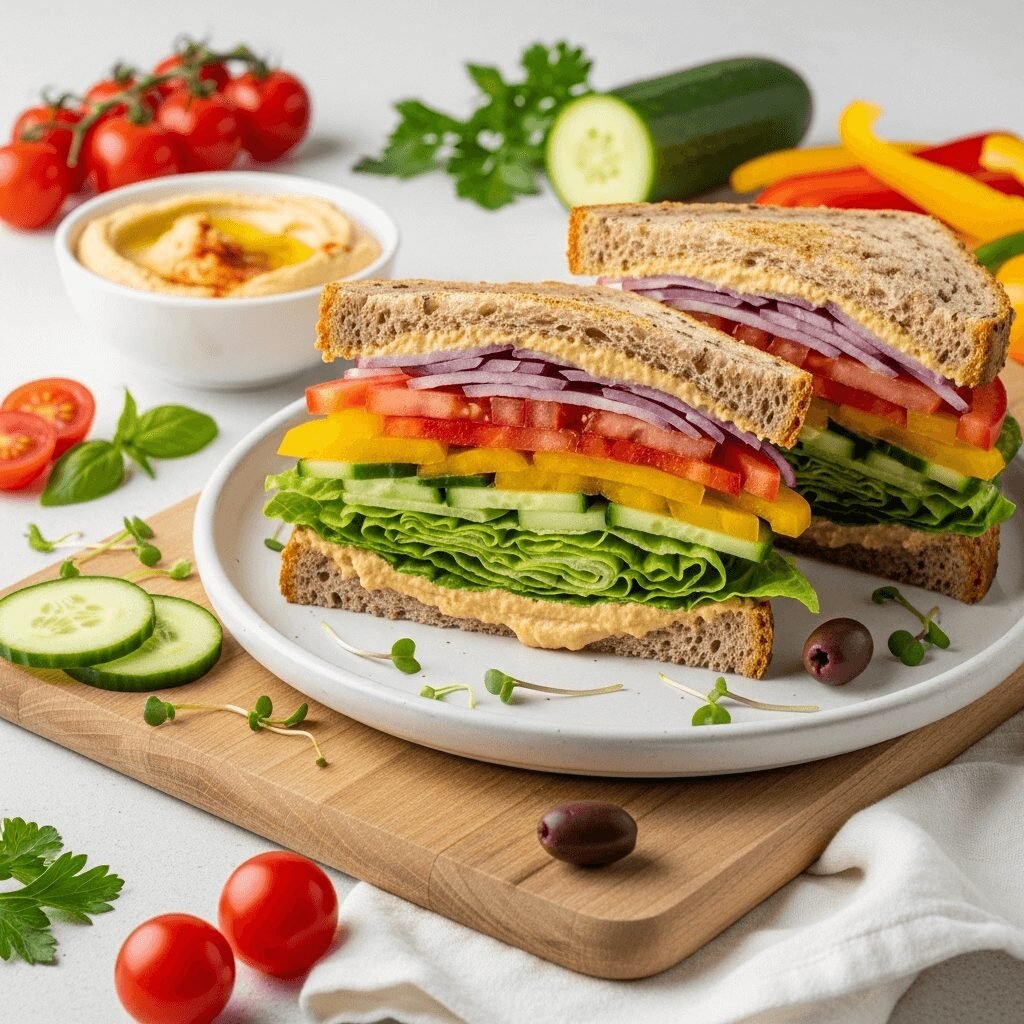
The hummus veggie sandwich is a vibrant, nutritious, and incredibly satisfying meal that’s taking the plant-based food world by storm! This colorful sandwich features creamy, protein-rich hummus spread generously on your favorite bread, piled high with crisp, fresh vegetables like cucumbers, tomatoes, lettuce, bell peppers, and more. The result is a crunchy, flavorful, and filling sandwich that’s both wholesome and delicious. This healthy veggie hummus sandwich is perfect for so many occasions: pack it for work lunches where it stays fresh and doesn’t require reheating, enjoy it as a quick weeknight dinner when you don’t feel like cooking, serve it at casual gatherings where vegetarian options are appreciated, take it on picnics and hikes for portable nutrition, make it for Meatless Mondays when you want something substantial without meat, or whip it up for meal prep Sundays to have ready-made lunches throughout the week. The beauty of this easy vegetarian hummus sandwich lies in its flexibility and simplicity—it’s naturally vegan (when you choose the right bread), packed with fiber and nutrients from all those vegetables, completely customizable based on what you have on hand, and comes together in just 10 minutes with zero cooking required. Whether you’re a dedicated vegetarian, trying to eat more plant-based meals, looking for lighter lunch options, or simply love the Mediterranean flavors of hummus and fresh veggies, this Mediterranean veggie sandwich delivers incredible taste, satisfying texture, and nourishing goodness in every single bite!
History / Background
While the hummus veggie sandwich as we know it today is a relatively modern creation, its roots run deep in Middle Eastern and Mediterranean culinary traditions. Hummus itself has ancient origins, dating back thousands of years to the Middle East, with various countries including Lebanon, Israel, Palestine, Syria, and Egypt all claiming to be its birthplace. Historical records show that chickpeas were consumed in the region as early as 7,000 years ago, and the specific preparation of mashed chickpeas with tahini (sesame paste), lemon, and garlic likely emerged several centuries ago.
The concept of using hummus as a spread on bread has been traditional in Middle Eastern cuisine for generations. In countries like Lebanon, Israel, and Syria, hummus is often served with warm pita bread, and people naturally began scooping hummus onto bread and adding vegetables—creating early versions of what we’d now call a hummus sandwich. However, the elaborate, stacked veggie sandwich we know today is largely a Western interpretation and evolution of these traditional combinations.
The hummus veggie sandwich gained significant popularity in the United States and Europe starting in the 1990s and 2000s, coinciding with several cultural shifts. First, there was growing awareness of vegetarianism and plant-based diets, driven by health, environmental, and ethical considerations. Second, Mediterranean cuisine was increasingly recognized for its health benefits, with studies highlighting the Mediterranean diet’s positive effects on heart health and longevity. Third, hummus itself became a mainstream product in American grocery stores, transitioning from specialty Middle Eastern markets to everyday supermarket shelves.
The rise of fast-casual restaurant chains like Panera Bread, which introduced Mediterranean-inspired veggie sandwiches, helped popularize this style of sandwich in the 2000s and 2010s. Coffee shops and health-focused cafes began offering hummus wraps and sandwiches as healthier alternatives to traditional deli sandwiches. The explosion of food blogs, Instagram, and Pinterest further accelerated the trend, as colorful, vegetable-packed sandwiches are incredibly photogenic and shareable on social media.
Today, the hummus veggie sandwich has become a staple in the repertoire of health-conscious home cooks, college students seeking affordable nutrition, busy professionals needing quick lunches, and anyone looking to incorporate more plant-based meals into their diet. It represents a beautiful fusion of ancient Middle Eastern ingredients with modern Western sandwich culture, creating something that’s both globally inspired and perfectly suited to contemporary eating habits.
Why You’ll Love This Recipe
This hummus veggie sandwich recipe takes a simple concept and elevates it with smart techniques, flavor combinations, and assembly tips that transform it from basic to brilliant! While you might think there’s not much to a veggie sandwich, there are actually tricks to making it truly exceptional—from choosing the right vegetables for optimal crunch and flavor, to layering strategically so it doesn’t fall apart, to seasoning in ways that make every component shine.
What makes this particular approach special is the attention to balance and texture. We’re not just randomly piling vegetables on bread—we’re thinking about color, crunch, creaminess, and how each element complements the others. The hummus provides protein and creamy richness, the vegetables add crunch and freshness, and optional add-ins like avocado, sprouts, or roasted red peppers bring additional layers of flavor and nutrition.
Here’s why this healthy hummus veggie sandwich will become your new favorite go-to meal:
- Ready in 10 Minutes – One of the fastest lunches you can make from scratch
- No Cooking Required – Perfect for hot days when you don’t want to turn on the stove
- Naturally Vegan – Plant-based, dairy-free, and egg-free when using appropriate bread
- Packed with Nutrients – Loaded with fiber, vitamins, minerals, and plant protein
- Incredibly Budget-Friendly – Costs just a few dollars per sandwich with basic ingredients
- Endlessly Customizable – Use whatever vegetables you have on hand
- Kid-Friendly – Mild flavors that even picky eaters often enjoy
- Meal Prep Champion – Components can be prepped ahead for quick assembly
- Portable & Packable – Travels well for lunches, picnics, and road trips
- Filling & Satisfying – Despite being meatless, it keeps you full for hours
- Fresh & Light – Won’t weigh you down like heavier sandwiches
- Colorful & Appealing – Beautiful presentation that’s Instagram-worthy
Ingredient Notes
The beauty of this sandwich is its simplicity and flexibility, but let’s talk about choosing the best ingredients!
Bread: This is your foundation! Whole wheat bread provides fiber, nutrients, and hearty texture that holds up well to moist fillings. Sourdough offers tangy flavor and sturdy structure. Multigrain adds seeds and extra nutrition. Ciabatta or focaccia bring Mediterranean flair with their chewy texture. Pita pockets are traditional and make eating tidier. Wraps or tortillas create a handheld option. Gluten-free bread works perfectly for those with celiac disease. Pro tip: Choose bread with substance—soft, fluffy white bread gets soggy quickly under juicy vegetables!
Hummus: The star spread! Classic chickpea hummus is traditional and widely available. Roasted garlic hummus adds savory depth. Red pepper hummus brings sweetness and beautiful color. Roasted pine nut hummus offers richness. Spicy hummus adds kick. You can use store-bought for convenience or homemade for ultimate freshness and customization. Amount: Use a generous amount—2-4 tablespoons per sandwich creates that creamy, satisfying base.
Cucumbers: Provide refreshing crunch and hydration. English (seedless) cucumbers are best—no need to peel, fewer seeds, and less watery than regular cucumbers. Persian cucumbers are another excellent choice. Prep tip: Slice thin for best texture and easier eating.
Tomatoes: Add juiciness, umami, and beautiful color. Roma (plum) tomatoes are ideal—they’re less watery than beefsteak varieties and have fewer seeds. Cherry or grape tomatoes, sliced in half, work wonderfully. Heirloom tomatoes bring gorgeous colors when in season. Important: Always remove excess seeds and gel to prevent soggy sandwiches!
Lettuce or Greens: Provide crisp texture and fresh flavor. Romaine lettuce is crunchy and sturdy. Butter lettuce offers tender, mild leaves. Spinach adds nutrition and color. Arugula brings peppery bite. Mixed spring greens add variety. Prep tip: Dry greens thoroughly after washing—wet greens make soggy sandwiches!
Bell Peppers: Contribute sweet crunch and vibrant color. Red bell peppers are sweetest. Yellow and orange offer similar sweetness with different hues. Green peppers are more vegetal and slightly bitter. Tip: Roasted red peppers (jarred or homemade) add smoky, sweet flavor!
Red Onion: Adds sharp, pungent bite that cuts through creamy hummus. Pro tip: Soak thinly sliced red onion in cold water for 10 minutes to mellow the harsh bite while maintaining crunch.
Optional Add-Ins:
- Avocado for creaminess and healthy fats
- Sprouts (alfalfa, broccoli, or sunflower) for crunch and nutrition
- Shredded carrots for sweetness and color
- Olives (Kalamata or green) for briny, salty punch
- Feta or goat cheese for tanginess (if not vegan)
- Pickled vegetables for acidity
- Fresh herbs like basil, cilantro, or parsley
Equipment Needed
The simplicity of this recipe means you need minimal equipment!
- Sharp knife (for slicing vegetables)
- Cutting board
- Butter knife or offset spatula (for spreading hummus)
- Vegetable peeler (optional, for cucumbers or carrots)
- Paper towels (for drying vegetables)
- Plate or cutting board (for assembly)
- Small bowl (optional, for soaking onions)
- Plastic wrap or parchment paper (for wrapping if packing)
- Sandwich containers or bags (for storage and transport)
That’s it! No appliances, no cooking equipment—just basic prep tools.
Print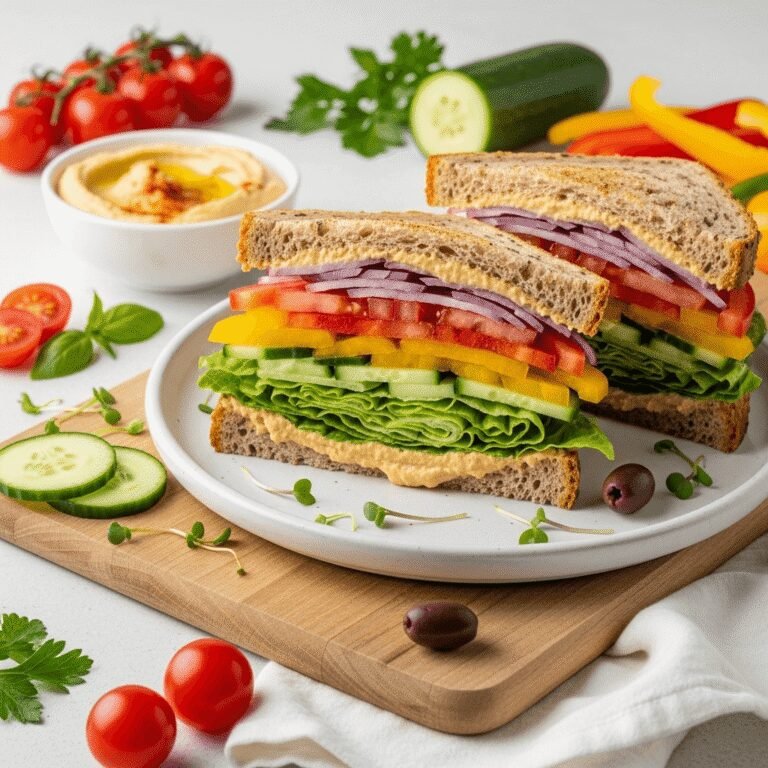
Hummus Veggie Sandwich Recipe
Vibrant, healthy hummus veggie sandwich loaded with creamy hummus, crisp cucumbers, juicy tomatoes, crunchy bell peppers, and fresh greens. A satisfying plant-based lunch ready in just 10 minutes!
- Total Time: 10 minutes
- Yield: 1 sandwich (easily multiplied) 1x
Ingredients
For One Sandwich:
- 2 slices bread of your choice (whole wheat, sourdough, multigrain, or gluten-free)
- 3-4 tablespoons hummus (any flavor)
- ¼ cucumber, thinly sliced (about 6-8 slices)
- ½ medium tomato, sliced (with seeds removed)
- 2-3 leaves romaine lettuce or handful of spinach/mixed greens
- ¼ bell pepper (any color), thinly sliced
- 2-3 thin slices red onion (optional)
- Salt and black pepper to taste
- Optional: drizzle of olive oil or lemon juice
Optional Add-Ins:
- ¼ avocado, sliced
- 2 tablespoons sprouts (alfalfa, broccoli, or sunflower)
- 2 tablespoons shredded carrots
- 2-3 Kalamata olives, sliced
- 1 tablespoon crumbled feta cheese (if not vegan)
- Fresh herbs (basil, cilantro, or parsley)
- Pickled vegetables
- Pinch of za’atar or sumac for extra Mediterranean flavor
Instructions
- Prepare Your Vegetables: Wash all vegetables thoroughly. Slice cucumber into thin rounds (about ⅛-inch thick). Slice tomato and remove the seedy center gel—just keep the firm outer walls to prevent sogginess. Tear or chop lettuce into manageable pieces. Slice bell pepper into thin strips. If using red onion, slice paper-thin and soak in cold water for 10 minutes, then drain and pat dry.
- Dry Everything Well: Use paper towels to pat all vegetables completely dry, especially lettuce, tomatoes, and cucumbers. This is crucial for preventing a soggy sandwich! Any excess water will make your bread mushy.
- Toast Bread (Optional): For extra structure and flavor, lightly toast your bread. This creates a slight barrier against moisture and adds pleasant crunch. Skip this step if you prefer soft bread.
- Spread the Hummus: Lay both bread slices on a clean work surface. Spread a generous, even layer of hummus on both slices, covering edge to edge. Use about 2 tablespoons per slice—don’t be shy! The hummus is both your flavor base and moisture barrier.
- Build Your Base Layer: On one slice (the bottom of your sandwich), start with lettuce or greens. This creates a protective layer between the bread and juicy vegetables. Press down gently to help it adhere to the hummus.
- Layer the Vegetables: Layer cucumber slices in an even, slightly overlapping pattern. Add tomato slices on top. Arrange bell pepper strips next. Add red onion if using. Season lightly with salt and pepper at this point.
- Add Optional Ingredients: If using avocado, layer it now. Add sprouts, shredded carrots, olives, or any other add-ins you’re including. If using fresh herbs, tuck them in now.
- Finish and Close: Drizzle with a tiny amount of olive oil or lemon juice if desired (optional but adds brightness). Place the second bread slice on top, hummus side down. Press down gently but firmly to help everything adhere together.
- Cut and Serve: Using a sharp serrated knife, cut the sandwich in half diagonally (this makes it easier to eat and looks more appealing). For meal prep or packing, wrap tightly in parchment paper or plastic wrap, or place in a sandwich container.
- Enjoy: Eat immediately, or refrigerate for up to 4-6 hours if packing for lunch. The sandwich holds up remarkably well when properly assembled!
Notes
- Prevent Sogginess: The key is drying vegetables thoroughly and using hummus edge-to-edge as a moisture barrier. Remove tomato seeds!
- Bread Choice Matters: Use sturdy bread that won’t get soggy. Avoid very soft, fluffy white bread.
- Customize Freely: This recipe is a template—use whatever vegetables you have and love!
- Make it Vegan: Most hummus is naturally vegan, just check bread ingredients (some contain milk or honey).
- Gluten-Free: Simply use certified gluten-free bread.
- Meal Prep: Prep all vegetables at once and store separately. Assemble sandwiches fresh each morning or the night before.
- Prep Time: 10 minutes
- Cook Time: 0 minutes
- Category: Sandwich
- Method: No-Cook
- Cuisine: American
- Diet: Vegan
Nutrition
- Serving Size: 1 sandwich (with standard vegetables, no optional add-ins)
- Calories: 320
- Sugar: 8g
- Sodium: 520mg
- Fat: 11g
- Saturated Fat: 1g
- Unsaturated Fat: 9g
- Trans Fat: 0g
- Carbohydrates: 45g
- Fiber: 10g
- Protein: 12g
- Cholesterol: 0mg
Tips & Variations
Mediterranean-Style: Use pita bread or focaccia, add Kalamata olives, crumbled feta cheese, sliced pepperoncini, and a sprinkle of za’atar or dried oregano. Drizzle with olive oil.
California-Style: Add sliced avocado, sprouts, shredded carrots, and sunflower seeds. Use whole grain bread and add a squeeze of fresh lemon juice.
Greek-Inspired: Layer with cucumber, tomato, red onion, feta cheese, olives, and pepperoncini. Use roasted red pepper hummus and add fresh dill or oregano.
Rainbow Veggie: Use vegetables in every color—purple cabbage, yellow bell pepper, orange carrots, red tomatoes, green cucumbers—for a stunning, nutrient-packed sandwich.
Spicy Kick: Use spicy hummus or add sliced jalapeños, banana peppers, or a drizzle of sriracha or harissa. Sprinkle with red pepper flakes.
Roasted Vegetable: Replace raw vegetables with roasted vegetables—roasted red peppers, zucchini, eggplant, and red onion. Serve warm or at room temperature.
Club-Style: Use three slices of bread to create a double-decker hummus veggie club sandwich with layers of different vegetables.
Wrap Version: Use a large whole wheat or spinach tortilla instead of bread. Spread hummus, layer vegetables, roll tightly, and slice in half on the diagonal.
Grilled Option: Assemble the sandwich, brush the outside with olive oil, and grill in a panini press or skillet for a warm, crispy variation.
Pro Chef Tips
The Moisture Barrier Method: Professional sandwich makers know the secret to non-soggy sandwiches: create barriers! Spread hummus all the way to the edges on both slices of bread. This creates a fat-based barrier that prevents water from vegetables soaking into the bread. Think of hummus as both flavor and functional waterproofing!
Strategic Layering Order: Always place sturdier, drier items (like lettuce) directly on the bread, then add juicier items (tomatoes) in the middle layers, away from the bread. This architecture prevents moisture migration to the bread. The order matters more than you think!
The Salt Timing Trick: Don’t salt your vegetables until right before assembling, and even then, salt sparingly. Salt draws out moisture from vegetables (especially tomatoes and cucumbers) through osmosis. If you salt too early, you’ll have a puddle of liquid that makes everything soggy.
Knife Selection: Use a sharp serrated knife (like a bread knife) to cut your finished sandwich. A dull knife or regular chef’s knife squashes the sandwich and causes fillings to slide out. One clean, gentle sawing motion gives you a perfect cut without destruction.
The Press and Rest: After assembling, press down on the sandwich firmly for about 5 seconds before cutting. This helps everything adhere together and compress slightly, making it much easier to eat without ingredients falling out. Some people even wrap the sandwich in parchment and let it rest for 5 minutes before cutting.
Flavor Layering: Don’t just think vegetables—think about layering flavors! Include something creamy (hummus, avocado), something crunchy (cucumber, bell pepper), something acidic (tomato, pickled onions), and something aromatic (herbs, spices). This creates complexity and keeps every bite interesting.
Hydrated but Not Wet: Your vegetables should be hydrated and crisp (which means keeping them in the fridge until ready to use) but completely surface-dry. This is the sweet spot—maximum crunch and freshness without added moisture that causes sogginess.
Common Mistakes to Avoid
Using Wet Vegetables: The number one mistake! Putting freshly washed, still-wet vegetables on bread guarantees sogginess within an hour. Always pat vegetables completely dry with paper towels or a clean kitchen towel before assembling. Even better, wash vegetables hours ahead and store them properly dried in the fridge.
Too Much Tomato Gel and Seeds: The watery, seedy center of tomatoes is delicious but extremely watery. If you include all of it in your sandwich, you’ll have a soggy mess. Always remove the seeds and gel, keeping only the firm outer walls of the tomato. This reduces moisture by about 60%!
Skimping on Hummus: Using just a thin smear of hummus means you miss out on both flavor and function. Hummus is your protein source, your creamy element, and your moisture barrier. Use a generous amount—at least 2 tablespoons per slice of bread, spread edge to edge.
Wrong Bread Choice: Super-soft, fluffy white bread with a very open crumb (lots of air pockets) absorbs moisture like a sponge. Choose bread with a tighter crumb and some structure—whole wheat, sourdough, or dense multigrain. The bread should be sturdy enough to hold heavy, moist fillings without disintegrating.
Overstuffing: While it’s tempting to pile on vegetables for maximum nutrition, overstuffed sandwiches are impossible to eat neatly and often fall apart. Be generous but reasonable—you should be able to compress the sandwich slightly with your hands and take a bite without everything sliding out the back.
Assembling Too Far in Advance: These sandwiches hold up well for 4-6 hours when properly made, but much beyond that, even the best techniques can’t prevent some deterioration. If you’re meal-prepping for a whole week, consider packing components separately and assembling fresh each day, or accept that day-of assembly is best.
Storage & Meal Prep
Short-Term Storage (Same Day): If making your hummus veggie sandwich in the morning for lunch, wrap it tightly in parchment paper, then plastic wrap, or use a good-quality sandwich container. Store in the refrigerator until you’re ready to eat. Properly assembled sandwiches stay fresh and crisp for 4-6 hours.
Optimal Wrapping Technique: Parchment paper is better than plastic wrap alone because it allows slight air circulation while protecting the sandwich. Wrap tightly in parchment, then overwrap with plastic wrap or place in a container for maximum freshness and to prevent the parchment from unwrapping.
Component Meal Prep: The smartest approach is to prep all components at the beginning of the week:
- Hummus: Store in airtight container, stays fresh 5-7 days
- Sliced cucumbers: Store in airtight container with paper towel, 3-4 days
- Sliced bell peppers: Store in airtight container, 4-5 days
- Washed, dried lettuce: Store wrapped in paper towels in container, 5-7 days
- Tomatoes: Best sliced fresh daily, but whole tomatoes stay fresh at room temperature
Daily Assembly: With prepped components, you can assemble a fresh sandwich in 2-3 minutes each morning. This gives you meal-prep convenience with fresh-made quality.
Lunchbox Packing: Keep an ice pack in your lunchbox to maintain food safety and freshness, especially if your workplace doesn’t have refrigeration. The sandwich itself doesn’t require refrigeration for food safety (no meat or dairy if vegan), but it tastes better cold and stays crisper.
Leftover Management: These sandwiches don’t keep well overnight once assembled—the vegetables will release moisture and the bread will get soggy. If you have leftover assembled sandwiches, eat them within 6-8 hours for best quality. Don’t save overnight.
Make-Ahead & Freezer Notes
Not Freezer-Friendly: Unfortunately, hummus veggie sandwiches do not freeze well at all. The high water content in vegetables means they’ll become mushy and watery when thawed. The bread will also become soggy and unappetizing. Hummus can separate and become grainy after freezing. This is definitely a fresh-assembly recipe!
Hummus Freezing: While you can’t freeze the assembled sandwich, you CAN freeze hummus alone! Store-bought or homemade hummus freezes beautifully for up to 4 months. Freeze in portions (½ cup servings work well), thaw overnight in the fridge, stir well, and use as normal. This is great for batch cooking or stocking up when hummus is on sale.
Bread Freezing: You can absolutely freeze bread! Keep a loaf in the freezer and toast slices directly from frozen as needed. This ensures you always have fresh bread available for sandwiches without waste.
Prep-Ahead Schedule: For maximum efficiency:
- Sunday: Wash and prep all vegetables, store separately
- Daily: Slice tomatoes fresh each morning
- Morning of: Assemble sandwich in 3 minutes with prepped ingredients
Best Make-Ahead Strategy: The night before, lay out all your components in the fridge so they’re cold and ready. In the morning, assembly takes just minutes. This is the sweet spot between convenience and freshness.
Room Temperature Considerations: If you know you won’t have access to refrigeration, assemble the sandwich as close to eating time as possible. While these ingredients are technically safe at room temperature for several hours (no meat or dairy), the quality and texture degrade faster when warm.
Serving Suggestions
Side Salad: Pair with a simple side salad of mixed greens, cherry tomatoes, and olive oil-lemon dressing for a light, complete meal.
Chips and Pickles: Serve with pita chips, vegetable chips, or your favorite potato chips, plus pickle spears or pickled vegetables for a satisfying crunch contrast.
Soup Pairing: This sandwich is perfect alongside tomato soup, lentil soup, or any Mediterranean-style soup for a comforting lunch combo.
Fresh Fruit: Add fresh fruit like apple slices, grapes, berries, or orange segments for a naturally sweet, refreshing side.
Mediterranean Mezze Plate: Serve with additional hummus, olives, tabbouleh, stuffed grape leaves, and pita chips for a mezze-style meal.
Roasted Vegetables: Add a side of roasted vegetables—carrots, broccoli, cauliflower, or Brussels sprouts—for extra nutrition and warmth contrast.
Beverages: Pair with iced tea (sweetened or unsweetened), lemonade, sparkling water with lemon, fresh vegetable juice, or a fruit smoothie.
Pasta Salad: Serve alongside cold pasta salad—Greek orzo salad, Mediterranean couscous, or simple vinaigrette-dressed pasta with vegetables.
Hummus and Veggies: Ironically, serving extra hummus with raw vegetable sticks (carrots, celery, bell peppers) makes a perfect complement!
FAQs Section
Q: How do you keep a hummus veggie sandwich from getting soggy?
A: Three key steps prevent sogginess: 1) Pat all vegetables completely dry after washing—wet vegetables are the main culprit; 2) Spread hummus edge-to-edge on both slices of bread to create a moisture barrier; 3) Remove seeds and gel from tomatoes before adding them. Following these steps, your sandwich will stay fresh and crisp for 4-6 hours!
Q: Can you make hummus sandwiches the night before?
A: Yes, but with caveats! These sandwiches hold up reasonably well for 12-14 hours if properly assembled (moisture barriers, dried vegetables) and stored wrapped in the refrigerator. However, they’re always best made the morning of. For optimal freshness, prep all components the night before and assemble in the morning—it only takes 3 minutes.
Q: What vegetables go best on a hummus sandwich?
A: The classics are cucumber, tomato, lettuce, and bell peppers—they provide great texture contrast and complementary flavors. Beyond basics, excellent additions include avocado, sprouts, shredded carrots, red onion, olives, roasted red peppers, and fresh herbs. Choose vegetables with different textures (some crunchy, some soft) for the most satisfying sandwich.
Q: Is a hummus sandwich healthy?
A: Absolutely! Hummus veggie sandwiches are nutrient-dense, providing plant protein from hummus (chickpeas), fiber from vegetables and whole grain bread, vitamins and minerals from the variety of vegetables, and healthy fats from the tahini in hummus. They’re naturally low in saturated fat, cholesterol-free, and packed with phytonutrients. A typical sandwich has around 300-350 calories with 10g protein and 10g fiber—very healthy!
Q: What can I use instead of hummus on a veggie sandwich?
A: Great alternatives include mashed avocado, pesto, tahini, baba ganoush, white bean spread, sunflower seed butter (for nut-free), cream cheese (if not vegan), Greek yogurt mixed with herbs, or even mustard and mayo. Each brings a different flavor profile but serves the same creamy, protein-rich function.
Q: Can you eat hummus sandwiches cold?
A: Yes! In fact, they’re typically served cold or at room temperature. The cool, crisp vegetables and creamy hummus are refreshing, especially in warm weather. There’s no need to heat these sandwiches (though you could grill them if you want a warm variation). They’re perfect grab-and-go cold meals.
Q: How long does a hummus veggie sandwich last in the fridge?
A: Once assembled, hummus veggie sandwiches stay fresh for 4-6 hours at peak quality, and up to 12-14 hours if you must push it. Beyond that, even properly stored sandwiches will start to get soggy as vegetables release moisture. For best results, assemble fresh the day you plan to eat them. Unassembled components, however, last 3-7 days in the fridge!
Conclusion
And there you have it—everything you need to create the perfect, vibrant, delicious hummus veggie sandwich! While this might seem like a simple recipe (and it is wonderfully simple!), paying attention to the details—from drying vegetables thoroughly to strategic layering to proper storage—transforms a basic veggie sandwich into something truly special that stays fresh, crisp, and delicious for hours.
This healthy veggie hummus sandwich is so much more than just a meatless alternative—it’s a celebration of fresh vegetables, Mediterranean flavors, and wholesome plant-based nutrition. It’s proof that food doesn’t need to be complicated or time-consuming to be absolutely satisfying and nourishing. Whether you’re a dedicated vegetarian, someone trying to incorporate more plant-based meals, a busy professional seeking quick healthy lunches, or simply a lover of fresh, flavorful food, this easy vegetarian hummus sandwich delivers on every level.
The best part? Once you master the basic technique, you can customize endlessly based on your preferences, what’s in season, or what you have in your fridge. Every sandwich can be a new adventure in flavor and nutrition!
Now it’s your turn to build your perfect Mediterranean veggie sandwich! I’d love to hear about your experience—what vegetables do you plan to use? Do you have a favorite hummus flavor? Are you adding any creative extras like roasted vegetables or unique toppings? Share your combinations, questions, and photos in the comments below! Your creativity might inspire other readers to try something new.
Don’t forget to save this hummus veggie sandwich recipe to your Pinterest boards—pin it to “Healthy Lunch Ideas,” “Vegetarian Recipes,” “Meal Prep Recipes,” or “Quick Easy Dinners” so you can find it whenever you need fresh lunch inspiration. If you know someone who’s looking for healthier lunch options, trying to eat more vegetables, or loves Mediterranean flavors, share this article with them. And when you make your colorful, veggie-packed creation, snap a photo and tag me on social media—I absolutely love seeing your beautiful sandwiches!
Now go create your own fresh, healthy, delicious masterpiece—your taste buds (and your body!) will thank you! 🥙🥒