Cottage Cheese Sandwich Recipe: High-Protein, Fresh, and Delicious
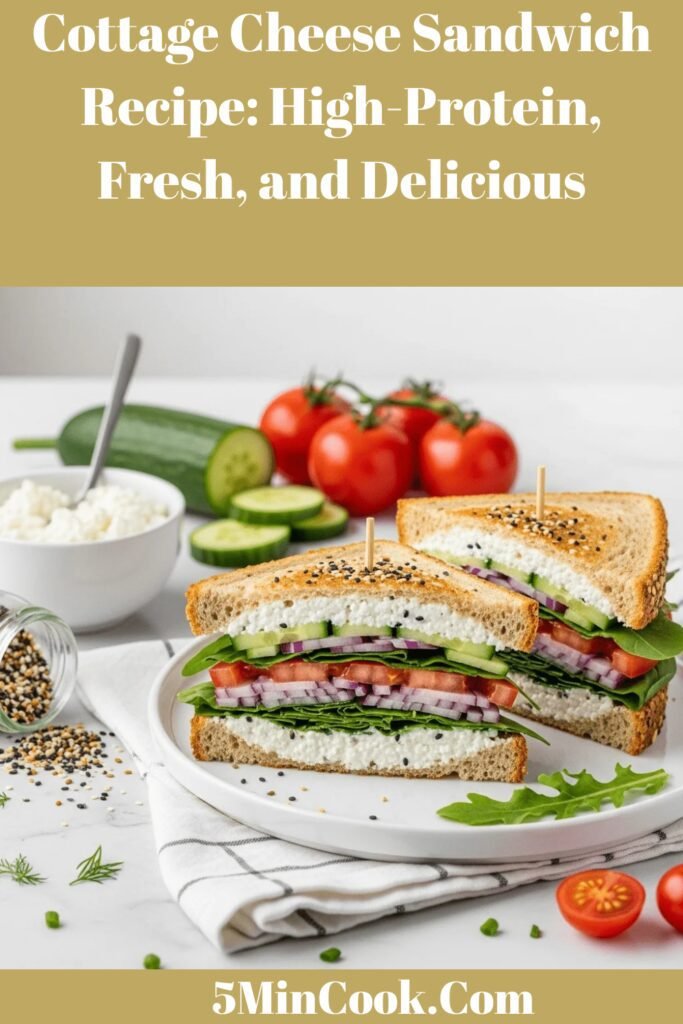
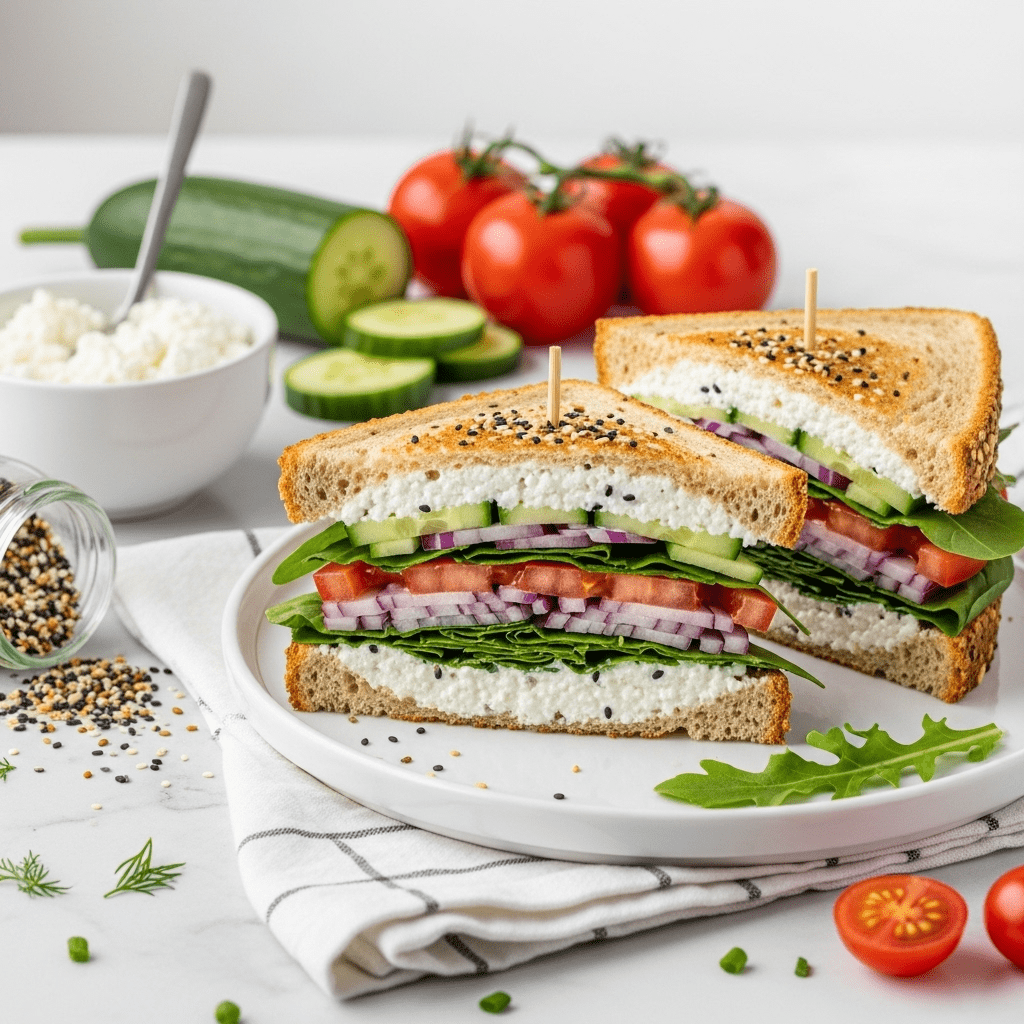
The cottage cheese sandwich is a protein-packed, surprisingly delicious sandwich that’s taking the healthy eating world by storm! This nutritious sandwich features creamy cottage cheese as the star ingredient, paired with fresh vegetables, herbs, and seasonings, all layered between your favorite bread. The result is a refreshing, satisfying meal that’s both light and filling at the same time. This healthy cottage cheese sandwich recipe is perfect for so many occasions: enjoy it as a protein-rich breakfast to fuel your morning, pack it for nutritious work lunches that keep you full until dinner, make it for post-workout meals when you need quick protein recovery, serve it as a light dinner on busy weeknights, prep it for healthy meal prep Sundays, or whip it up as a satisfying snack when regular snacks just won’t cut it. The beauty of this easy protein sandwich lies in its incredible versatility and nutritional profile—it’s naturally high in protein (often 20+ grams per sandwich!), low in calories compared to traditional deli sandwiches, packed with nutrients from fresh vegetables, completely customizable to your taste preferences, and comes together in just 5-10 minutes with zero cooking required. Whether you’re a fitness enthusiast looking for high-protein meals, someone trying to eat healthier without sacrificing satisfaction, a busy professional needing quick nutritious lunches, or simply a cottage cheese lover seeking new ways to enjoy this superfood, this high-protein cottage cheese lunch delivers incredible nutrition, surprising flavor, and genuine satisfaction in every bite!
History / Background
The cottage cheese sandwich might seem like a modern health food invention, but cottage cheese itself has a long and fascinating history that spans centuries and continents. Cottage cheese is believed to be one of the oldest cheese varieties in existence, with evidence of its consumption dating back to ancient Rome and possibly even earlier to Mesopotamia. The name “cottage cheese” originated in America, referring to the fact that this simple cheese was traditionally made in rural cottages from leftover milk after butter-making.
In the United States, cottage cheese gained mainstream popularity in the early 20th century, but it truly exploded during the health food movement of the 1950s through the 1970s. During this era, cottage cheese became synonymous with dieting and healthy eating, often appearing in weight loss meal plans alongside grapefruit and salads. It was considered the ultimate diet food—low in calories, high in protein, and incredibly filling.
The classic mid-century cottage cheese presentation was often on a bed of lettuce with fruit or raw vegetables, served as a light lunch or diet plate. However, the cottage cheese sandwich as a specific entity was less common during this period. Most people ate cottage cheese with a spoon from a bowl, paired with fruits like pineapple or peaches, or mixed into salads.
The cottage cheese sandwich experienced a major revival starting in the 2010s and exploding in the 2020s, driven by several cultural shifts. First, the rise of high-protein diets (like keto, paleo, and general fitness-focused eating) brought renewed attention to cottage cheese’s impressive protein content—typically 12-15 grams per half cup. Second, social media platforms, especially TikTok and Instagram, featured cottage cheese in creative new ways, including as a sandwich spread. Third, there was a growing movement toward whole, minimally processed foods, and cottage cheese fit perfectly into this trend.
The modern cottage cheese sandwich is often influenced by Scandinavian open-faced sandwich traditions (smørrebrød), where creamy dairy products like cream cheese or soft cheeses are spread on bread and topped with vegetables, fish, or eggs. Today’s versions also draw inspiration from bagel and cream cheese culture, Mediterranean mezze spreads, and contemporary healthy eating trends.
What started as a simple diet food has evolved into a trendy, Instagram-worthy meal that food bloggers, fitness influencers, and home cooks alike are embracing. The cottage cheese sandwich represents a beautiful intersection of nostalgia, nutrition, and modern culinary creativity—proof that sometimes the simplest ingredients, when thoughtfully prepared, can create something truly special and surprisingly delicious.
Why You’ll Love This Recipe
This cottage cheese sandwich recipe transforms humble cottage cheese into a gourmet, satisfying meal that tastes as good as it looks! While the concept is simple—cottage cheese on bread with toppings—there are tricks to making it exceptional: choosing the right cottage cheese texture, seasoning it properly so it’s flavorful rather than bland, selecting complementary toppings that add crunch and freshness, and assembling it in a way that’s structurally sound and pleasant to eat.
What makes this particular approach to the healthy protein cottage cheese sandwich special is the attention to flavor balance and texture contrast. We’re not just slapping plain cottage cheese on bread—we’re seasoning it with herbs and spices, adding crunchy vegetables for textural interest, incorporating fresh elements for brightness, and thinking strategically about how each component enhances the others. The result is a sandwich that’s nutritious without tasting like “diet food.”
Here’s why this easy cottage cheese sandwich will become your new favorite healthy meal:
- Ready in 5-10 Minutes – Faster than going through a drive-through
- No Cooking Required – Perfect for hot days or when you don’t want to heat up the kitchen
- Incredibly High in Protein – Often 20-25+ grams per sandwich, perfect for muscle building and satiety
- Low Calorie but Filling – Typically 250-350 calories while keeping you satisfied for hours
- Budget-Friendly – Cottage cheese is one of the most affordable protein sources
- Naturally Gluten-Free Option – Just use gluten-free bread or make it open-face
- Meal Prep Champion – Components can be prepped ahead for quick assembly
- Endlessly Customizable – Sweet or savory, Mediterranean or Everything Bagel-style
- Kid-Friendly – Mild flavors that children often enjoy, plus fun to customize
- Gut-Healthy – Cottage cheese contains beneficial probiotics
- Low-Carb Friendly – Use low-carb bread or make it an open-face sandwich
- Satisfies Cravings – Creamy texture satisfies like cream cheese or mayo-based sandwiches
Ingredient Notes
The beauty of this sandwich is its simplicity, but let’s talk about making smart ingredient choices!
Cottage Cheese: Your star ingredient! The type you choose matters significantly. Small curd cottage cheese has a smoother, more spreadable texture—ideal for sandwiches. Large curd cottage cheese has more texture and is chunkier. Low-fat (1-2%) cottage cheese is lighter with fewer calories. Full-fat (4%) cottage cheese is creamier and more indulgent. Pro tip: For the smoothest spread, blend cottage cheese for 30 seconds in a food processor! Quality matters: Good Cottage cheese (the brand) is popular for its creamy texture. Daisy brand is another favorite. Look for cottage cheese with live and active cultures for probiotic benefits. Substitution: Ricotta cheese is similar but sweeter and smoother, Greek yogurt works in a pinch but is tangier, or try farmer’s cheese for a firmer texture.
Bread: Your foundation! Whole grain bread provides fiber, complex carbs, and a nutty flavor that complements cottage cheese beautifully. Sourdough offers tangy complexity and a chewy texture. Rye bread brings earthy, slightly sour notes. Multigrain adds seeds and texture. Gluten-free bread works perfectly for those with celiac disease. Pro tip: Toast your bread lightly for structural integrity—it prevents sogginess and adds pleasant crunch. Low-carb option: Use low-carb bread, cloud bread, or make an open-face sandwich on one slice.
Fresh Vegetables: Add crunch, nutrition, and color! Cucumber provides refreshing crispness and hydration. Tomatoes add juiciness and umami. Bell peppers (any color) bring sweet crunch. Radishes offer peppery bite and beautiful color. Red onion adds sharpness (soak in cold water to mellow). Avocado contributes healthy fats and creaminess. Spinach or arugula adds peppery greens. Tip: Pat vegetables dry to prevent sogginess!
Seasonings: Transform cottage cheese from bland to grand! Everything bagel seasoning is the most popular option—it adds onion, garlic, poppy seeds, and sesame seeds. Fresh or dried dill is classic with cottage cheese. Garlic powder and onion powder add savory depth. Black pepper and salt (use sparingly—cottage cheese is already salty) enhance all flavors. Red pepper flakes add heat. Fresh herbs like chives, parsley, or basil bring brightness.
Optional Add-Ins:
- Smoked salmon for a bagel-and-lox vibe
- Sliced hard-boiled eggs for extra protein
- Sprouts (alfalfa, broccoli, or sunflower) for crunch
- Microgreens for elegance and nutrition
- Pickles or pickled vegetables for tang
- Capers for briny, salty pops
- Sunflower or pumpkin seeds for crunch
- Hot sauce or sriracha for heat
Equipment Needed
One of the best things about this recipe is how little equipment you need!
- Fork or small spoon (for mixing and spreading cottage cheese)
- Butter knife or offset spatula (for spreading)
- Cutting board
- Sharp knife (for slicing vegetables and sandwich)
- Small bowl (for mixing cottage cheese with seasonings)
- Toaster (optional, for toasting bread)
- Food processor or blender (optional, for making cottage cheese super smooth)
- Paper towels (for drying vegetables)
- Plate (for assembly and serving)
That’s it! No cooking equipment needed—just basic prep tools.
Print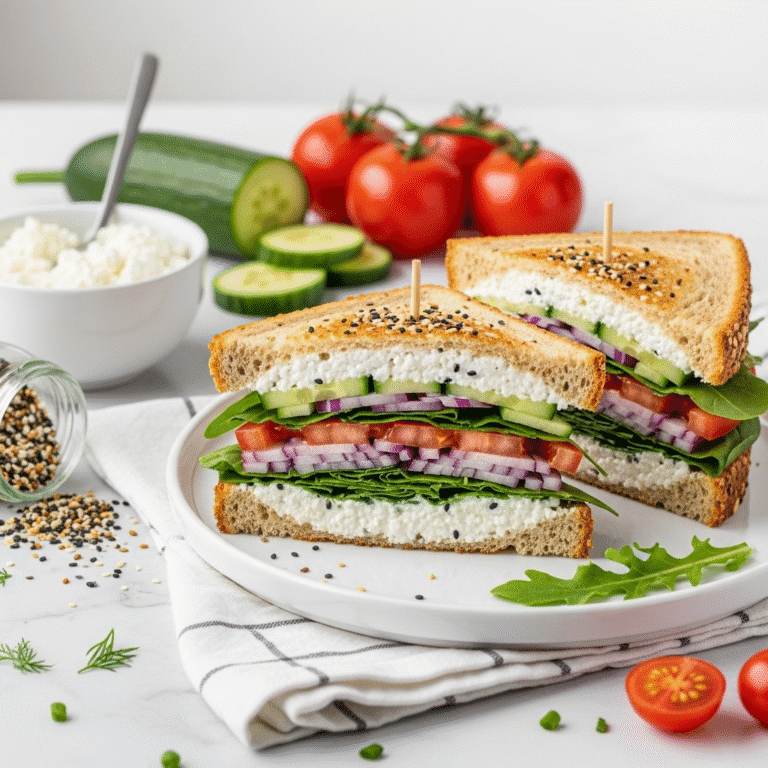
Cottage Cheese Sandwich Recipe
High-protein cottage cheese sandwich with seasoned cottage cheese, fresh vegetables, and your choice of toppings on toasted bread. A nutritious, filling meal ready in just 5 minutes!
- Total Time: 5 minutes
- Yield: 1 sandwich (easily multiplied) 1x
Ingredients
For One Sandwich:
- 2 slices bread of your choice (whole grain, sourdough, rye, or gluten-free)
- ½ cup (115g) cottage cheese (small curd or large curd, any fat percentage)
- 1 teaspoon everything bagel seasoning (or seasoning of choice)
- ¼ cucumber, thinly sliced (about 6-8 slices)
- ½ small tomato, thinly sliced (or 4-5 cherry tomatoes, halved)
- 2-3 thin slices red onion (optional)
- Small handful of fresh greens (spinach, arugula, or lettuce)
- Salt and black pepper to taste
- Optional: drizzle of olive oil or hot sauce
Seasoning Options (choose one or combine):
- 1 teaspoon everything bagel seasoning
- ½ teaspoon dried dill + ¼ teaspoon garlic powder
- ¼ teaspoon garlic powder + ¼ teaspoon onion powder + pinch of black pepper
- ½ teaspoon za’atar
- Fresh chopped herbs (dill, chives, parsley)
Optional Add-Ins:
- 2 ounces smoked salmon
- 1 hard-boiled egg, sliced
- ¼ avocado, sliced
- 2 tablespoons sprouts or microgreens
- 1 tablespoon capers
- 2 tablespoons sunflower or pumpkin seeds
- Pickle slices
Instructions
- Prepare Your Vegetables: Wash and dry all vegetables thoroughly. Slice cucumber into thin rounds (about ⅛-inch thick). Slice tomato into thin slices and pat dry with paper towels to remove excess moisture. If using red onion, slice paper-thin and soak in cold water for 5 minutes to mellow the sharpness, then drain and pat dry.
- Season the Cottage Cheese: In a small bowl, combine cottage cheese with your chosen seasonings. Mix well with a fork, breaking up any large curds slightly if desired. Taste and adjust seasoning—cottage cheese is already somewhat salty, so add additional salt sparingly. For an extra-smooth texture, blend cottage cheese in a food processor for 30 seconds before seasoning.
- Toast the Bread (Recommended): Lightly toast both bread slices. This step is optional but highly recommended—it adds structure, prevents sogginess, and adds pleasant texture contrast to the creamy cottage cheese. Toast to light golden brown, not too dark.
- Spread the Cottage Cheese: Lay both toasted bread slices on a clean plate or cutting board. Spread about ¼ cup (about half the cottage cheese) on each slice, covering edge to edge. Use the back of a spoon or offset spatula for even coverage. The thick layer of cottage cheese is what makes this sandwich special!
- Layer the Vegetables: On one slice of bread (this will be your base), arrange cucumber slices in an even layer, slightly overlapping. Add tomato slices on top. Layer any additional vegetables you’re using—greens, red onion, avocado, etc.
- Add Optional Toppings: If using smoked salmon, drape it over the vegetables. Add sliced hard-boiled egg, sprouts, capers, or any other add-ins you’re including.
- Season and Finish: Give the vegetables a light sprinkle of black pepper and a tiny pinch of salt if needed (remember, cottage cheese is already salty!). Drizzle with olive oil or hot sauce if desired.
- Close the Sandwich: Place the second bread slice on top, cottage cheese side down. Press down very gently to help everything adhere.
- Cut and Serve: Using a sharp knife, cut the sandwich in half diagonally or straight across. For easier eating, you can cut it into quarters. Serve immediately and enjoy!
For Open-Face Version:
- Use just one slice of bread
- Spread cottage cheese generously on top
- Layer all vegetables and toppings artfully
- Eat with a knife and fork
Notes
- Moisture Control: Pat tomatoes and cucumbers dry before using to prevent a soggy sandwich.
- Make it Smoother: Blend cottage cheese in a food processor for 30 seconds for a cream cheese-like consistency.
- Protein Boost: This sandwich typically contains 20-25g of protein. Add an egg or smoked salmon for even more.
- Low-Carb: Use low-carb bread or make it open-face on one slice.
- Meal Prep: Season cottage cheese ahead and store in containers. Prep vegetables and store separately. Assemble fresh each day.
- Vegan Option: This recipe contains dairy (cottage cheese), so it’s not vegan. Try hummus or mashed avocado for a vegan protein alternative.
- Prep Time: 5 minutes
- Cook Time: 0 minutes
- Category: Breakfast
- Method: No-Cook
- Cuisine: American
- Diet: Vegetarian
Nutrition
- Serving Size: 1 sandwich
- Calories: 295
- Sugar: 8g
- Sodium: 720mg
- Fat: 6g
- Saturated Fat: 2g
- Unsaturated Fat: 3g
- Trans Fat: 0g
- Carbohydrates: 38g
- Fiber: 6g
- Protein: 24g
- Cholesterol: 15mg
Tips & Variations
Everything Bagel Style: Mix cottage cheese with everything bagel seasoning, top with tomato, red onion, cucumber, and capers for a bagel-and-schmear experience without the bagel!
Mediterranean-Inspired: Season cottage cheese with za’atar or dried oregano, top with cucumber, tomatoes, Kalamata olives, and fresh basil for Greek-inspired flavors.
Smoked Salmon Deluxe: Spread cottage cheese mixed with dill and lemon zest, top with smoked salmon, capers, red onion, and cucumber for a luxurious protein-packed lunch.
Avocado Power Sandwich: Layer cottage cheese with sliced avocado, tomato, microgreens, and a drizzle of hot sauce for healthy fats plus protein.
Garden Veggie: Load up with every vegetable you have—cucumber, tomato, bell peppers, radishes, sprouts, spinach, and shredded carrots for maximum nutrition and crunch.
Sweet Breakfast Version: Spread cottage cheese on toast, top with sliced strawberries, blueberries, a drizzle of honey, and a sprinkle of cinnamon for a protein-packed breakfast.
Egg Salad Alternative: Mix cottage cheese with chopped hard-boiled eggs, a tiny bit of mustard, dill, and chives for a high-protein egg salad-style sandwich filling.
Spicy Kick: Mix cottage cheese with sriracha or hot sauce, add jalapeños, and top with extra red pepper flakes for a spicy protein punch.
Protein-Packed Powerhouse: Add both a hard-boiled egg and smoked salmon for an ultra-high-protein sandwich (35-40g protein!).
Pro Chef Tips
The Blending Trick: Professional food stylists and recipe developers know this secret: blend your cottage cheese for 20-30 seconds in a food processor or blender to create a smooth, cream cheese-like texture that spreads beautifully and looks more elegant. This is especially helpful if you’re making the sandwich for photos or picky eaters who don’t like the curds. The texture becomes luxuriously smooth while maintaining the protein content.
Salt Control: Cottage cheese is already quite salty (often 300-400mg sodium per half cup), so always taste your seasoned cottage cheese before adding any additional salt. The vegetables, bread, and any add-ins (especially smoked salmon, capers, or pickles) also contribute salt. When in doubt, err on the side of less salt—you can always add more at the table.
The Drainage Technique: If your cottage cheese seems very watery (some brands are wetter than others), place it in a fine-mesh strainer over a bowl and let it drain for 10-15 minutes in the refrigerator. This removes excess whey and creates a thicker, more spreadable consistency that won’t make your bread soggy. Some brands like Good Culture naturally have thicker, creamier texture with less whey.
Vegetable Preparation: Always pat vegetables dry with paper towels after washing. For tomatoes specifically, if they’re particularly juicy, remove the seedy center gel—just keep the firm outer walls. This prevents up to 60% of the excess moisture that causes soggy sandwiches. For cucumbers, English (seedless) cucumbers are less watery than regular cucumbers.
Temperature Matters: Cottage cheese tastes significantly better at cool room temperature rather than straight-from-the-fridge cold. The flavors are more pronounced and the texture is creamier. Take it out of the fridge 10-15 minutes before making your sandwich, or quickly microwave for just 10-15 seconds to take the chill off (don’t overheat!).
Strategic Layering: Place sturdier, drier items like greens directly on the bread as a protective layer, then add cottage cheese, then wetter items like tomatoes in the middle. This architectural approach prevents moisture from migrating directly to the bread, keeping it fresher longer.
Toast for Structure: Even light toasting creates a slight crust that acts as a moisture barrier, dramatically extending the sandwich’s freshness. If you’re meal-prepping for lunch later in the day, toasting is essential. The cottage cheese won’t soak into toasted bread as quickly as it would soft, untoasted bread.
Common Mistakes to Avoid
Using Watery Cottage Cheese: Some cottage cheese brands have significantly more whey (the liquid) than others. Using very watery cottage cheese creates a soupy, messy sandwich that soaks the bread. Look for thicker brands, or drain excess liquid by placing cottage cheese in a strainer for 10-15 minutes before using. Good Culture and Nancy’s are known for thicker textures.
Not Seasoning the Cottage Cheese: Plain, unseasoned cottage cheese on bread tastes bland and “diet-like.” The cottage cheese itself MUST be well-seasoned with herbs, spices, garlic powder, or everything bagel seasoning to be delicious. Don’t skip this crucial step! The seasonings transform it from boring to crave-worthy.
Skipping the Toast: Using soft, untoasted bread with wet cottage cheese almost guarantees a soggy, falling-apart sandwich within an hour. Even light toasting makes a massive difference in structural integrity and prevents the dreaded soggy-bread disaster. Always toast, especially if you’re not eating the sandwich immediately.
Overloading with Toppings: While it’s tempting to pile on vegetables, an overstuffed sandwich is impossible to eat, falls apart, and creates an unbalanced ratio of filling to bread. Be generous but reasonable—you should be able to close the sandwich and take a bite without everything sliding out.
Using Too Much Cottage Cheese: Counterintuitively, more isn’t always better. Using more than ½ cup per sandwich makes it too wet, messy, and structurally unsound. About ¼ cup per slice of bread (½ cup total) is the sweet spot for optimal flavor, texture, and structural integrity.
Not Drying Vegetables: Putting freshly washed, still-wet vegetables on your sandwich introduces unnecessary moisture that makes everything soggy. Always pat vegetables completely dry with paper towels after washing. This simple 30-second step extends sandwich freshness by hours.
Storage & Meal Prep
Short-Term Storage (Same Day): If making this cottage cheese sandwich in the morning for lunch, wrap it tightly in parchment paper first (which allows slight air circulation), then overwrap with plastic wrap or aluminum foil. Store in the refrigerator for up to 4-6 hours. The toasting and proper moisture control are essential for it to hold up this long.
Component Meal Prep (Best Approach): The smartest strategy is to prep components separately at the beginning of the week:
- Seasoned cottage cheese: Mix cottage cheese with seasonings and store in individual ½-cup portions in small containers. Keeps 5-7 days.
- Sliced vegetables: Wash, dry, and slice cucumbers and bell peppers. Store in airtight containers with paper towels. Keeps 3-4 days.
- Greens: Wash, thoroughly dry, and store wrapped in paper towels in a container. Keeps 5-7 days.
- Tomatoes: Don’t slice ahead! Tomatoes release moisture when cut. Keep whole and slice fresh each day.
- Bread: Store at room temperature or freeze extra.
Daily Assembly: With prepped components, assembling a fresh sandwich takes just 3-4 minutes each morning. This gives you meal prep convenience with fresh-made quality and optimal texture.
Office/Work Storage: If your workplace has a refrigerator, you can store your wrapped sandwich there until lunch. Remove from refrigerator 5-10 minutes before eating if possible—cottage cheese tastes better at cool room temperature than ice-cold. If no refrigeration is available, use an insulated lunch bag with an ice pack. Cottage cheese is a dairy product and should be kept cold for food safety.
Leftover Management: These sandwiches really don’t keep well overnight once assembled. The cottage cheese will make the bread soggy and wet. If you have leftover components, store them separately and make a fresh sandwich the next day. Don’t try to save an assembled sandwich for the next day—it won’t be pleasant.
Make-Ahead & Freezer Notes
Not Freezer-Friendly: Unfortunately, cottage cheese sandwiches do not freeze well at all. Cottage cheese has very high moisture content, and the curds separate, become grainy, and release water when frozen and thawed. The texture becomes unpleasant and watery. The bread also becomes soggy and unappetizing. This is definitely a fresh-assembly or same-day meal.
Cottage Cheese Freezing Note: While you can technically freeze cottage cheese alone for use in cooked dishes (like lasagna or baked pasta), the texture changes significantly—it becomes grainy, watery, and separated. It’s not recommended for fresh applications like sandwiches after freezing. Always use fresh cottage cheese for this recipe.
Bread Freezing: You CAN freeze bread successfully! Keep extra bread in the freezer and toast slices directly from frozen. This ensures you always have fresh-ish bread available without waste.
Best Prep-Ahead Timeline:
- Sunday: Season cottage cheese and portion into containers, prep vegetables (except tomatoes), store separately
- Daily/Morning of: Slice tomatoes fresh, toast bread, assemble sandwich
- Result: Fresh sandwich in 4 minutes with most work done ahead
Office Refrigerator Strategy: If you have reliable refrigeration at work, consider bringing components separately in small containers and assembling at your desk right before lunch. This gives you maximum freshness. Keep small containers of seasoned cottage cheese, a container of vegetables, and bread at your desk or in the work fridge.
On-the-Go Consideration: If you’re traveling or will be without refrigeration for extended periods, cottage cheese sandwiches aren’t the best choice due to the dairy component requiring cold storage for food safety. Choose shelf-stable options like peanut butter or hummus instead.
Serving Suggestions
Side Chips: Pair with baked chips, vegetable chips, pita chips, or your favorite potato chips for satisfying crunch.
Fresh Fruit: Serve with apple slices, grapes, berries, melon, or an orange for a balanced, refreshing meal.
Crudités and Dip: Add raw vegetable sticks (carrots, celery, bell peppers, cherry tomatoes) with hummus or ranch for extra nutrition.
Simple Side Salad: A small side salad with mixed greens, cucumber, tomatoes, and vinaigrette complements perfectly.
Soup Pairing: This sandwich is excellent with tomato soup, vegetable soup, or any broth-based soup for a comforting combo.
Pickle Spear: Add a dill pickle spear or pickled vegetables for tangy, crunchy contrast.
Yogurt or Cottage Cheese Cup: Pair with a small cup of yogurt or additional cottage cheese mixed with fruit for extra protein.
Beverage Pairings: Serve with iced tea, lemonade, sparkling water, fresh vegetable juice, protein shake, or cold brew coffee.
Protein Shake: If you’re using this post-workout, pair with a protein shake for maximum muscle recovery nutrition.
Hard-Boiled Eggs: Add extra protein by serving with 1-2 hard-boiled eggs on the side.
FAQs Section
Q: Does cottage cheese taste good on a sandwich?
A: Yes! When properly seasoned, cottage cheese is creamy, tangy, and delicious on sandwiches—similar to cream cheese. The key is seasoning it well with everything bagel seasoning, herbs, garlic powder, or other flavors. Plain, unseasoned cottage cheese is bland, but seasoned cottage cheese is genuinely delicious and satisfying!
Q: Is cottage cheese healthy for sandwiches?
A: Absolutely! Cottage cheese is one of the healthiest sandwich fillings available. It’s high in protein (12-15g per ½ cup), low in calories, rich in calcium, contains beneficial probiotics for gut health, and is much lower in fat than mayo or cheese spreads. It’s perfect for weight management, muscle building, and overall health.
Q: How do you keep a cottage cheese sandwich from getting soggy?
A: Four key steps: 1) Toast your bread to create a moisture barrier; 2) Drain cottage cheese if it’s very watery; 3) Pat all vegetables completely dry after washing; 4) Assemble close to eating time, or store properly wrapped in the refrigerator. Following these steps, your sandwich stays fresh for 4-6 hours.
Q: Can you meal prep cottage cheese sandwiches?
A: Yes, but with caveats! These hold up reasonably well for 4-6 hours when properly assembled (toasted bread, dried vegetables, seasoned cottage cheese) and stored wrapped in the fridge. However, the absolute best approach is to prep all components separately and assemble fresh each morning—this takes only 3-4 minutes but gives you maximum freshness.
Q: What can I add to cottage cheese to make it taste better?
A: Everything bagel seasoning is the most popular option! Other great choices include: fresh or dried dill, garlic powder and onion powder, za’atar, fresh herbs (chives, parsley, basil), black pepper, red pepper flakes, hot sauce, lemon zest, or even a tiny drizzle of honey for sweet applications. The seasonings transform bland cottage cheese into something crave-worthy!
Q: Can you use low-fat cottage cheese for sandwiches?
A: Absolutely! Low-fat (1-2%) cottage cheese works perfectly for sandwiches and has fewer calories (about 80-90 calories per ½ cup vs. 110 for full-fat). The texture is slightly less creamy, but it’s still delicious. Full-fat cottage cheese is creamier and more indulgent. Use whichever fits your dietary preferences!
Q: What type of bread is best for cottage cheese sandwiches?
A: Whole grain bread is ideal—it provides fiber, complex carbs, nutty flavor, and sturdy structure that holds up to creamy cottage cheese. Sourdough, rye, and multigrain also work beautifully. The key is choosing bread with substance and character, not soft white bread that gets soggy easily. Always toast lightly for best results!
Conclusion
And there you have it—everything you need to create the most delicious, protein-packed, surprisingly satisfying cottage cheese sandwich! While this might seem like an unconventional recipe, paying attention to the details—from seasoning the cottage cheese well to properly drying vegetables to toasting the bread—transforms what could be a bland diet food into something genuinely crave-worthy and nutritionally outstanding.
This healthy cottage cheese sandwich recipe is proof that nutritious food doesn’t have to be boring or taste like “diet food.” With the right seasonings, fresh vegetables, and thoughtful preparation, cottage cheese becomes a creamy, tangy, satisfying sandwich filling that rivals any deli spread. Plus, with 20-25 grams of protein and typically under 300 calories, it’s one of the best meals you can make for supporting fitness goals, managing weight, or simply eating healthier without sacrificing satisfaction.
Whether you’re making this easy protein sandwich for meal prep lunches, post-workout nutrition, busy weeknight dinners, or simply because you’re a cottage cheese enthusiast looking for new ways to enjoy this superfood, this recipe delivers incredible nutrition, surprising flavor, and genuine satisfaction in every bite. It’s the kind of recipe that becomes part of your regular rotation because it’s just that good, just that easy, and just that beneficial for your health goals.
Now it’s your turn to create your own perfect high-protein cottage cheese lunch! I’d love to hear about your experience—what seasonings did you use? Did you go sweet or savory? What vegetables did you pile on? Did you try the blending technique for smoother texture? Share your thoughts, creative variations, and beautiful sandwich photos in the comments below! Your feedback and creativity inspire other readers and help build our healthy cooking community.
Don’t forget to save this cottage cheese sandwich recipe to your Pinterest boards—pin it to “Healthy Lunch Ideas,” “High-Protein Recipes,” “Meal Prep Recipes,” or “Quick Easy Meals” so you can find it whenever you need nutritious lunch inspiration. If you know someone who’s trying to eat healthier, looking for high-protein meals, or loves cottage cheese, share this article with them. And when you make your protein-packed creation, snap a photo and tag me on social media—I absolutely love seeing your healthy, delicious creations!
Now go make yourself this surprisingly delicious, incredibly nutritious sandwich—your body and taste buds will thank you! 🥪