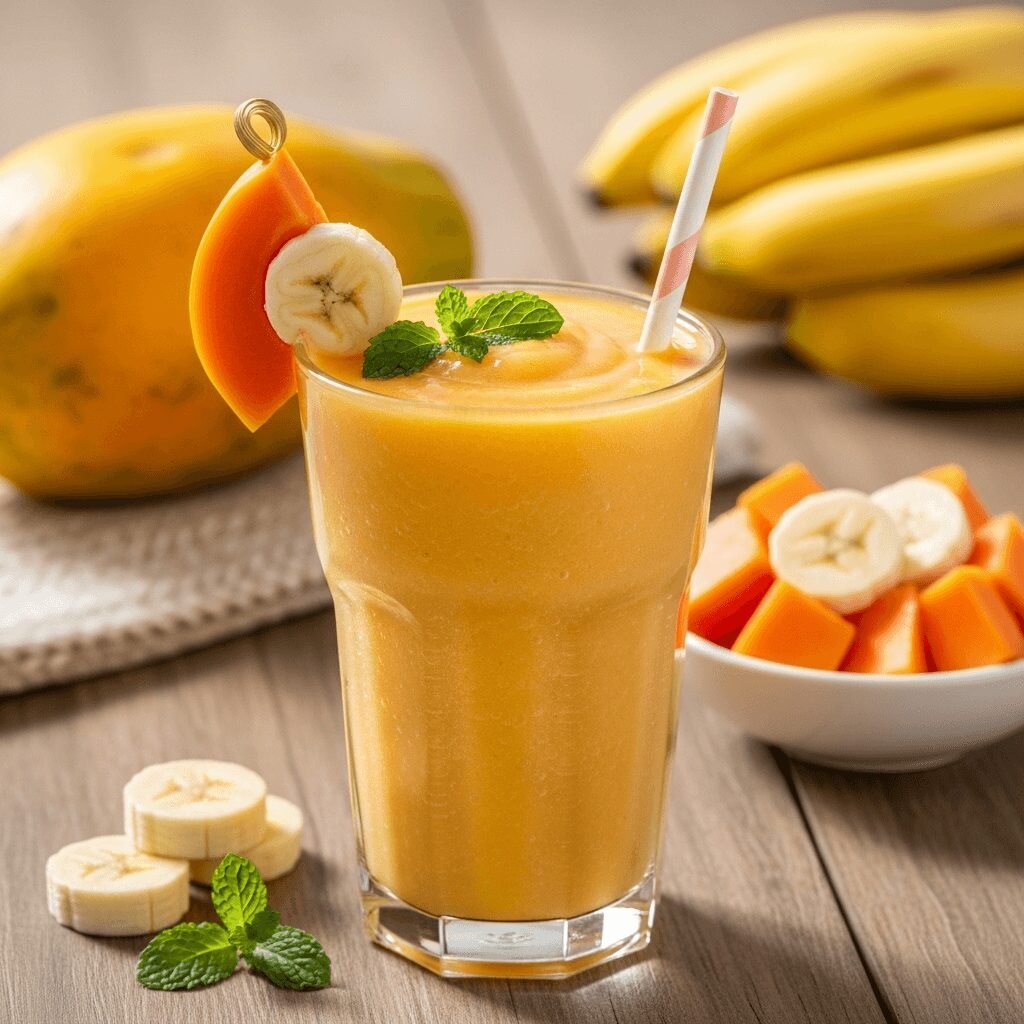
Papaya Banana Smoothie Recipe: Tropical Breakfast Smoothie

If you’re dreaming of a tropical getaway but can’t escape your daily routine, this Papaya Banana Smoothie will transport your taste buds straight to paradise! This vibrant, sunshine-colored smoothie combines the sweet, buttery flavor of ripe papaya with the creamy richness of banana to create a refreshing drink that’s both indulgent and incredibly nutritious. It’s like sipping on liquid sunshine – naturally sweet, tropical, and bursting with vitamins that’ll make your body sing with happiness.
What makes this easy tropical papaya smoothie so irresistible is its perfect balance of exotic flavor and familiar comfort. Papaya brings a unique tropical sweetness that’s slightly musky and incredibly smooth, while banana adds natural creaminess and a comforting flavor that makes this smoothie feel less exotic and more like a delicious treat you’d want every single day. The texture is absolutely dreamy – thick, velvety, and smooth without any grittiness or chunks.
This healthy papaya breakfast smoothie is perfect for countless occasions throughout your day! Start your morning with this vitamin C-packed powerhouse alongside your breakfast, blend it up as a refreshing afternoon snack when energy levels dip, enjoy it as post-workout fuel to replenish and hydrate, or serve it as a light, digestive-friendly dessert after a heavy meal. Papaya contains natural enzymes that aid digestion, making this smoothie especially wonderful after eating or when your stomach needs some gentle support. Kids love the naturally sweet taste and beautiful golden-orange color, making it an excellent way to introduce tropical fruits into their diet. Whether you’re using fresh papaya when it’s in season or convenient frozen papaya chunks year-round, this smoothie takes just 5 minutes to make and requires minimal cleanup – truly a busy person’s dream!
History / Background
Papaya, scientifically known as Carica papaya, has a rich history dating back thousands of years to the tropical regions of Central America and southern Mexico. The ancient Mayans revered papaya as the “fruit of the angels,” and Christopher Columbus reportedly called it “the fruit of paradise” when he encountered it during his voyages. Spanish and Portuguese explorers helped spread papaya throughout the Caribbean, South America, and eventually to tropical regions worldwide, including Asia, Africa, and the Pacific Islands.
For centuries, papaya has been valued not just as a delicious fruit but as a medicinal plant. Traditional medicine systems in various cultures have used papaya to treat digestive issues, inflammation, wounds, and numerous other ailments. The fruit contains papain, a powerful enzyme that breaks down proteins and aids digestion – this is why papaya is often served after meals in tropical countries and why it’s a key ingredient in many meat tenderizers.
The smoothie as we know it today emerged in the United States during the 1960s and 1970s when health food stores began blending fruits with ice, juice, and other nutritious ingredients. However, the concept of blended fruit drinks existed long before in many tropical cultures. In Latin America, “licuados” (blended fruit drinks) have been popular for generations. In Southeast Asia, papaya smoothies and shakes have been enjoyed as street food and home remedies for decades.
The papaya banana smoothie specifically represents a beautiful fusion of tropical fruit culture with modern health consciousness. Papayas are grown extensively in Hawaii, Florida, California, and imported from Mexico, making them increasingly accessible to American consumers. As people became more interested in digestive health, gut wellness, and enzyme-rich foods in the 2000s and 2010s, papaya experienced a renaissance in popularity. Food bloggers and wellness advocates began championing this tropical fruit for its incredible nutritional profile – it’s loaded with vitamin C, vitamin A, folate, fiber, and those famous digestive enzymes.
Today, this smoothie is beloved by health enthusiasts, tropical fruit lovers, people with digestive sensitivities, and anyone who appreciates a naturally sweet, refreshing beverage. It’s particularly popular in coastal areas, among yoga and wellness communities, and in regions with large Hispanic and Asian populations where papaya is a familiar, cherished fruit. The combination with banana is genius because banana’s familiar flavor and creamy texture make papaya more approachable for those trying it for the first time, while papaya elevates a simple banana smoothie into something truly special and exotic.
Why You’ll Love This Recipe
This creamy papaya smoothie recipe isn’t just another fruit blend – it’s a recipe that delivers incredible flavor, amazing nutrition, and genuine digestive benefits all in one gorgeous glass. The taste is naturally sweet and tropical without being overwhelming, and the texture rivals any premium smoothie shop creation.
Here’s why this tropical banana papaya smoothie will become your new morning ritual:
- Super Quick & Easy – Ready in just 5 minutes from start to finish with minimal equipment and zero cooking
- Naturally Sweet – No added sugar needed! Ripe papaya and banana provide all the sweetness naturally
- Digestive Powerhouse – Papaya’s natural enzymes (papain) aid digestion and soothe stomach discomfort
- Vitamin C Bomb – One serving provides over 100% of your daily vitamin C needs for immune support
- Incredibly Creamy – The combination creates a luxurious, velvety texture without any dairy or thickeners
- Budget-Friendly – Affordable tropical fruits that are available year-round, especially when using frozen
- Kid-Approved – The sweet, mild tropical flavor and pretty color appeal to even picky eaters
- Energy-Boosting – Natural fruit sugars and nutrients provide clean, sustained energy without crashes
- Hydrating – Both fruits have high water content, helping you stay hydrated throughout the day
- Skin-Loving – High in vitamin A and antioxidants that support healthy, glowing skin
- Gentle on Stomach – Perfect for sensitive stomachs, morning sickness, or post-illness recovery
- Versatile – Works perfectly as breakfast, snack, post-workout fuel, or light dessert
- Anti-Inflammatory – Natural compounds in papaya help reduce inflammation throughout the body
Whether you’re a smoothie enthusiast looking for new tropical flavors, someone with digestive concerns seeking natural relief, a parent trying to get more fruit into your kids’ diets, or simply someone who loves the taste of paradise in a glass, this recipe delivers on every promise. It’s proof that the healthiest foods can also be the most delicious!
Ingredient Notes
Let’s explore what makes this healthy tropical papaya smoothie so delicious and nutritious. Understanding your ingredients helps you make smart substitutions and truly master this recipe.
Fresh or Frozen Papaya – The star ingredient! Ripe papaya should be orange-yellow in color, slightly soft to the touch, and smell sweet and tropical. You’ll need about 1½ cups of cubed papaya, which is roughly half of a medium papaya. Remove the black seeds (they’re edible but peppery and bitter) and scoop out the flesh. Frozen papaya chunks are an excellent alternative – they’re pre-cut, often more affordable, available year-round, and create an extra-thick, frosty texture. Both fresh and frozen work beautifully, so choose based on availability and convenience.
Banana – Essential for creating that creamy, smooth texture we all love in smoothies. Use a ripe banana (with some brown spots) for maximum sweetness and creaminess. Frozen banana creates the absolute best texture – thick and milkshake-like – while fresh banana plus ice works but won’t be quite as luxurious. Always peel and slice your bananas before freezing for easier blending. The banana also helps balance papaya’s unique flavor, making it more approachable if you’re new to this tropical fruit.
Liquid Base – You’ll need some form of liquid to help everything blend smoothly. Options include coconut milk (for extra tropical flavor and creaminess), almond milk (light and subtly sweet), oat milk (creamy and naturally sweet), regular dairy milk, orange juice (enhances the tropical vibe), or even coconut water (for a lighter, more hydrating smoothie). Start with less liquid than you think you need – you can always add more to reach your preferred consistency.
Greek Yogurt (Optional but Recommended) – Adding ½ cup of plain Greek yogurt boosts protein content significantly, adds probiotics for gut health, creates extra creaminess, and provides a subtle tangy flavor that complements the sweet tropical fruits. For a vegan version, use plant-based yogurt (coconut, almond, or cashew) or simply omit the yogurt and use more liquid instead.
Lime Juice – Just a squeeze of fresh lime juice (about 1-2 teaspoons) brightens all the flavors, adds vitamin C, and creates a more complex, restaurant-quality taste. Lime pairs beautifully with papaya’s tropical sweetness. Fresh lime is strongly preferred over bottled, but bottled will work in a pinch.
Sweetener (Optional) – Depending on the ripeness of your fruits and your personal taste, you may want to add a drizzle of honey, maple syrup, or agave nectar. Most people find ripe papaya and banana provide sufficient sweetness, so always taste before adding sweetener. If your papaya is under-ripe or you prefer sweeter smoothies, start with 1 tablespoon and adjust.
Optional Flavor Enhancers – Consider adding a tiny pinch of ground turmeric for anti-inflammatory benefits and color boost, fresh ginger (½-inch piece) for digestive support and spicy warmth, vanilla extract (½ teaspoon) for depth, or a handful of spinach for hidden greens without affecting the tropical flavor.
Ice Cubes (Optional) – Only needed if using all fresh (not frozen) fruit. Ice helps create that thick, frosty texture. However, frozen banana and/or frozen papaya typically provide enough chill without diluting the flavor with ice.
Equipment Needed
One of the best things about this easy papaya banana smoothie recipe is that you need very minimal equipment, most of which you probably already have!
- High-Powered Blender – Essential for creating that perfectly smooth, creamy texture. Quality blenders like Vitamix, Blendtec, Ninja, or similar models handle frozen fruit effortlessly and pulverize everything into silky smoothness. If you have a less powerful blender, let frozen ingredients thaw for 5-10 minutes before blending, and be prepared to stop and scrape down the sides several times.
- Sharp Knife – For cutting papaya in half and cubing the flesh, plus slicing banana
- Cutting Board – Standard kitchen cutting board for fruit prep
- Spoon – For scooping out papaya seeds and flesh from the skin
- Measuring Cups and Spoons – For accurate ingredient measurements
- Citrus Juicer or Reamer (Optional) – Makes squeezing fresh lime juice easier and more efficient
- Rubber Spatula – Helpful for scraping down blender sides and getting every drop of smoothie goodness
- Tall Glasses or Tumblers – For serving your beautiful tropical smoothie
- Reusable Straws – Optional but make smoothie-drinking more enjoyable
- Freezer-Safe Bags or Containers – If you’re making smoothie prep packs ahead of time
Blender Pro Tips: The order you layer ingredients matters! Always add liquid first (this creates the vortex that pulls ingredients down), then any yogurt or soft ingredients, then fresh fruit, and finally frozen items on top. This prevents air pockets and helps your blender work more efficiently.
Print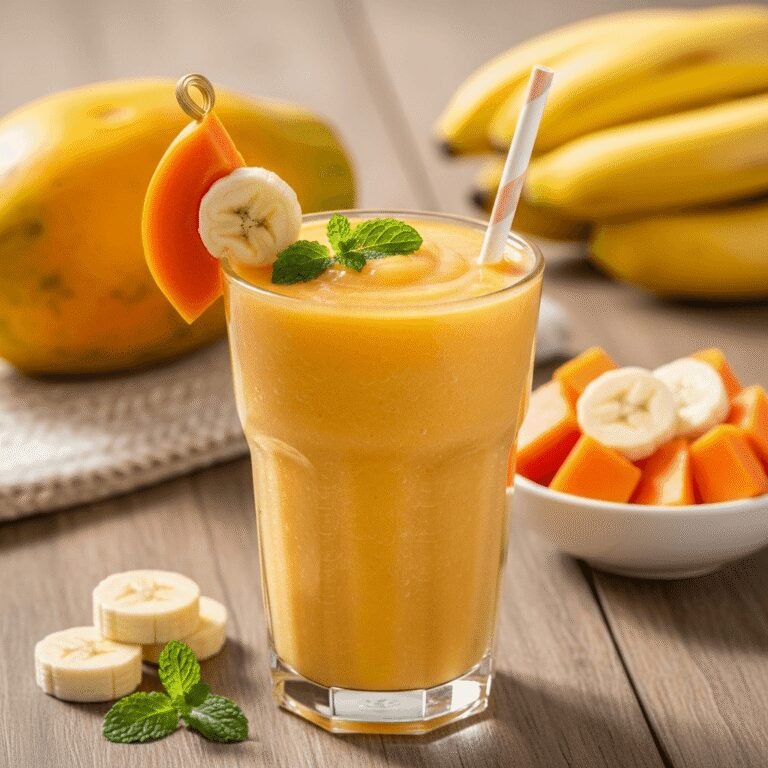
Papaya Banana Smoothie Recipe
This Papaya Banana Smoothie is a tropical paradise in a glass! Naturally sweet, incredibly creamy, and packed with digestive enzymes and vitamin C, this healthy breakfast smoothie is ready in 5 minutes. Made with just a few simple ingredients, it’s perfect for busy mornings, post-workout fuel, or anytime you need a refreshing, nutritious pick-me-up!
- Total Time: 5 minutes
- Yield: 2 servings 1x
Ingredients
- 1½ cups fresh or frozen papaya chunks (seeds removed)
- 1 large banana, preferably frozen
- ¾ cup liquid of choice (coconut milk, almond milk, oat milk, or orange juice)
- ½ cup plain Greek yogurt (or plant-based yogurt)
- 1-2 teaspoons fresh lime juice
- 1 tablespoon honey or maple syrup (optional, to taste)
- ½ cup ice cubes (only if using all fresh fruit)
- Fresh mint leaves for garnish (optional)
Instructions
- Prepare Your Papaya: If using fresh papaya, cut it in half lengthwise and scoop out all the black seeds with a spoon (discard them or save for another use). Cut the flesh into cubes and measure out 1½ cups. If using frozen papaya, simply measure out 1½ cups – no prep needed! If your papaya isn’t fully ripe, let the cubes sit at room temperature for 10 minutes to enhance sweetness.
- Prep Your Banana: If you haven’t already, peel and slice your banana. For the absolute best texture, use a banana that’s been frozen for at least 2 hours or overnight. If using fresh banana, you’ll need to add ice cubes to achieve proper smoothie thickness.
- Layer Ingredients Properly: Add ingredients to your blender in this strategic order for optimal blending: liquid first (milk or juice), then Greek yogurt, lime juice, any optional sweetener, fresh banana (if using), papaya chunks, frozen banana pieces (if using), and finally ice cubes if needed. This layering technique creates proper vortex action and prevents ingredients from getting stuck.
- Start Blending on Low: Begin your blender on the lowest speed setting for about 10-15 seconds. This breaks down the larger fruit chunks without overworking your blender motor or creating air pockets. You’ll hear the sound change as the ingredients start breaking down and incorporating together.
- Increase to High Speed: Gradually increase your blender speed to high and blend for 45-60 seconds until the smoothie is completely smooth, creamy, and velvety with no visible chunks remaining. The mixture should be a beautiful peachy-orange color and have a thick, luxurious consistency. If your blender has a tamper tool, use it to push ingredients toward the blades if needed.
- Check Consistency and Adjust: Stop the blender and check the thickness. If it’s too thick to blend properly or drink comfortably, add liquid 2 tablespoons at a time and pulse briefly. If it’s too thin for your liking, add a few more ice cubes, extra frozen banana, or more frozen papaya and blend again. Remember that the smoothie will thin slightly as it sits.
- Taste and Perfect: This crucial step ensures your smoothie is exactly how you like it! Taste and adjust sweetness if needed. If your papaya was under-ripe or you prefer sweeter smoothies, add honey or maple syrup and blend briefly. If it needs more brightness, add another squeeze of lime juice. Blend for just 5-10 seconds after any additions.
- Serve Immediately: Pour into glasses and enjoy right away while it’s perfectly chilled and the texture is at its peak. If desired, garnish with a small wedge of fresh papaya, a lime wheel, fresh mint leaves, or a sprinkle of coconut flakes for a pretty, Instagram-worthy presentation.
Notes
- Choose papaya that’s ripe but not overripe – it should be mostly orange-yellow with some give when pressed, and smell sweet and tropical
- Frozen fruit creates the best thick, creamy texture without diluting flavors with excessive ice
- The riper your banana, the sweeter your smoothie will be naturally
- Papaya can have a slightly musky flavor that some people find strong – the banana, lime, and optional yogurt help balance this
- For a lighter, more juice-like smoothie, use coconut water or orange juice and skip the yogurt
- If smoothie separates after sitting (normal!), just stir or shake before drinking
- Different blenders have different power – blend longer if needed to achieve silky-smooth consistency
- Protein powder (vanilla or unflavored) can be added for extra protein but may thicken the smoothie
- Prep Time: 5 minutes
- Cook Time: 0 minutes
Nutrition
- Serving Size: 1 smoothie (approximately 16 oz)
- Calories: 215
- Sugar: 28g
- Sodium: 45mg
- Fat: 3g
- Saturated Fat: 1g
- Unsaturated Fat: 1g
- Trans Fat: 0g
- Carbohydrates: 42g
- Fiber: 5g
- Protein: 8g
- Cholesterol: 5mg
Tips & Variations
The beauty of this tropical papaya smoothie bowl base is how wonderfully versatile and customizable it is. Here are creative ways to adapt this recipe to match your taste preferences, dietary needs, and nutritional goals:
Flavor Variations:
- Papaya Mango Smoothie: Replace half the papaya with frozen mango for a double-tropical treat
- Papaya Pineapple Paradise: Add ½ cup of frozen pineapple chunks for extra tropical vibes and tanginess
- Green Papaya Smoothie: Sneak in a handful of spinach or kale – the papaya’s sweetness masks any green taste
- Papaya Coconut Dream: Use coconut milk and add 2 tablespoons of shredded coconut for intense coconut flavor
- Papaya Berry Fusion: Add ½ cup of frozen strawberries or mixed berries for a fruity twist
- Spiced Tropical: Add a pinch of ground cinnamon, cardamom, or a ¼-inch piece of fresh ginger for warming spice
- Papaya Protein Power: Add a scoop of vanilla or unflavored protein powder for a protein-packed breakfast
Dietary Adaptations:
- Vegan Version: Use plant-based yogurt (coconut, almond, or cashew) or omit yogurt entirely, use non-dairy milk, and choose maple syrup or agave over honey
- Dairy-Free: Simply swap Greek yogurt for coconut yogurt and use non-dairy milk like almond, oat, or coconut milk
- Paleo-Friendly: Use coconut milk and coconut yogurt, skip any sweetener or use raw honey
- Low-Sugar: Use less banana (½ instead of whole) and add ¼ avocado for creaminess without extra sugar
- High-Protein: Add a scoop of protein powder, extra Greek yogurt, or 2 tablespoons of hemp hearts
- Keto-Adapted: This smoothie is naturally higher in carbs due to fruit, but you could use less papaya/banana, add avocado for fat, and use unsweetened coconut milk with stevia
Texture Modifications:
- Smoothie Bowl: Use just ½ cup liquid for an ultra-thick, spoonable consistency. Pour into a bowl and top with granola, fresh fruit, coconut flakes, chia seeds, and sliced almonds
- Thinner Drinkable Smoothie: Increase liquid to 1-1½ cups for a lighter, more juice-like consistency
- Extra Creamy: Add ¼ of a ripe avocado for ultra-luxurious creaminess without altering the tropical flavor
- Frosty Shake: Add an extra ½ cup of ice for an even thicker, frostier, milkshake-like texture
Nutrition Boosters:
- Add 1 tablespoon of chia seeds, ground flaxseed, or hemp hearts for omega-3 fatty acids and fiber
- Include ½ teaspoon of turmeric powder for anti-inflammatory benefits (won’t affect taste much)
- Mix in a tablespoon of almond butter or cashew butter for healthy fats and protein
- Add a tablespoon of collagen powder for skin, hair, and joint health
- Throw in ¼ teaspoon of spirulina or a handful of spinach for extra nutrients and greens
Pro Chef Tips
Want to take your healthy papaya banana breakfast smoothie from good to absolutely spectacular? Here are professional insights that make all the difference:
Master Papaya Selection: Choosing the right papaya is crucial for smoothie success. Look for fruit that’s mostly yellow-orange (about 80% colored) with slight give when pressed gently – like a ripe peach. It should smell sweet and tropical at the stem end. Avoid papayas that are completely hard (under-ripe) or have soft spots and fermented smell (over-ripe). If your papaya is under-ripe, let it sit at room temperature for 2-3 days until it ripens. Pro tip: placing papaya in a paper bag with a banana or apple speeds up ripening!
Freeze Papaya Properly: When you have perfectly ripe papaya, prep it for future smoothies by cubing the flesh, spreading pieces on a parchment-lined baking sheet in a single layer, and freezing until solid (2-3 hours). Then transfer to freezer bags. This prevents papaya from freezing in one giant clump and makes measuring easy. Frozen papaya chunks last 3-6 months and are smoothie-ready anytime!
The Banana Sweetness Secret: The sweetness of your entire smoothie depends heavily on banana ripeness. Use bananas with brown spots on the peel – these are perfectly ripe with maximum sugar content. Green-tinged bananas will make your smoothie less sweet and more starchy. If you only have under-ripe bananas, add an extra tablespoon of honey or a pitted Medjool date for sweetness.
Don’t Fear the Lime: Many people skip the lime juice thinking it’s optional, but it’s actually transformative! Fresh lime juice cuts through the rich sweetness, adds brightness and complexity, and makes your smoothie taste like it came from a high-end smoothie bar rather than your home kitchen. Just 1-2 teaspoons makes a massive difference without making the smoothie taste sour or citrusy.
Master the Liquid Ratio: This is crucial for perfect texture every time. Always start with less liquid than the recipe calls for – begin with ½ cup instead of ¾ cup. Blend, check consistency, and add more liquid 2 tablespoons at a time until you reach your ideal thickness. It’s infinitely easier to thin out a too-thick smoothie than to rescue a watery one. Remember: you want a smoothie you can drink through a straw, but thick enough that it coats the back of a spoon.
Layer Like a Pro: Professional smoothie makers always add ingredients in this order: liquid first (creates the vortex), then room temperature ingredients like yogurt, then fresh soft fruits, and finally frozen items on top. This strategic layering ensures smooth blending without air pockets and prevents your blender from struggling.
Blend Longer Than You Think: Most home cooks don’t blend long enough. For professional-level smoothness with zero papaya fibers or banana chunks, blend for a full 60-90 seconds on high speed after everything is incorporated. This extra time creates that silky, velvety texture that rivals any smoothie shop.
Serve at Peak Chill: Smoothies taste best when served icy cold. If your smoothie has warmed up even slightly while blending or sitting, add 2-3 ice cubes and blend for 10 more seconds before serving. Temperature affects flavor perception – cold smoothies taste sweeter and more refreshing!
Common Mistakes to Avoid
Even though this easy tropical fruit smoothie is quite forgiving, here are common pitfalls to watch out for:
Using Under-Ripe Papaya: This is the biggest mistake! Under-ripe papaya is firm, pale yellow-green, and tastes bland, slightly bitter, or even soapy. It will make your smoothie disappointing. The fix: Only use papaya that’s mostly orange, yields slightly to pressure, and smells sweet. If you bought under-ripe papaya, let it ripen at room temperature for several days before making your smoothie, or buy frozen papaya which is always harvested at peak ripeness.
Adding Too Much Liquid at Once: Starting with too much liquid creates a thin, watery smoothie that’s more like juice than a satisfying, thick smoothie. You can’t easily thicken it back up without more frozen fruit, which changes your fruit ratios. The fix: Always start with less liquid (½ cup) and add more gradually only as needed. Remember, frozen fruit contains water that will thin the smoothie as it melts slightly during blending.
Blending on High Speed Immediately: Cranking your blender to maximum speed right away causes frozen chunks to bounce around the container without actually blending, creates air pockets, and can even damage less powerful blender motors. The fix: Always start on low speed for 10-15 seconds to break down large chunks, then gradually increase to high speed. This protects your equipment and creates smoother results.
Not Removing All Papaya Seeds: Papaya seeds are technically edible (they’re peppery and slightly bitter), but leaving them in your smoothie creates unpleasant texture and bitter flavor. Even a few seeds can negatively impact taste. The fix: Thoroughly scoop out all black seeds with a spoon and check that you’ve removed them completely before adding papaya flesh to your blender.
Using the Wrong Banana: Using a green, under-ripe banana makes your smoothie less sweet, slightly starchy, and less creamy. Over-ripe bananas (completely black with liquid insides) can make smoothies taste fermented. The fix: Use bananas with yellow peels and brown spots – this is the perfect ripeness for maximum sweetness and creaminess. Freeze them at this stage for future smoothies.
Forgetting to Taste Before Serving: Papayas vary in sweetness depending on variety, ripeness, and season. Making the whole recipe without tasting means you might serve a smoothie that’s too tart, too bland, or not quite right. The fix: Always taste after blending and adjust sweetness, lime juice, or other flavors before serving. This 10-second step ensures perfect results every single time.
Storage & Meal Prep
While this creamy papaya breakfast smoothie is definitely best enjoyed fresh, there are smart strategies for storage and prep that make healthy eating effortless throughout your week.
Immediate Storage: If you can’t drink your smoothie right away, store it in an airtight container, mason jar, or bottle in the refrigerator for up to 24 hours maximum. Fill the container completely to the top to minimize air exposure, which causes oxidation and color changes. The smoothie will naturally separate as it sits – this is totally normal! The heavier papaya and banana solids sink to the bottom while liquid rises to the top. Simply shake vigorously or give it a quick 10-second re-blend before drinking. The texture may be slightly thinner than when freshly made, but the flavor remains delicious.
Smoothie Prep Packs – The Ultimate Time-Saver: This is hands-down the best meal prep strategy for smoothies! Portion all your solid ingredients into individual freezer-safe bags or containers. Each pack should contain: 1½ cups cubed papaya (fresh or already frozen), 1 sliced banana, and any add-ins like chia seeds. Label each bag with the recipe name, date, and what liquids to add. Store flat in the freezer for up to 3 months. On busy mornings, simply dump one prep pack into your blender, add ¾ cup milk and ½ cup yogurt, blend for 60 seconds, and you’re done! Breakfast in under 3 minutes.
Pre-Cutting Fresh Ingredients: When you bring home fresh papaya, prep it all at once for the week. Cut the fruit in half, scoop out seeds, cube all the flesh, and store in airtight containers in the refrigerator for 3-4 days. This makes morning smoothie-making incredibly fast since your fruit is ready to go. Do the same with bananas – peel and slice several at once and freeze on a baking sheet before transferring to bags.
Portion Control: Use silicone muffin cups or small containers to freeze individual smoothie portions. Blend a double or triple batch, pour into containers, freeze until solid, then pop them out and store in freezer bags. When you want a smoothie, blend one or two frozen portions with a splash of fresh milk. Perfect for portion control!
Travel Tips: Taking your smoothie on-the-go? Use an insulated stainless steel bottle or tumbler with a secure lid. Add the smoothie and an ice pack to your bag. Some people freeze their smoothie in the travel container overnight, then let it thaw throughout the morning for a perfectly slushy drink by mid-morning break time. Genius!
Papaya Storage: Whole unripe papaya can be stored at room temperature until ripe (2-5 days depending on initial ripeness). Once ripe, store whole papaya in the refrigerator for up to 5 days. Cut papaya should be stored in an airtight container in the fridge and used within 3-4 days for best quality.
Make-Ahead & Freezer Notes
Planning ahead transforms this healthy tropical smoothie from an occasional treat into a daily healthy habit that requires practically zero effort on busy mornings.
Can You Freeze the Complete Blended Smoothie? Yes, but with some important caveats about texture. You can freeze fully blended smoothies in freezer-safe jars or containers (leave 1 inch of headspace for expansion as liquids expand when frozen). They’ll keep for up to 2 months. However, the texture will change upon thawing – ingredients separate more noticeably, and the consistency may be slightly grainy or less creamy. To serve, thaw overnight in the refrigerator and shake or blend vigorously before drinking. Alternatively, blend the frozen smoothie with a splash of fresh milk for better texture restoration.
Smoothie Popsicles – A Delicious Alternative: Pour your blended papaya banana smoothie into popsicle molds and freeze for healthy, naturally sweet frozen treats! These are fantastic for hot summer days, kids’ after-school snacks, or anytime you want something cold and refreshing. They’re portion-controlled, portable, and make getting your daily fruits fun. Add a small piece of fresh fruit to each mold before freezing for visual appeal.
The Best Freezer Strategy: Absolutely the winner is the smoothie prep pack method described above. Having bags of pre-portioned ingredients (papaya, banana, any add-ins) in your freezer means you can make a fresh smoothie with optimal texture and flavor in under 5 minutes anytime. Simply blend frozen ingredients with fresh yogurt and milk. This method gives you the absolute best texture since you’re blending fresh rather than thawing pre-made smoothies.
How Long Do Prep Packs Last? Properly stored in airtight freezer bags with excess air removed, smoothie prep packs maintain excellent quality for 3 months. Both papaya and banana freeze well without quality loss when properly prepared. After 3 months, they’re still safe to eat but may develop mild freezer burn that slightly affects texture and flavor. Always label bags with dates so you can use the oldest packs first.
Thawing Tips: Great news – you never need to thaw smoothie prep packs! Blend contents directly from frozen with your liquid and yogurt. The frozen fruit creates that perfect thick, frosty texture. If your blender is less powerful, you can let the pack sit at room temperature for 5-10 minutes to soften slightly, making blending easier. Never fully thaw and refreeze fruit as this significantly degrades quality and texture.
Quick Morning Routine: With prep packs ready, your morning routine is beautifully simple: grab one prep pack from freezer, empty contents into blender, add ¾ cup milk and ½ cup yogurt, blend for 60 seconds, pour, and enjoy! From freezer to glass in under 3 minutes – faster than a coffee shop drive-through and infinitely healthier and more affordable.
Serving Suggestions
While this papaya banana tropical smoothie is absolutely perfect enjoyed on its own, here are creative ways to serve it and complementary pairings:
As a Complete Breakfast: Pair your smoothie with whole-grain toast topped with almond butter and sliced strawberries, or alongside a veggie-packed omelet or scrambled eggs for a balanced breakfast with protein, healthy fats, complex carbs, and fruits. The smoothie provides fruits and dairy/protein (if using yogurt), while your sides complete the nutritional profile.
Smoothie Bowl Transformation: Make it thicker (use just ½ cup liquid) and pour into a bowl for an Instagram-worthy breakfast bowl. Top with beautiful toppings like sliced banana, fresh papaya chunks, granola, shredded coconut, chia seeds, hemp hearts, passion fruit, kiwi slices, and a drizzle of honey. Eat with a spoon for a more substantial, satisfying meal that feels more like eating than drinking.
Post-Workout Recovery: Enjoy within 30-45 minutes after exercise alongside a handful of raw almonds, cashews, or a hardboiled egg. The natural fruit sugars replenish glycogen stores, while the optional yogurt provides protein for muscle recovery. Papaya’s anti-inflammatory properties help reduce workout-related inflammation.
Breakfast On-the-Go: Pour into an insulated travel mug and grab a protein bar, breakfast cookie, or homemade muffin to eat alongside during your commute. This combo provides sustained energy without needing to sit down for a proper meal.
Digestive Aid After Meals: In many tropical cultures, papaya is traditionally served after heavy meals to aid digestion. Enjoy this smoothie as a light, refreshing dessert after dinner, especially after rich, heavy, or protein-heavy meals. The papain enzymes in papaya help break down proteins and ease digestion.
of string cheese, whole-grain crackers with hummus, or a small energy ball for a balanced afternoon snack that combines natural fruit sugars with protein and healthy fats. This combination prevents energy crashes and keeps you satisfied until dinner.
Brunch Beverage: Serve at your weekend brunch gathering alongside pancakes, waffles, French toast, egg dishes, or avocado toast. The bright tropical flavor and beautiful golden-orange color make it feel special and festive. Set up a smoothie bar where guests can customize their own with various toppings!
Kids’ Lunch Addition: Pack in an insulated thermos for school lunches alongside a sandwich, veggie sticks with ranch, and fruit. The naturally sweet taste and pretty color make it a lunchbox win that kids actually look forward to drinking.
Light Dessert: Serve in pretty glasses with a dollop of coconut whipped cream, a sprinkle of toasted coconut flakes, and a fresh lime wheel garnish for an elegant, healthy dessert that satisfies sweet cravings without the guilt. Perfect for dinner parties or special occasions!
Poolside or Beach Refreshment: This tropical smoothie is ideal for hot summer days by the pool or at the beach. The hydrating fruits and refreshing flavor make it perfect for outdoor entertaining. Serve with colorful straws and tropical garnishes for that vacation vibe!
FAQs Section
What does papaya taste like in a smoothie?
Ripe papaya has a sweet, tropical flavor that’s often described as a blend of cantaloupe and mango with subtle musky or floral notes. In this smoothie, the papaya creates a smooth, buttery texture and sweet tropical taste that’s balanced beautifully by banana’s familiar creaminess and lime’s brightness. If you’ve never tried papaya, don’t worry – the banana makes it very approachable! Some people find papaya has a unique aroma they need to get used to, but most find it deliciously sweet and tropical, especially when blended with complementary ingredients.
Can I use green (unripe) papaya for this smoothie?
No, green unripe papaya is not recommended for smoothies. Unripe papaya is firm, pale in color, and has a very different flavor profile – it’s bland, slightly bitter, or even soapy-tasting. It’s used in some Southeast Asian cuisines for salads (like papaya salad) where it’s shredded and dressed with bold flavors, but it won’t create a pleasant smoothie. Always use ripe, orange-fleshed papaya that’s soft, sweet, and fragrant. If your papaya is under-ripe, let it sit at room temperature for 2-5 days until it ripens properly.
Is papaya good for digestion? Why?
Yes! Papaya is exceptional for digestive health. It contains papain, a powerful proteolytic enzyme that helps break down proteins in food, making them easier to digest. This is why papaya is traditionally served after meals in many tropical cultures. Papaya also contains fiber, which supports regular bowel movements, and other enzymes like chymopapain that have anti-inflammatory properties. Many people with digestive issues, bloating, or IBS find papaya soothing and helpful. It’s also gentle on the stomach, making this smoothie perfect for morning sickness, post-illness recovery, or anytime your digestion needs support.
Can I make this smoothie without banana?
Yes, though banana provides crucial creaminess and natural sweetness that make this smoothie so delicious. For a banana-free version, substitute with: ½ ripe avocado (adds creaminess without banana flavor), frozen mango chunks (keeps the tropical theme), an extra ½ cup of Greek yogurt (boosts creaminess and protein), or ½ cup of frozen cauliflower (sounds weird but you won’t taste it, and it creates great texture). You’ll likely need to add extra sweetener since you’re losing the banana’s natural sugars. The texture and flavor will be slightly different but still delicious!
What’s the best milk to use for this tropical smoothie?
It really depends on your dietary preferences and desired flavor profile! Coconut milk is fantastic because it enhances the tropical vibe and adds natural creaminess. Almond milk is light, subtly sweet, and lets the fruit flavors shine. Oat milk is creamy and naturally sweet. Regular dairy milk works beautifully for classic creaminess. Orange juice instead of milk creates a more vibrant, tropical, juice-like smoothie. Coconut water makes an ultra-light, hydrating version. My personal favorite is coconut milk for maximum tropical flavor, but honestly, they all work great – choose based on what you have and what you prefer!
Can I add greens to this smoothie without tasting them?
Absolutely! This smoothie’s naturally sweet tropical flavor is strong enough to mask the taste of mild greens. Add up to 1 cup of fresh baby spinach or ½ cup of frozen spinach without detecting any “green” taste. The papaya and banana’s sweetness completely covers it. The color will shift slightly toward a more peachy-orange rather than bright orange, but most people don’t even notice. Spinach adds iron, folate, and extra nutrients without affecting the delicious tropical flavor. It’s a fantastic way to sneak greens into kids’ (or your own!) diet.
How do I know if my papaya is ripe enough?
Perfect papaya ripeness is crucial for smoothie success! Look for these signs: The skin should be 70-80% yellow-orange in color (some green is okay, but mostly colored). It should yield slightly to gentle pressure, similar to a ripe peach or avocado – not rock hard, not mushy. The stem end should smell sweet and tropical, not bland or fermented. If you cut it open, the flesh should be bright orange (not pale yellow or greenish), and the fruit should be soft enough to easily scoop with a spoon. If your papaya meets these criteria, it’s perfect for smoothies!
Can I use this smoothie as a meal replacement?
Yes, with some modifications! The base recipe provides about 215 calories and 8g of protein per serving (with yogurt), which is a bit light for a complete meal replacement. To make it more substantial and nutritionally complete, add: a scoop of protein powder (adds 15-20g protein), 2 tablespoons of nut butter like almond or cashew butter (adds healthy fats, protein, and calories), 2 tablespoons of oats or chia seeds (adds fiber and complex carbs), or an extra ½ cup of Greek yogurt (boosts protein significantly). These additions create a more balanced meal with sufficient protein, healthy fats, and calories to keep you satisfied for 3-4 hours.
Conclusion
There you have it – everything you need to know to make this incredible Papaya Banana Smoothie that tastes like a tropical vacation in a glass while nourishing your body with amazing nutrients! This vibrant, sunshine-colored smoothie proves that healthy eating doesn’t have to be complicated, expensive, or taste boring. With just a handful of simple, wholesome ingredients and 5 minutes of your time, you can create a restaurant-quality smoothie that rivals anything from fancy smoothie shops – right in your own kitchen for a fraction of the cost.
What I love most about this recipe is how it introduces people to papaya in such an approachable, delicious way. If you’ve never tried papaya or were hesitant about its unique flavor, this smoothie is the perfect gateway! The familiar sweetness of banana, the brightness of lime, and the creaminess of yogurt create a flavor profile that’s tropical and exciting but still comfortable and crave-worthy. Plus, the digestive benefits from papaya’s natural enzymes make this more than just a tasty drink – it’s functional nutrition that actually helps your body feel better.
Whether you’re rushing out the door in the morning and need a quick breakfast, recovering from a tough workout, trying to eat more fruit, supporting your digestive health, or simply craving something sweet and refreshing that won’t derail your healthy eating goals, this smoothie has you covered. It’s naturally gluten-free, easily made vegan, budget-friendly, kid-approved, and endlessly customizable to suit your preferences.
Remember, the keys to smoothie success are using ripe, sweet papaya, frozen fruit for the best texture, quality ingredients, and not being afraid to adjust the recipe to make it your own. Start with the base recipe, then experiment with the variations to discover your perfect tropical blend!
I’d absolutely love to hear how your tropical papaya smoothie turns out! Did you try any of the flavor variations? Do you have your own creative twist or favorite add-in to share? Drop a comment below and let me know your experience. And if this recipe brightened your morning or helped you fall in love with papaya, please save it to your Pinterest boards so you can find it easily again – and help other home cooks discover the joy of this tropical treat too! Here’s to delicious, nutritious smoothies that make every day feel a little more like paradise! 🌴🥤✨