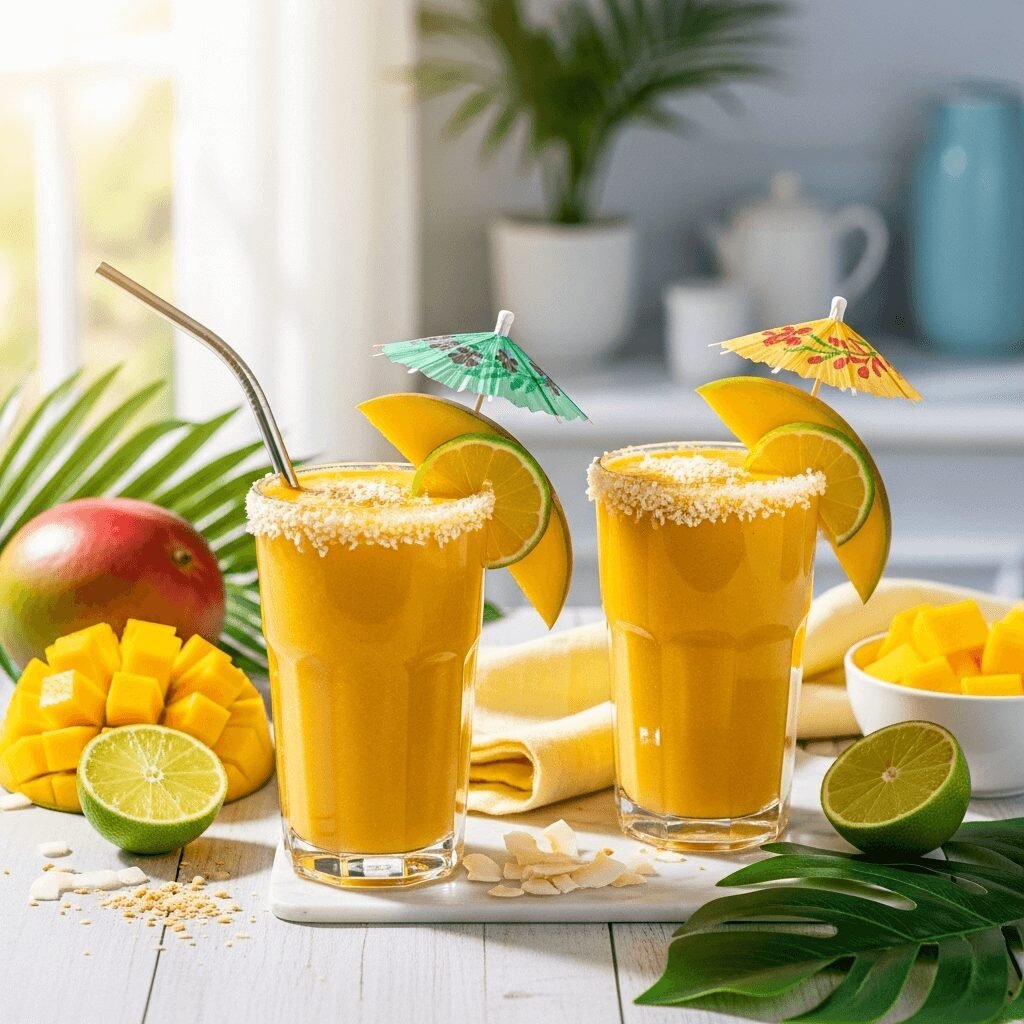
Tropical Coconut Mango Smoothie Recipe – Creamy, Dreamy & Paradise Perfect!

Close your eyes and imagine you’re lounging on a tropical beach with crystal-clear waters lapping at your feet – that’s exactly the feeling this Coconut Mango Smoothie delivers with every sip. This luscious blend combines the sweet, sunshine-bright flavor of ripe mangoes with the rich, creamy indulgence of coconut, creating a smoothie that tastes like vacation in a glass. Whether you’re rushing through a hectic weekday morning, need a post-workout refresher, or want to transport yourself to paradise for a few blissful moments, this easy coconut mango smoothie is your ticket to tropical bliss.
What makes this tropical mango coconut smoothie so incredibly beloved among home cooks is its perfect balance of flavors and textures. The natural sweetness of mangoes means you rarely need added sugar, while coconut milk adds that luxurious creaminess that makes this smoothie feel indulgent without being heavy. It’s refreshing yet satisfying, naturally sweet yet sophisticated. Serve this for breakfast alongside your morning routine, blend it up as an afternoon escape when you need a mental vacation, pack it for beach days or picnics, or enjoy it as a healthy dessert that feels like a special treat.
Parents love this healthy mango coconut smoothie because it’s an effortless way to get fruit into kids (the tropical flavor is universally adored). Fitness enthusiasts appreciate the natural energy from fruit sugars and the electrolytes from coconut water. And anyone who appreciates beautiful food will absolutely swoon over that gorgeous golden-orange color that screams sunshine and happiness! This smoothie is Pinterest perfection and will have your followers begging for the recipe.
History / Background
The marriage of coconut and mango is a love story written in the tropical regions of the world, where both ingredients have been celebrated for thousands of years. This pairing isn’t just delicious – it’s deeply rooted in culinary traditions spanning continents.
Mangoes are believed to have originated in South Asia, particularly in the Indian subcontinent and Myanmar, over 4,000 years ago. Ancient Sanskrit texts mention mangoes, and they’re considered sacred in Hindu tradition. The Mughal emperors were so enamored with mangoes that they established vast orchards. Portuguese explorers introduced mangoes to Africa and Brazil in the 16th century, and eventually, they made their way to the Americas. Today, India remains the world’s largest mango producer, but varieties thrive in Mexico, the Philippines, Thailand, and Florida.
Coconuts have an equally fascinating history. Native to the Indo-Pacific region, coconuts have been cultivated for over 4,000 years and are called the “tree of life” in many tropical cultures because every part of the coconut palm can be used. Ancient Austronesian seafarers spread coconuts across the Pacific and Indian Oceans during their epic voyages. The word “coconut” comes from the 16th-century Portuguese word “coco,” meaning “head” or “skull,” because the three indentations on the coconut shell resembled a face.
The combination of mango and coconut is especially prominent in Southeast Asian, South Asian, Caribbean, and Latin American cuisines. In Thailand, you’ll find mango sticky rice with coconut milk. In the Philippines, mango float desserts layer mangoes with coconut cream. Indian cuisine features mango lassi variations with coconut. Caribbean islands blend both into refreshing drinks and desserts. These cultures understood something magical: mangoes and coconuts are culinary soulmates.
The modern smoothie trend that swept America in the 1990s and 2000s introduced millions to tropical flavor combinations. Juice bars and smoothie chains quickly discovered that coconut mango smoothies were customer favorites – they tasted like an exotic vacation while delivering genuine nutritional benefits. The rise of social media and food blogging in the 2010s turned this smoothie into a Pinterest sensation, with home cooks discovering they could recreate that fresh, tropical experience right in their own kitchens for a fraction of the price.
Today, this creamy mango coconut smoothie represents the perfect fusion of ancient culinary wisdom and modern wellness culture – a delicious reminder that the healthiest foods are often the most naturally delicious.
Why You’ll Love This Recipe
This isn’t just another fruit smoothie – it’s your daily dose of sunshine, your stress-reliever in a glass, and your secret weapon for starting the day with a smile. Here’s why this coconut mango smoothie is about to become your most-made tropical recipe:
🌴 Instant Tropical Vacation – Every sip transports you to a beautiful beach with swaying palm trees. It’s sunshine and happiness in liquid form, perfect for brightening even the gloomiest days.
⚡ Lightning Fast & Easy – Ready in just 5 minutes! Perfect for busy mornings when you need something delicious and nutritious but don’t have time for complicated recipes. If you can push a blender button, you can make this smoothie.
🥭 Naturally Sweet & Delicious – Ripe mangoes provide all the sweetness you need without any added sugars or artificial sweeteners. It tastes like dessert but fuels you like breakfast.
🥥 Luxuriously Creamy – Coconut milk creates that rich, velvety texture that makes this smoothie feel absolutely indulgent without being heavy or overly filling. It’s like a tropical milkshake but so much healthier!
💪 Nutrient-Packed Powerhouse – Mangoes are loaded with vitamins A and C, fiber, and antioxidants, while coconut provides healthy fats and electrolytes. Your body gets serious nutrition while your taste buds dance with joy.
👨👩👧👦 Kid-Approved Favorite – That gorgeous golden color and candy-sweet tropical flavor make this an instant hit with children of all ages. They’ll never know they’re drinking something so good for them!
💰 Budget-Friendly – Especially when you buy frozen mango chunks, this smoothie is incredibly economical. One bag of frozen mango can make multiple smoothies at a fraction of what you’d pay at a juice bar.
🌿 Naturally Vegan & Allergen-Friendly – This smoothie is dairy-free, gluten-free, and can easily be made nut-free. Perfect for anyone with dietary restrictions or allergies.
🔥 Satisfying & Energizing – The natural fruit sugars provide quick energy while the healthy fats from coconut keep you satisfied longer. It’s the perfect balance for sustained energy without a crash.
📸 Social Media Gold – That vibrant golden-orange color is absolutely stunning in photos. Your Instagram and Pinterest followers will be double-tapping and saving like crazy!
Ingredient Notes
Let’s break down what makes this smoothie so wonderfully delicious. Every ingredient plays a starring role in creating that perfect tropical paradise flavor.
Fresh or Frozen Mango – The golden treasure of this smoothie! Fresh, ripe mango offers incredible flavor and natural sweetness, but frozen mango chunks are actually perfect for smoothies. They’re picked at peak ripeness, flash-frozen to lock in nutrients and flavor, they’re available year-round, and they create that thick, frosty texture we all crave. Plus, frozen mango is typically more affordable than fresh. Choosing fresh mango: Look for fruits that give slightly when gently pressed, smell sweet at the stem end, and have vibrant yellow-orange skin (though some varieties stay green when ripe). Substitution: If you can’t find mango, frozen peaches create a similar texture and tropical vibe.
Coconut Milk – This is what transforms your smoothie from good to extraordinary! Full-fat canned coconut milk creates the richest, creamiest texture and adds healthy fats that help you absorb fat-soluble vitamins from the mango. Options: Use full-fat canned coconut milk for maximum creaminess, light coconut milk for fewer calories, or coconut milk from a carton (like Silk or So Delicious) for a thinner, more beverage-style smoothie. Each option works beautifully but creates slightly different textures. Pro tip: Shake the can well before opening – coconut cream naturally separates and rises to the top.
Coconut Water (Optional) – Adds extra tropical flavor and electrolytes while keeping the smoothie light and refreshing. Coconut water is nature’s sports drink, packed with potassium and naturally hydrating. If you don’t have it, regular filtered water works fine, or just use more coconut milk for extra creaminess. Substitution: Orange juice, pineapple juice, or regular water all work.
Banana – The secret ingredient for ultra-creamy texture! Banana adds natural sweetness and creates that smooth, thick consistency that makes this feel like a tropical milkshake. For best results, use frozen banana chunks – they make the smoothie extra thick and frosty without watering it down with ice. Substitution: If you’re avoiding bananas or don’t like the flavor, try half an avocado (seriously – you won’t taste it but it’ll be incredibly creamy), Greek yogurt for thickness, or frozen cauliflower florets (totally undetectable!).
Pineapple (Optional but Recommended) – Adding a small amount of fresh or frozen pineapple enhances the tropical flavor profile and adds a subtle tangy brightness that makes all the flavors pop. Pineapple and mango are classic tropical companions! Amount: Just ½ cup is perfect – you want to enhance, not overpower the mango flavor.
Honey or Maple Syrup (Optional) – Most of the time, ripe mango and banana provide plenty of natural sweetness, and you won’t need any additional sweetener at all. However, if your mango isn’t perfectly ripe or you prefer sweeter smoothies, a small drizzle helps. Always taste first before adding sweetener!
Lime Juice (Optional) – A squeeze of fresh lime juice brightens all the tropical flavors and adds a subtle tang that prevents the smoothie from tasting flat or one-dimensional. This tiny addition makes a surprisingly big impact! Just ½-1 tablespoon is perfect.
Ice Cubes – Essential if you’re using all fresh (not frozen) fruit. Ice creates that perfect frosty, thick texture and keeps your smoothie ice-cold and refreshing. If using frozen mango and frozen banana, you typically won’t need any ice at all.
Optional Boosters – Elevate your smoothie with additions like a handful of baby spinach (completely undetectable but adds nutrients), a tablespoon of chia seeds or ground flaxseed (omega-3s and fiber), a scoop of vanilla protein powder (makes it more filling), fresh ginger (adds warming spice), or a pinch of turmeric (anti-inflammatory benefits and gorgeous color).
Equipment Needed
The beauty of smoothie-making is its simplicity – you need very minimal equipment to create something absolutely magical:
- High-Powered Blender – Your essential tool! A powerful blender (Vitamix, Blendtec, Ninja, or similar) creates the smoothest, silkiest texture and easily handles frozen fruit. Standard kitchen blenders work too – you may just need to blend a bit longer and stop to scrape down the sides. The investment in a good blender is absolutely worth it if you make smoothies regularly.
- Measuring Cups and Spoons – For accurate measurements, especially when making the recipe for the first time. Once you’re familiar with the recipe, you can eyeball amounts more confidently.
- Sharp Knife and Cutting Board – If using fresh mango, you’ll need these to peel and cube the fruit. Mango has a large flat pit in the center, so learning to cut around it is a useful skill.
- Can Opener – For opening canned coconut milk.
- Citrus Juicer or Reamer – Optional but helpful for extracting fresh lime juice efficiently.
- Tall Glasses or Mason Jars – For serving your beautiful smoothie! Wide-mouth mason jars are perfect for both drinking and creating stunning photos.
- Straws – Reusable stainless steel or silicone straws are eco-friendly and make sipping even more enjoyable.
- Rubber Spatula – Essential for scraping down the blender sides and getting every last bit of creamy goodness into your glass.
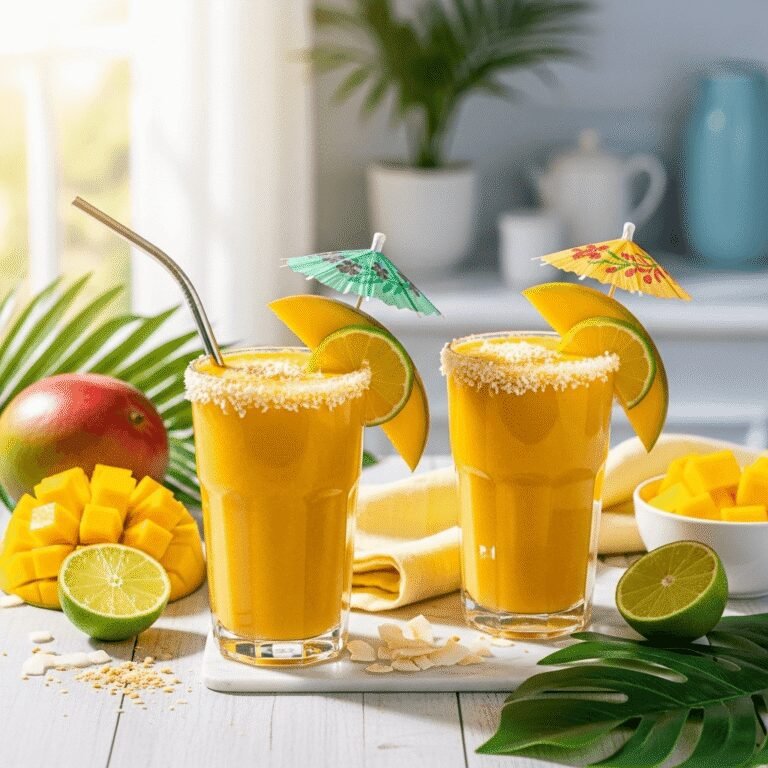
Coconut Mango Smoothie Recipe
A lusciously creamy Coconut Mango Smoothie that combines sweet tropical mangoes with rich coconut milk for a refreshing drink that tastes like paradise. Naturally sweet, dairy-free, and ready in 5 minutes!
- Total Time: 5 minutes
- Yield: 2 servings 1x
Ingredients
- 2 cups fresh or frozen mango chunks (about 2 medium mangoes)
- 1 medium banana, fresh or frozen (frozen recommended)
- ¾ cup full-fat coconut milk (from a can, well-shaken)
- ½ cup coconut water or regular water
- ½ cup fresh or frozen pineapple chunks (optional, but adds great flavor)
- 1 tablespoon fresh lime juice (about ½ lime)
- 1 cup ice cubes (reduce or omit if using all frozen fruit)
- 1-2 teaspoons honey or maple syrup (optional, only if needed for sweetness)
- Pinch of salt (optional, enhances all the flavors)
Instructions
Step 1: Prepare Your Ingredients
If using fresh mango, peel it and cut the flesh away from the large flat pit, then cube into chunks. Peel your banana and break it into pieces. If you have time, freeze the banana chunks for 30 minutes before blending for an extra frosty texture. Shake your can of coconut milk well to recombine the cream and liquid – this is important for smooth blending!
Step 2: Layer Ingredients in Blender
Add ingredients to your blender in this optimal order for smoothest blending: liquid first (coconut milk and coconut water), then the soft ingredients (banana, lime juice), followed by mango and pineapple if using, and finally ice cubes on top. This layering technique helps the blender blades catch everything efficiently and prevents air pockets.
Step 3: Blend Until Silky Smooth
Secure the blender lid tightly. Start blending on low speed for a few seconds, then gradually increase to high speed. Blend for 45-60 seconds until completely smooth, creamy, and uniform in color. You should see a gorgeous golden-orange smoothie with no visible chunks of fruit or ice. The texture should be velvety and luxurious. If your blender is struggling, stop and add a splash more coconut water to help it along.
Step 4: Taste and Adjust Perfection
This is your moment to customize! Stop the blender and taste using a clean spoon. Is it sweet enough? Ripe mango is usually plenty sweet, but if needed, add honey or maple syrup. Want more coconut flavor? Add a bit more coconut milk. Need more tang? Squeeze in more lime. Want it thicker? Add more frozen fruit or ice. Blend briefly after any additions.
Step 5: Serve Immediately and Enjoy
Pour into tall, chilled glasses and serve right away while the smoothie is at its peak – ice-cold, perfectly thick, and beautifully blended. Smoothies naturally separate and lose their ideal texture if they sit too long. Garnish with a mango slice on the rim, a sprinkle of toasted coconut flakes, a lime wedge, or a small umbrella for extra tropical vibes perfect for Pinterest photos!
Notes
- Coconut Milk Options: Full-fat canned coconut milk creates the richest, creamiest smoothie. Light coconut milk or carton coconut milk work but create a thinner texture.
- Frozen Fruit Advantage: Using frozen mango and banana eliminates the need for ice and creates the thickest, creamiest texture without diluting the flavor.
- Consistency Control: For a thick smoothie bowl, use minimal liquid (just ½ cup coconut milk) and all frozen fruit. For a drinkable smoothie, add more coconut water as needed.
- Sweetness Level: Ripe, sweet mango usually provides all the sweetness needed. Only add honey if your mango isn’t very sweet or if you prefer sweeter smoothies.
- Make It Protein-Rich: Add a scoop of vanilla protein powder or ½ cup Greek yogurt to make this more filling and substantial.
- Fresh Mango Selection: Choose mangoes that give slightly when pressed and smell sweet at the stem end. If they’re rock-hard, let them ripen on your counter for 2-3 days.
- Prep Time: 5 minutes
- Cook Time: 0 minutes
Nutrition
- Serving Size: 1 smoothie (12-14 oz)
- Calories: 285
- Sugar: 35g
- Sodium: 25mg
- Fat: 12g
- Saturated Fat: 10g
- Unsaturated Fat: 1g
- Trans Fat: 0g
- Carbohydrates: 45g
- Fiber: 3g
- Protein: 3g
- Cholesterol: 0mg
Tips & Variations
One of the best features of this coconut mango smoothie is how endlessly adaptable it is. Here are creative ways to customize it to your taste and dietary needs:
🥥 Extra Coconutty: Add 2 tablespoons of unsweetened shredded coconut, a splash of coconut extract, or top with toasted coconut flakes for maximum coconut flavor lovers. You can also use all coconut milk instead of mixing with coconut water.
🍍 Piña Colada Style: Increase the pineapple to 1 cup and add a splash of rum extract (or actual rum for adults!) for a virgin or boozy piña colada vibe. Garnish with a pineapple wedge and maraschino cherry.
🥬 Hidden Greens Version: Add a large handful of baby spinach or kale. The vibrant mango color and sweet flavor completely mask the greens, but you get an extra boost of vitamins and minerals. The color will shift to more golden-green, but kids often don’t notice!
💪 Protein Power Smoothie: Add a scoop of vanilla protein powder, ½ cup Greek yogurt (makes it non-vegan but incredibly creamy), or 2 tablespoons of hemp seeds for extra protein and staying power. Perfect for post-workout recovery or meal replacement.
🌶️ Spicy Tropical: Add a small pinch of cayenne pepper or a tiny piece of fresh jalapeño (remove seeds!) for an unexpected spicy kick that actually enhances the sweetness. This combination is surprisingly addictive!
🧡 Turmeric Golden Milk: Add ½ teaspoon of ground turmeric and a small pinch of black pepper (helps absorption) for anti-inflammatory benefits and a gorgeous golden color even more vibrant.
🍊 Citrus Burst: Add the juice of half an orange or a few segments of fresh grapefruit for extra citrus brightness. This creates a more complex, layered flavor profile.
🥤 Smoothie Bowl Style: Use minimal liquid (just enough to blend) and all frozen fruit for a thick, spoonable consistency. Pour into bowls and top with sliced fresh mango, granola, coconut flakes, chia seeds, sliced banana, and a drizzle of honey for an Instagram-worthy tropical breakfast bowl.
🌰 Nut Butter Addition: Stir in a tablespoon of cashew butter or almond butter for healthy fats, protein, and a subtle nutty richness that pairs beautifully with tropical flavors.
🫐 Berry Twist: Add ½ cup of frozen berries (strawberries, blueberries, or mixed berries) for antioxidants and a beautiful sunset gradient color effect.
Pro Chef Tips
These professional-level insights will help you create the absolute best coconut mango smoothie every single time:
🥭 The Mango Ripeness Test: A perfectly ripe mango should give slightly when gently squeezed (like a ripe avocado), smell sweet and fragrant at the stem end, and have wrinkled skin near the stem (a sign of peak ripeness). Color varies by variety – some stay green when ripe, so don’t rely on color alone. If your mangoes are rock-hard, place them in a paper bag with a banana or apple for 1-2 days to speed ripening.
🔪 Master the Mango Cut: Mangoes have a large, flat pit in the center. The easiest way to cut them: Stand the mango upright, cut down along one side of the pit, repeat on the other side (you’ll have two “cheeks”), score the flesh in a crosshatch pattern without cutting through the skin, then push the skin up to pop out the cubes. Cut the cubes away from the skin. This technique gives you perfect mango chunks with minimal waste.
🥥 Coconut Milk Separation is Normal: When you open canned coconut milk, the thick cream will have separated and risen to the top with thin liquid below. This is completely normal! For smoothies, you want both parts mixed together for ideal consistency. Shake the can vigorously before opening, or stir well after opening. If the can is cold, the cream becomes very thick – let it sit at room temperature for a few minutes for easier mixing.
❄️ Create a Smoothie Freezer Stash: Buy mangoes when they’re on sale and perfectly ripe, cube them, freeze on a baking sheet until solid, then transfer to freezer bags. Same with bananas – peel, slice, and freeze. Having pre-frozen fruit means you can make thick, creamy smoothies anytime with zero morning prep. This is the #1 tip for smoothie success!
⚖️ Perfect Texture Formula: For ideal smoothie consistency, use a 2:1 ratio of frozen fruit to liquid. Too much liquid creates a watery, thin smoothie; too little and your blender struggles. Start with less liquid than you think you need and add more gradually if necessary.
🌡️ Everything Cold is Key: For the most refreshing smoothie, start with all cold ingredients – refrigerated coconut milk, frozen fruit, cold coconut water. Even keep your serving glasses in the freezer for 5-10 minutes before serving. Temperature makes a huge difference in how refreshing and enjoyable the smoothie feels.
🎨 Layer for Visual Impact: Want that gorgeous gradient effect for photos? Blend the mango with half the coconut milk and banana first, creating a bright orange layer. Pour into glasses. Then blend a small amount of coconut milk with a handful of pineapple until very thick and white, carefully spoon on top, and use a spoon to gently swirl for an ombré effect.
⏰ Timing Matters: Smoothies are at their absolute peak immediately after blending – perfectly cold, perfectly thick, and perfectly mixed. After about 15 minutes, natural separation begins, and the texture changes. Blend right before you plan to drink for the best experience.
🧂 Secret Ingredient – Salt: A tiny pinch of salt (like ⅛ teaspoon) might sound strange in a smoothie, but it actually enhances all the sweet flavors and makes them more vibrant and complex. Professional pastry chefs use this trick constantly!
Common Mistakes to Avoid
Even simple recipes have potential pitfalls! Here are the most common errors and how to sidestep them:
❌ Using Unripe Mango: This is the #1 mistake! Unripe mango is hard, fibrous, sour, and lacks that gorgeous tropical sweetness. Your smoothie will taste disappointing no matter what else you do. Always wait for mangoes to ripen fully – they should give slightly when pressed and smell sweet. If you need smoothies immediately and your mangoes aren’t ripe, frozen mango is your best friend (it’s picked and frozen at peak ripeness).
❌ Not Shaking Coconut Milk: If you don’t shake the can before opening, you’ll pour out either all watery liquid or all thick cream, creating an imbalanced smoothie. Always shake canned coconut milk vigorously for 10-15 seconds before opening to recombine the separated cream and liquid. This ensures consistent creaminess.
❌ Adding Too Much Liquid: The most common texture mistake! Remember, frozen fruit releases liquid as it breaks down, and you’re also adding coconut milk which is already quite liquid. Start with the minimum amount of coconut water (or skip it entirely), and only add more if your blender genuinely struggles. You can always thin it out, but you can’t easily make a watery smoothie thick again.
❌ Over-Blending: While you want everything smooth, blending for too long (more than 60-90 seconds) can actually warm up your smoothie from blade friction, making it less refreshing. It can also incorporate too much air, creating a foamy texture. Blend just until smooth and stop.
❌ Not Tasting Before Serving: Every mango has different sweetness levels depending on variety and ripeness. Every banana varies in sweetness too. Always taste your smoothie before serving and adjust sweetness, lime juice, or consistency as needed. This 10-second step is what separates “good” from “absolutely perfect.”
❌ Forgetting to Clean the Blender Immediately: Smoothie residue becomes incredibly stubborn if left to dry. The moment you pour your smoothie, fill the blender halfway with warm water, add a drop of dish soap, blend for 20 seconds, and rinse. Your blender is clean in under a minute, and future-you will be so grateful!
Storage & Meal Prep
While this smoothie is definitely best enjoyed fresh from the blender, real life sometimes requires flexibility. Here’s how to store and prep strategically:
Refrigerator Storage: Pour leftover smoothie into an airtight container or mason jar, filling it completely to the very top to minimize air exposure (which causes oxidation and separation). Store in the refrigerator for up to 24 hours maximum. The smoothie will absolutely separate as it sits – this is completely normal physics, not spoilage. The heavier particles sink while lighter ones float. Simply shake or stir vigorously before drinking, and it’ll come right back together. The texture won’t be as gloriously frosty as fresh, but the flavor remains delicious.
Color Changes: Your vibrant golden-orange smoothie may darken slightly or develop a dull appearance after several hours due to natural oxidation. The extra lime juice in the recipe helps slow this process. The color change doesn’t affect taste, quality, or safety – it’s just the natural carotenoids in mango reacting with oxygen.
Best Storage Vessel: Glass mason jars with tight-fitting lids are ideal. They don’t absorb odors or flavors, keep the smoothie cold, and look beautiful if you’re bringing it to work, school, or the gym.
Coconut Milk Separation: If your smoothie contains coconut milk (which this one does), you’ll notice more dramatic separation as it sits because the coconut fat solidifies and separates from the water. Again, completely normal! Just shake vigorously, and it recombines. If it’s been refrigerated for a while, let it sit at room temperature for 5-10 minutes, then shake – it’ll mix easier.
On-the-Go Strategy: If you’re making this smoothie to take with you, blend it right before leaving and transport in an insulated tumbler or thermos to maintain that cold, fresh temperature. Add a few ice cubes before sealing to keep it extra frosty for hours.
Maximum Freshness Window: For absolute best quality, consume within 4-6 hours of blending. After 24 hours, while still safe to drink, it loses significant quality, flavor brightness, and nutritional potency.
Make-Ahead & Freezer Notes
Want ultimate convenience without sacrificing quality? These make-ahead strategies are life-changing:
Smoothie Freezer Packs (The Ultimate Hack): This is hands-down the best meal prep strategy! Portion all your solid ingredients (mango chunks, banana pieces, pineapple if using) into individual freezer-safe bags or containers. When you’re ready for a smoothie, dump the frozen contents directly into your blender, add coconut milk, coconut water, lime juice, and blend. You get a fresh, perfect smoothie in under 2 minutes with virtually zero morning prep! Label each pack with the date and any notes like “add ¾ cup coconut milk + ½ cup coconut water + lime.”
Freezer Storage Duration: Properly stored in airtight freezer bags or containers with excess air squeezed out, your smoothie packs will maintain perfect quality for 2-3 months. Always label with the date so you know what to use first.
Pre-Frozen Fruit is Your Friend: Frozen mango chunks from the grocery store are actually ideal – they’re picked at peak ripeness and flash-frozen to lock in nutrients and flavor. They’re also more economical than buying fresh mangoes out of season. Keep a few bags in your freezer at all times for easy smoothie-making.
Smoothie Ice Cubes: Have leftover smoothie? Pour it into ice cube trays and freeze. These golden cubes are perfect for adding to future smoothies (adds flavor and thickness without dilution), blending into a quick instant smoothie with a splash of coconut milk, or even adding to sparkling water for a lightly flavored refreshing drink. Kids also love eating these as healthy frozen treats!
Smoothie Popsicles (Kid-Approved Magic): Pour your freshly blended smoothie into popsicle molds and freeze for 4-6 hours. These healthy, homemade popsicles are perfect for hot summer days, after-school snacks, or as a way to use up leftover smoothie. They’ll keep in the freezer for up to 3 months and taste like tropical ice cream!
No Thawing Required: Never thaw frozen smoothie pack ingredients before blending! Blend them directly from frozen for the best thick, frosty, slushy texture. This is actually the ideal way to make smoothies.
Thawing Pre-Blended Smoothies: If you’ve frozen a complete blended smoothie, thaw overnight in the refrigerator, shake very well to recombine, and either drink as-is (it’ll be more like a juice consistency) or blend briefly with fresh ice cubes to restore that frozen, thick texture.
What Not to Freeze: Don’t freeze smoothies that contain carbonated ingredients (they’ll go flat) or dairy yogurt (separates badly when thawed, though Greek yogurt does slightly better). Coconut milk-based smoothies like this one freeze and thaw beautifully!
Serving Suggestions
This tropical smoothie is wonderfully versatile! Here are delicious ways to serve and enjoy it:
🌅 Complete Tropical Breakfast: Serve your smoothie alongside coconut chia pudding topped with fresh fruit, whole grain toast with almond butter and sliced banana, or a veggie-packed omelet for a balanced, energizing breakfast that transports you to the tropics.
🏖️ Beach or Pool Day Essential: Pack in insulated bottles or thermoses for beach trips, pool parties, or outdoor adventures. It’s refreshing, hydrating, and so much more delicious than sugary store-bought drinks. Add ice cubes before sealing to keep it cold for hours.
🥗 Light Lunch Companion: Enjoy alongside a big tropical chicken salad with mango and avocado, fish tacos with mango salsa, or a Buddha bowl with coconut rice. The smoothie complements island-inspired lunches perfectly.
🍳 Brunch Showstopper: This smoothie is absolutely perfect for brunch gatherings! Serve in pretty glasses garnished with tropical fruit, paper umbrellas, and lime wheels alongside tropical French toast, coconut pancakes, or breakfast burritos. Your guests will feel like they’re at a resort!
🏃♀️ Pre or Post-Workout Fuel: Drink 30-45 minutes before exercise for sustained energy, or immediately after your workout with added protein powder for muscle recovery. The natural fruit sugars replenish glycogen stores while coconut provides electrolytes.
👶 Kid-Friendly Snack: Serve with whole grain crackers and cheese, veggie sticks with hummus, or graham crackers with peanut butter for an afternoon snack kids actually get excited about. That golden color looks fun and inviting!
🍰 Healthy Dessert Alternative: Serve in fancy stemware with a dollop of coconut whipped cream, toasted coconut flakes, and a fresh mango slice for a guilt-free dessert that feels indulgent and special. It’s light enough that you won’t feel overly full after dinner.
🎉 Party Perfection: Make a big batch for birthday parties, baby showers, or summer barbecues. Set up a “tropical smoothie bar” where guests can customize with toppings like coconut flakes, chia seeds, fresh fruit, and granola. For adults, offer a separate station with rum or coconut rum for boozy tropical cocktail versions!
🥣 Smoothie Bowl Base: Pour into bowls instead of glasses, add toppings like sliced mango, kiwi, granola, coconut flakes, chia seeds, passion fruit, and edible flowers for a smoothie bowl that’s as beautiful as it is delicious and perfect for leisurely weekend mornings.
FAQs Section
Q: Can I make this smoothie without coconut milk?
A: Absolutely! While coconut milk provides that signature tropical flavor and creamy texture, you can substitute with any milk you prefer – almond milk, oat milk, cashew milk, regular dairy milk, or even Greek yogurt thinned with water. The smoothie will still be delicious, just with a different flavor profile and slightly less tropical taste. For a lighter version, use all coconut water instead.
Q: My mango isn’t ripe yet. Can I still make this smoothie?
A: Unripe mango will create a disappointing smoothie – it’ll be fibrous, sour, and lack that sweet tropical flavor. Your best options: use frozen mango chunks (they’re picked at peak ripeness), wait 2-3 days for your mango to ripen at room temperature (speed it up by placing in a paper bag with a banana), or substitute with frozen peaches or extra pineapple for now. Patience with mango ripeness makes all the difference!
Q: How do I make this smoothie thicker or thinner?
A: For a thicker, milkshake-like consistency: use all frozen fruit (no fresh), reduce or eliminate coconut water, add a frozen banana, include ½ cup Greek yogurt, or add a handful of ice. For a thinner, more drinkable smoothie: add more coconut water or regular water a tablespoon at a time, use less frozen fruit, or blend longer. Adjust gradually until you hit your perfect consistency.
Q: Can I use light coconut milk instead of full-fat?
A: Yes! Light coconut milk works perfectly fine and reduces calories and fat significantly. The smoothie will be less rich and creamy but still delicious and tropical. You can also use coconut milk from a carton (like Silk brand), though this is much thinner than canned coconut milk. Each option creates a slightly different texture, but all are tasty!
Q: How can I add protein to this smoothie?
A: Great question! Add a scoop of vanilla or unflavored protein powder (whey, plant-based, or collagen all work), ½ cup plain Greek yogurt (makes it non-vegan but incredibly creamy and protein-rich), 2 tablespoons hemp seeds, a tablespoon of almond butter or cashew butter, or silken tofu (sounds weird but blends invisibly!). These additions make the smoothie more filling and substantial enough to be a complete meal replacement.
Q: Can I meal prep this smoothie for the whole week?
A: While you can’t pre-blend smoothies for the week (they separate and lose quality), you absolutely can prep smoothie freezer packs! Portion all solid ingredients (mango, banana, pineapple) into 5-7 individual freezer bags. Each morning, dump one pack into your blender, add coconut milk and coconut water, and blend. Fresh smoothie in 2 minutes with virtually no morning prep required!
Q: Why does my smoothie separate so quickly?
A: All smoothies naturally separate as they sit – it’s simple physics! The heavier fruit particles sink while lighter liquid rises. This is completely normal and doesn’t mean anything is wrong. Coconut milk-based smoothies separate even more dramatically because coconut fat solidifies when cold. To minimize separation, use less liquid for a thicker smoothie, and always give it a good shake or stir before drinking if it’s been sitting.
Q: Is this smoothie good for weight loss?
A: This smoothie can definitely fit into a weight loss plan, but be mindful of portions and ingredients. It’s naturally nutritious with vitamins, fiber, and healthy fats. To make it more weight-loss friendly: use light coconut milk or replace half with coconut water, skip optional sweeteners, add protein powder or Greek yogurt to increase satiety, and consider it a meal replacement rather than an addition to a full breakfast. A typical serving has around 285 calories, which is reasonable for a filling breakfast.
Conclusion
And there you have it – your complete guide to making the most luscious, tropical, and absolutely delicious Coconut Mango Smoothie right in your own kitchen! This easy recipe delivers everything you could possibly want: stunning golden-orange color that’s Pinterest perfection, naturally sweet flavor that tastes like a vacation in paradise, and incredible nutritional benefits that make you feel as amazing as it tastes.
Whether you’re a busy parent looking for quick, nutritious breakfast options, a tropical flavor enthusiast who dreams of beach vacations, or simply someone who appreciates delicious healthy food, this creamy mango coconut smoothie is about to become your go-to recipe. It’s quick enough for rushed weekday mornings, impressive enough for weekend brunch with friends, and healthy enough to enjoy guilt-free every single day.
The beauty of this tropical coconut mango smoothie lies in its perfect balance of simplicity and sophistication – it tastes complex and exotic but requires minimal effort and basic ingredients. Make it exactly as written for classic tropical perfection, or customize it with the countless variations suggested above. Every batch can be a little different based on what you have available, what your body needs, and what flavors you’re craving that day. That’s the magic of smoothies!
The combination of sweet, juicy mango with rich, creamy coconut is pure culinary magic – a pairing perfected over thousands of years in tropical cultures around the world. Now you can enjoy that same delicious tradition in your own home, creating a little moment of paradise even on the most ordinary days.
Now it’s your turn to experience this tropical sensation! Grab your blender, pick up some gorgeous ripe mangoes (or frozen chunks for convenience), grab a can of coconut milk, and treat yourself to this incredible smoothie. Your taste buds will do a happy dance, your body will thank you for the nutrition, and your Instagram followers will be begging for the recipe.
I’d absolutely love to hear how yours turns out! Leave a comment below sharing your favorite variation or creative twist. Did you add spinach? Make it a smoothie bowl? Turn it into popsicles for the kids? Take a photo of your gorgeous creation and share it on social media – don’t forget to tag me so I can see your beautiful tropical smoothies! And please, please pin this recipe to your Pinterest boards so you can find it again and again. This is one of those recipes you’ll want to make all year long.
Here’s to bringing a little sunshine and tropical paradise into your everyday life, one delicious smoothie at a time! Happy blending, friends! 🥭🥥✨
P.S. – If you loved this Coconut Mango Smoothie, you’ll also adore my Pineapple Ginger Smoothie, Raspberry Peach Smoothie, and Strawberry Watermelon Smoothie! Check them out for more tropical smoothie inspiration that’ll keep your mornings exciting and delicious all year long!