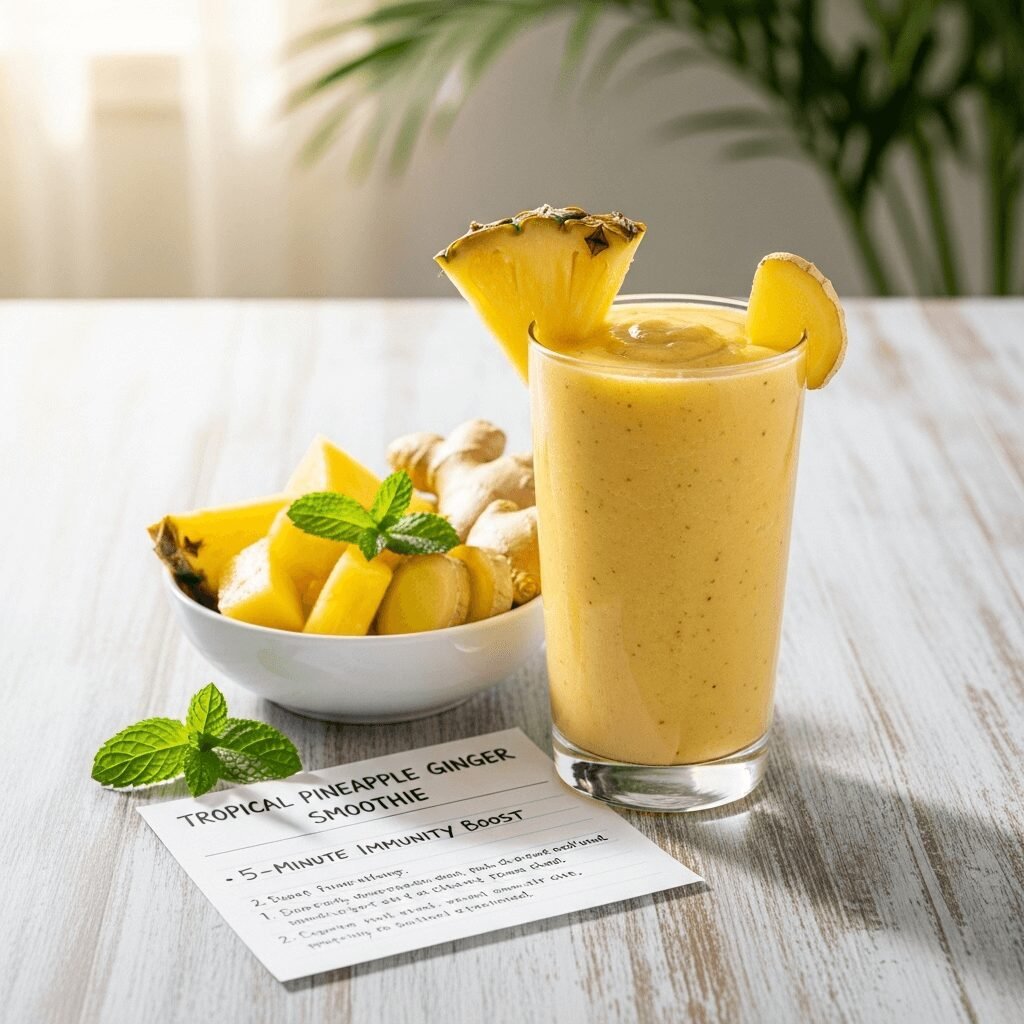
Tropical Pineapple Ginger Smoothie Recipe: Your 5-Minute Immunity Boost

Imagine transporting yourself to a sunny tropical paradise with just one sip—that’s the magic of this refreshing pineapple ginger smoothie. This vibrant, golden-hued beverage combines the sweet, tangy brightness of fresh pineapple with the warming, spicy kick of fresh ginger to create a flavor experience that’s both invigorating and incredibly delicious.
This healthy tropical smoothie has become a morning staple in kitchens across America, beloved by health enthusiasts, busy professionals, and anyone who appreciates a nutrient-packed breakfast that tastes like vacation in a glass. Whether you’re fighting off a cold, recovering from a tough workout, or simply craving something refreshing and energizing, this easy ginger smoothie delivers on every level.
What makes this pineapple smoothie recipe truly special is its impressive health benefits alongside incredible taste. Pineapple provides digestive enzymes and vitamin C, while fresh ginger offers powerful anti-inflammatory properties that support immunity and digestion. The combination creates a naturally sweet, slightly spicy drink that wakes up your taste buds and energizes your body—all without any refined sugar or artificial ingredients.
Perfect for rushed weekday mornings, post-workout recovery, afternoon pick-me-ups, or as a healthy dessert alternative, this smoothie comes together in just five minutes with simple ingredients. The gorgeous golden color makes it irresistibly Instagram-worthy, while the bright, tropical flavor keeps you coming back for more. Once you try this immunity-boosting smoothie, it’ll become a permanent fixture in your breakfast rotation.
History / Background
The pineapple ginger smoothie represents a beautiful fusion of ancient wellness traditions and modern American health culture, bringing together ingredients that have been valued for their medicinal properties across multiple cultures for thousands of years.
Pineapples are native to South America, specifically the region between southern Brazil and Paraguay, where indigenous peoples cultivated them long before European contact. Christopher Columbus encountered pineapples in 1493 in Guadeloupe and brought them back to Europe, where they became symbols of hospitality and exotic luxury. The fruit was so rare and expensive in colonial America that wealthy families would rent pineapples for display at parties before returning them to the grocer—yes, really!
Hawaii became synonymous with pineapple production in the early 1900s when James Dole established massive pineapple plantations, transforming the islands into the world’s leading producer for decades. While Hawaii’s commercial pineapple industry has since declined, the association between pineapples and tropical paradise remains strong in American culture. Today, Costa Rica, the Philippines, and Brazil lead global production, but Hawaii’s legacy means pineapple will forever evoke images of island life for most Americans.
Ginger’s history is even more ancient. This rhizome (underground stem) originated in Southeast Asia over 5,000 years ago and quickly spread throughout Asia, where it became central to both culinary and medicinal traditions. In Traditional Chinese Medicine and Ayurvedic practices, ginger has been used for millennia to treat digestive issues, nausea, inflammation, and respiratory problems. Arab traders brought ginger to Europe in ancient times, where it became one of the most sought-after spices, valued alongside pepper and cinnamon.
Ginger arrived in the Americas with Spanish colonizers and has been grown in the Caribbean since the 16th century. Jamaica, in particular, became famous for its high-quality ginger. In American culture, ginger gained prominence through ginger ale (invented in the 1850s) and gingersnap cookies, but its use as a fresh ingredient in mainstream American cooking only became widespread in recent decades as interest in Asian cuisines and natural health remedies grew.
The modern smoothie culture that gave birth to drinks like this pineapple ginger blend emerged in California during the 1960s and 70s, part of the broader health food movement. However, the specific pairing of pineapple and ginger gained popularity much more recently—in the 2000s and 2010s—as Americans became increasingly interested in functional foods, immunity boosters, and anti-inflammatory ingredients.
Juice bars and smoothie shops began featuring pineapple ginger combinations as “wellness shots” and immunity-boosting drinks, recognizing that these two ingredients complement each other perfectly both in flavor (the ginger’s spiciness balances pineapple’s sweetness) and in health benefits (both support digestion and immunity). Social media platforms like Pinterest and Instagram further popularized this combination, with health influencers and wellness bloggers celebrating its benefits and beautiful golden color.
Today, the pineapple ginger smoothie represents the modern American approach to wellness—combining ancient healing ingredients with contemporary convenience, creating something that’s both genuinely beneficial and genuinely delicious. It embodies our desire for foods that nourish our bodies while satisfying our taste buds, all while fitting seamlessly into busy lifestyles.
Why You’ll Love This Recipe
This tropical pineapple smoothie is about to become your new morning obsession, and I’m not exaggerating. This recipe delivers powerful health benefits, incredible flavor, and energizing nutrition in one gorgeous glass—all in just five minutes.
Here’s why this immunity-boosting smoothie will revolutionize your breakfast routine:
- Incredibly energizing – The natural fruit sugars and ginger’s warming properties provide sustained energy without the coffee crash
- Powerful immunity support – Pineapple’s vitamin C and ginger’s antimicrobial compounds help your body fight off illness
- Amazing for digestion – Pineapple contains bromelain, a digestive enzyme, while ginger soothes the stomach and reduces inflammation
- Anti-inflammatory powerhouse – Both ingredients contain compounds that reduce inflammation throughout the body
- Lightning-fast preparation – From ingredients to glass in just 5 minutes, perfect for hectic mornings
- Naturally sweet without added sugar – Ripe pineapple provides all the sweetness you need
- Refreshing and unique flavor – The tropical sweetness balanced with spicy ginger creates an addictive flavor combination
- Gorgeous golden color – That stunning yellow hue makes breakfast feel special and looks amazing on social media
- Customizable intensity – Easily adjust the ginger level to match your spice preference
- Budget-friendly ingredients – Uses affordable frozen pineapple that’s available year-round
- Kid-friendly option – Reduce the ginger and kids will love the tropical flavor
- Post-workout recovery – Natural enzymes and anti-inflammatory properties aid muscle recovery
- Nausea relief – Ginger’s well-documented ability to settle upset stomachs makes this perfect when you’re feeling queasy
- Minimal cleanup – Just one blender to rinse and you’re done
- Meal prep friendly – Make freezer smoothie packs for grab-and-go convenience all week
Whether you’re a wellness enthusiast who loves functional foods or simply someone who appreciates delicious, refreshing beverages, this easy tropical smoothie delivers. The flavor is bright and invigorating, the texture is perfectly smooth and creamy, and the health benefits support your wellness goals while actually tasting like something you’d order at a fancy juice bar. Trust me, once you experience that perfect sweet-spicy balance and feel how energized you are afterward, this healthy pineapple smoothie will be on permanent rotation.
Ingredient Notes
Understanding your ingredients transforms you from someone following a recipe to someone who can confidently customize and perfect it. Here’s everything you need to know:
Frozen Pineapple Chunks: The star ingredient! Frozen pineapple is actually superior to fresh for smoothie-making because it creates that thick, frosty, milkshake-like texture without diluting your drink with ice. Pineapple is flash-frozen at peak ripeness, locking in maximum sweetness and nutrients. It’s also more affordable and convenient than buying fresh pineapples. Fresh pineapple absolutely works if you have it—just add ice cubes to compensate for thickness. To use fresh pineapple, peel it, remove the core, and cut into chunks. One cup of pineapple contains bromelain (a digestive enzyme), vitamin C, manganese, and natural sweetness. Can substitute with frozen mango for a different tropical vibe, though you’ll lose the bromelain benefits.
Fresh Ginger Root: This is non-negotiable for authentic flavor and maximum health benefits. Fresh ginger provides that warming, slightly spicy kick along with powerful anti-inflammatory compounds called gingerols. A thumb-sized piece (about 1-2 inches) typically yields 1-2 teaspoons when peeled and grated or minced. Start with less if you’re new to ginger and increase to taste—it can be quite potent! The younger the ginger, the milder and juicier it is; older ginger has more intense, spicier flavor. Always peel the thin brown skin before using. Ground dried ginger is NOT a good substitute here as it lacks the fresh, bright flavor and will create a chalky texture. However, if absolutely necessary, use ¼ teaspoon ground ginger as a last resort.
Banana (Fresh or Frozen): While technically optional, banana adds natural sweetness and creates incredibly creamy texture that binds everything together. Frozen banana chunks make the smoothie extra thick and frosty—almost ice cream-like. Ripe bananas with brown spots are sweeter and blend more easily. You can omit banana for a more pineapple-forward, less sweet smoothie, but the texture won’t be quite as luxurious. If you’re avoiding bananas, substitute with ½ ripe avocado for creaminess without banana flavor, or add ¼ cup Greek yogurt.
Coconut Milk or Other Liquid: Your liquid base determines the final consistency and adds flavor dimension. Full-fat canned coconut milk creates the most luxuriously creamy, tropical result—it’s my top recommendation. Coconut milk from a carton (the beverage kind) works but is thinner. Alternative options include almond milk (neutral flavor), oat milk (creamy and slightly sweet), orange juice (extra vitamin C and tropical vibes), or regular dairy milk (if you’re not dairy-free). Coconut water is another excellent choice for a lighter, more hydrating smoothie with natural electrolytes. Start with less liquid and add more to reach your preferred thickness.
Greek Yogurt or Non-Dairy Yogurt (Optional): Adds protein, probiotics, and extra creaminess. Plain Greek yogurt provides the most protein without added sugar. Vanilla yogurt adds subtle sweetness. For dairy-free options, coconut yogurt maintains the tropical theme beautifully, while almond or cashew yogurt work well too. You can skip yogurt entirely for a lighter, more fruit-forward smoothie—just know you’ll get less protein.
Honey or Sweetener (Optional): Most ripe pineapples provide plenty of natural sweetness, so taste before adding any sweetener. If your pineapple is tart or you prefer sweeter smoothies, add honey, maple syrup, agave nectar, or a pitted Medjool date. Start with just one teaspoon and adjust. For zero-calorie options, stevia or monk fruit sweetener work well.
Ice Cubes (Optional): Only necessary if you’re using fresh (not frozen) pineapple or if you want an extra-thick, slushy texture. With frozen pineapple, you typically don’t need ice.
Optional Boosters: Turmeric powder (¼ teaspoon for extra anti-inflammatory power—pairs beautifully with ginger), fresh lime juice (1 tablespoon for brightness), chia seeds or flax seeds (omega-3s and fiber), protein powder (vanilla or unflavored), fresh mint leaves (refreshing herbal notes), cayenne pepper (tiny pinch for metabolism boost), or spinach (invisible greens for extra nutrients).
Equipment Needed
This simple tropical smoothie requires minimal equipment—you probably have everything already:
- High-powered blender – Essential for smooth, lump-free results. Vitamix, Blendtec, and Ninja blenders excel at pulverizing frozen fruit and fibrous ginger. Standard blenders work too, though you may need to blend longer or let frozen fruit soften slightly first. The more powerful your blender, the smoother your smoothie—especially important for breaking down the ginger fibers.
- Vegetable peeler or spoon – For peeling fresh ginger root (a spoon actually works better than a knife for ginger’s knobby shape—just scrape the edge along the skin)
- Grater or microplane – For grating fresh ginger into fine pieces that blend seamlessly (a microplane creates the finest texture)
- Sharp knife and cutting board – If using fresh pineapple or if you prefer to finely mince the ginger
- Liquid measuring cup – For accurately measuring coconut milk or other liquids (1 or 2 cup capacity)
- Dry measuring cups – For portioning frozen pineapple and other ingredients
- Measuring spoons – For ginger, honey, and any powdered add-ins
- Rubber spatula – For scraping every last bit of smoothie goodness from your blender
- Serving glasses – Clear glasses beautifully showcase that gorgeous golden color
- Straws – Reusable stainless steel, glass, or silicone straws for eco-friendly sipping
Pro equipment tip: A tamper tool (the long stick that comes with Vitamix blenders or can be purchased separately) is incredibly helpful for thick smoothies. It pushes ingredients toward the blades while blending, ensuring everything gets incorporated without adding excess liquid.
Print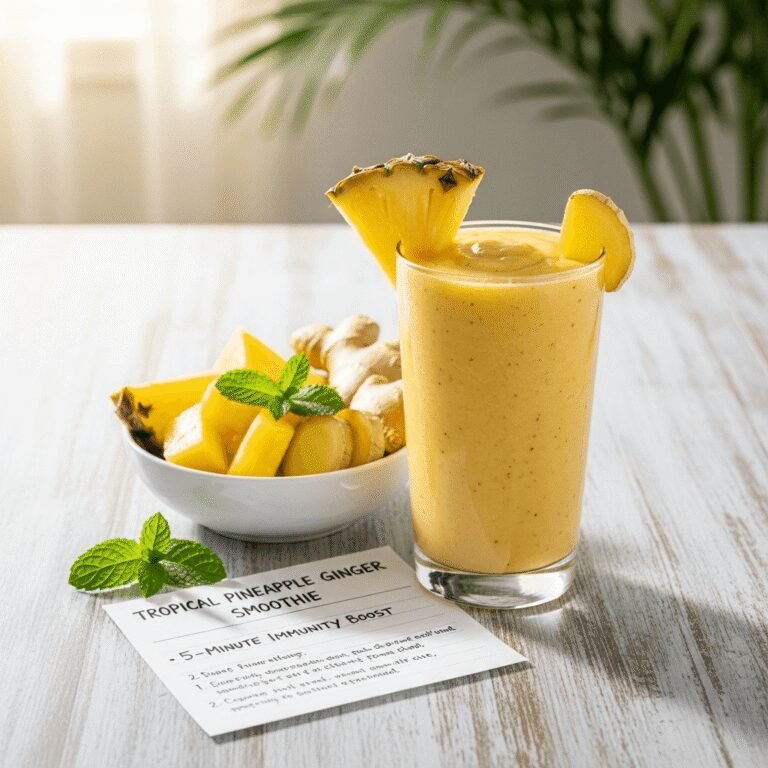
Pineapple Ginger Smoothie Recipe
A vibrant, refreshing pineapple ginger smoothie packed with anti-inflammatory ingredients and natural digestive enzymes. This tropical smoothie combines sweet pineapple with spicy fresh ginger for an immunity-boosting drink that’s ready in just 5 minutes—perfect for energizing mornings or post-workout recovery.
- Total Time: 5 minutes
- Yield: 2 servings 1x
Ingredients
- 2 cups frozen pineapple chunks (about 10-12 ounces)
- 1-2 teaspoons fresh ginger root, peeled and grated (adjust to taste—start with less if new to ginger)
- 1 medium banana, frozen or fresh (optional but recommended for creaminess)
- ¾ cup coconut milk (from can for creamiest texture, or from carton, or any milk/juice of choice)
- ½ cup plain Greek yogurt or coconut yogurt (optional for protein and extra creaminess)
- 1-2 teaspoons honey or maple syrup (optional—taste first, pineapple is often sweet enough)
- ½ cup ice cubes (only if using fresh pineapple instead of frozen)
- Squeeze of fresh lime juice (optional but recommended for brightness)
- ¼ teaspoon ground turmeric (pairs perfectly with ginger for anti-inflammatory power)
- 1 tablespoon chia seeds or ground flaxseed
- Handful of fresh spinach (you won’t taste it!)
- ¼ teaspoon cayenne pepper (for metabolism boost)
- 1 scoop vanilla protein powder
Instructions
Step 1: Prepare your ginger
This is the most important prep step! Take your fresh ginger root and use a spoon or vegetable peeler to remove the thin brown skin. Use a microplane grater, fine grater, or sharp knife to mince the ginger very finely. Start with 1 teaspoon if you’re new to ginger smoothies—you can always add more after tasting. The finer you grate or mince it, the better it will blend and the more evenly distributed the flavor will be.
Step 2: Layer ingredients in blender
For optimal blending efficiency, add ingredients in this specific order: liquid (coconut milk) first on the bottom, then yogurt if using, then grated ginger, then banana, and finally frozen pineapple chunks on top. This layering helps create a proper vortex that pulls ingredients down toward the blades, preventing air pockets and ensuring smooth, even blending without needing to stop and stir.
Step 3: Blend on low, then high speed
Secure the blender lid tightly. Start blending on low speed for 10-15 seconds to break up the large frozen chunks and distribute the ginger, then increase to high speed and blend for 45-60 seconds until completely smooth and creamy. The mixture should be silky with no visible ginger fibers or fruit chunks. If ingredients are stuck and not moving, stop the blender, use a spatula or tamper to push them toward the blades, then blend again.
Step 4: Check consistency and adjust
Your smoothie should be thick enough to coat a spoon but thin enough to sip through a straw. Too thick and it won’t pour? Add 2-3 tablespoons more liquid and pulse briefly. Too thin and watery? Add a few more frozen pineapple chunks or a handful of ice and blend again. The perfect consistency is personal preference—some love thick smoothie bowls, others prefer drinkable smoothies.
Step 5: Taste and adjust flavors
This critical step separates good smoothies from great ones! Take a small taste. Need more ginger kick? Add another ½ teaspoon grated ginger and blend briefly. Too spicy? Add more pineapple or banana to mellow it out. Not sweet enough? Add honey or a squeeze of lime juice (which paradoxically makes sweetness pop). Adjust until it’s absolutely perfect for your palate.
Step 6: Serve immediately
Pour into glasses right away while it’s at peak frosty perfection. Garnish with a pineapple wedge, lime slice, or fresh mint sprig if you’re feeling fancy. The smoothie is best enjoyed immediately, though it will keep for a few hours in the refrigerator if needed.
Notes
- Ginger intensity: Fresh ginger varies in spiciness. Young ginger (with thin, pale skin) is milder and juicier. Older ginger (thicker, darker skin) is more fibrous and intensely spicy. Start conservative and add more to taste.
- Fresh vs. frozen pineapple: Frozen is recommended for thick texture, but fresh works perfectly—just add ice. Fresh pineapple tastes slightly brighter and more delicate.
- Sweetness level: Ripe pineapple is naturally very sweet. Always taste before adding sweeteners—you likely won’t need any.
- Make it a smoothie bowl: Reduce liquid to ½ cup for extra-thick consistency you can eat with a spoon. Top with granola, coconut flakes, fresh fruit, and chia seeds.
- Dairy-free option: Use coconut milk and coconut yogurt, or omit yogurt entirely for a lighter, vegan smoothie.
- Digestive benefits: Drink this on an empty stomach for maximum digestive enzyme benefits from the bromelain in pineapple.
- Pregnancy-safe: Ginger helps with morning sickness! However, consult your doctor about appropriate amounts during pregnancy.
- Blending ginger: The finer you grate your ginger, the smoother your smoothie. A microplane creates almost a paste that blends seamlessly.
- Prep Time: 5 minutes
- Cook Time: 0 minutes
Nutrition
- Serving Size: 1 smoothie (8 oz)
- Calories: 210
- Sugar: 30g
- Sodium: 45mg
- Fat: 4g
- Saturated Fat: 3g
- Unsaturated Fat: 1g
- Trans Fat: 0g
- Carbohydrates: 44g
- Fiber: 4g
- Protein: 4g
- Cholesterol: 0mg
Tips & Variations
Ginger Intensity Adjustments:
- Mild ginger smoothie: Use just ½ teaspoon fresh grated ginger for subtle warmth
- Medium ginger kick: Use 1-1½ teaspoons (as written in recipe) for balanced spice
- Spicy ginger lovers: Use 2+ teaspoons for intense, warming heat
- Extra warming: Add a tiny pinch of cayenne pepper alongside ginger for metabolism boost
Tropical Flavor Variations:
- Pineapple mango ginger: Replace 1 cup pineapple with frozen mango chunks
- Tropical green smoothie: Add a big handful of spinach or kale (fruit masks the green taste completely)
- Pineapple coconut paradise: Use full-fat canned coconut milk and add 2 tablespoons shredded coconut
- Citrus twist: Add fresh orange juice instead of milk and a tablespoon of lime juice for extra brightness
- Piña colada inspired: Add ¼ teaspoon coconut extract and ¼ cup coconut cream
Health-Boosting Add-Ins:
- Golden milk smoothie: Add ¼ teaspoon turmeric and pinch of black pepper (increases turmeric absorption)
- Protein-packed: Add a scoop of vanilla protein powder or 2 tablespoons hemp hearts
- Omega-3 boost: Stir in 1 tablespoon chia seeds or ground flaxseed
- Probiotic power: Use kefir instead of regular milk for gut-healthy bacteria
- Immunity supercharge: Add ½ teaspoon fresh turmeric root, grated (intense orange color and anti-inflammatory benefits)
Texture Modifications:
- Smoothie bowl: Reduce liquid to ½ cup for super thick, spoonable consistency; top with granola, fresh pineapple, coconut flakes, and chia seeds
- Drinkable smoothie: Increase liquid to 1 cup for thinner, easily sippable texture
- Slushie-style: Add extra ice for frozen, icy texture perfect for hot days
- Extra creamy: Add ¼ ripe avocado or ¼ cup full-fat coconut cream
Dietary Adaptations:
- Vegan: Use coconut yogurt and plant-based milk (as written, it’s naturally vegan without yogurt)
- Keto-Friendly: Not ideal due to fruit sugars, but reduce pineapple to ½ cup, add avocado and coconut cream, use stevia
- Low-Sugar: Reduce pineapple to 1 cup, increase ginger, add cucumber for volume without sugar
- Paleo: Use coconut milk and coconut yogurt; sweeten with dates instead of honey
- Nut-Free: Use oat milk, coconut milk, or rice milk instead of almond milk
Flavor Enhancers:
- Add fresh mint leaves (4-5 leaves) for cooling contrast to ginger’s heat
- Include ½ teaspoon vanilla extract for depth
- Add 1 tablespoon fresh lime juice to brighten and balance sweetness
- Stir in ¼ teaspoon cinnamon for warm, spiced notes
- Add 2-3 fresh basil leaves for herbaceous sophistication
Pro Chef Tips
Tip #1: Grate ginger on a microplane for silkiest texture
Professional smoothie makers know that ginger’s fibrous texture can create unpleasant stringy bits in your smoothie if not properly prepared. The secret is using a microplane or fine grater to create almost a ginger paste rather than chunks. This allows the ginger to distribute evenly throughout the smoothie and blend completely smooth. If you only have a knife, mince the ginger as finely as humanly possible—almost to a paste consistency. The finer your ginger, the smoother and more evenly flavored your smoothie.
Tip #2: Freeze your ginger for easier grating
Here’s a pro trick that will change your life: keep a piece of peeled ginger in your freezer. Frozen ginger grates beautifully on a microplane without the stringy fibers that make fresh ginger difficult to work with. Simply peel your ginger, store it in a freezer bag, and grate it directly from frozen whenever you need it. It also lasts for months in the freezer, so you’ll always have ginger ready for smoothies.
Tip #3: Use full-fat canned coconut milk for creamiest results
If you want that luxurious, thick, almost milkshake-like texture, reach for canned coconut milk (the kind you’d use for Thai curry) rather than the coconut milk beverage in cartons. The canned version has much higher fat content, which creates incredible creaminess and makes your smoothie feel more indulgent. Shake the can before opening to mix the cream with the liquid, or deliberately use just the thick cream from the top for ultra-rich texture.
Tip #4: Add liquid gradually for perfect consistency
Professional smoothie makers never dump all the liquid in at once. Start with just ½ cup liquid, blend, then add more gradually—just 1-2 tablespoons at a time—until you reach your ideal consistency. It’s infinitely easier to thin a smoothie than to thicken one. This controlled approach ensures you don’t end up with a disappointing, watery smoothie.
Tip #5: Let frozen pineapple sit briefly if your blender struggles
If your blender is having trouble breaking up the frozen pineapple chunks, let them sit at room temperature for 3-5 minutes before blending. This slight softening makes blending dramatically easier without compromising that thick, frosty texture. Alternatively, add your liquid first, let it sit for 1-2 minutes to start softening the fruit, then blend.
Tip #6: Blend longer than you think necessary
For that professional, ultra-smooth texture without any ginger fibers, blend for a full 60 seconds on high speed—even if it looks smooth earlier. That extra blending time ensures every bit of ginger fiber is pulverized and creates a noticeably silkier texture. Just avoid blending for more than 90 seconds, which can warm the smoothie from friction.
Tip #7: Balance sweet with acid
Professional juice bar recipes always balance sweetness with acidity for the most crave-worthy flavor. Even though pineapple is naturally tangy, adding just ½-1 tablespoon of fresh lime juice takes this smoothie from good to absolutely exceptional. The acid makes the pineapple taste even brighter and more tropical while balancing the ginger’s heat. Don’t skip this tiny but mighty ingredient!
Common Mistakes to Avoid
Mistake #1: Using too much ginger on your first try
Fresh ginger is potent—much more intense than you might expect if you’re only familiar with dried ground ginger or ginger ale. The biggest newbie mistake is adding too much ginger and ending up with an overwhelmingly spicy smoothie that’s difficult to drink. The fix: always start with less ginger than recommended (½-1 teaspoon), blend, taste, then add more if desired. You can always add more spice, but you can’t remove it once it’s in there. Remember, ginger intensity builds—the initial sip might seem mild, but the heat develops on your palate.
Mistake #2: Not peeling or finely grating the ginger
Tossing large chunks of unpeeled ginger into your blender creates two problems: the skin tastes bitter and papery, and large pieces create fibrous, stringy bits that ruin your smoothie’s texture even in powerful blenders. The fix: always peel your ginger thoroughly (use a spoon to scrape off the skin easily), then grate it finely on a microplane or mince it into tiny pieces. Taking 30 extra seconds on ginger prep makes the difference between a professional-quality smoothie and a disappointing one.
Mistake #3: Adding too much liquid at once
This is smoothie-making enemy #1! Pouring in all your liquid at the beginning almost always results in a thin, disappointing smoothie that’s more juice than substance. Once it’s too thin, your only option is adding more frozen fruit (if you have it). The fix: start with just ½ cup liquid, blend thoroughly, assess thickness, then add more liquid one tablespoon at a time until perfect. Thick smoothies are luxurious and satisfying; thin ones are disappointing.
Mistake #4: Using canned pineapple in syrup
While canned pineapple technically works in emergencies, pineapple packed in heavy syrup adds excessive refined sugar and has a different, less fresh flavor than frozen or fresh pineapple. Plus, the extra liquid from the syrup throws off the smoothie’s consistency. The fix: always use frozen pineapple chunks (ideal) or fresh pineapple. If you must use canned, get the kind packed in 100% pineapple juice (not syrup), drain it extremely well, and reduce any added sweeteners in the recipe.
Mistake #5: Expecting instant results from old ginger
Fresh ginger loses potency as it ages. That sad, wrinkled piece of ginger in your fridge for three weeks won’t deliver the bright, zesty flavor you’re expecting. Old ginger becomes woody, fibrous, and less flavorful. The fix: buy fresh, firm ginger with smooth, taut skin. Store it properly wrapped in the refrigerator for up to 3 weeks, or freeze it (peeled) for months. Fresh ginger should be aromatic, juicy when grated, and have pale yellow flesh—not dried out, gray, or moldy.
Mistake #6: Skipping the taste test before serving
Pineapple varies wildly in sweetness depending on ripeness, variety, and season. Ginger varies in intensity. Without tasting and adjusting, you might serve a smoothie that’s too tart, too sweet, too spicy, or perfectly balanced—you won’t know until you taste! The fix: always take 5 seconds to taste before pouring into glasses. Adjust sweetness with honey, balance spice with more pineapple, or brighten flavor with lime juice. This tiny step transforms good smoothies into crave-worthy ones.
Storage & Meal Prep
Refrigerator Storage:
Freshly blended smoothies taste best immediately when they’re at peak frosty perfection, but life sometimes demands flexibility. You can store leftover or pre-made pineapple ginger smoothies in airtight containers, mason jars with tight lids, or reusable bottles for up to 24 hours in the refrigerator. The smoothie will naturally separate as it sits (heavier ingredients sink, liquid rises)—this is completely normal and doesn’t indicate spoilage. Simply shake vigorously for 30 seconds or give it a quick 10-second re-blend before drinking. The texture will be slightly different from fresh, and you may need to add a splash of liquid to restore the original consistency, but the flavor remains delicious.
Pro tip: Fill your storage container to the very top to minimize air exposure, which can cause oxidation (browning) and nutrient loss. A squeeze of fresh lime juice acts as a natural preservative thanks to its vitamin C content.
Freezer Storage—Two Methods:
Method 1: Smoothie Freezer Packs (Highly Recommended):
This is hands-down the best meal prep method. Portion your frozen ingredients (2 cups pineapple chunks + ½ sliced banana + pre-grated ginger stored in a tiny container or ice cube) into individual freezer bags or reusable silicone bags. Label with contents and date. Store flat in your freezer for up to 6 months. Each morning, dump one pack into your blender, add fresh coconut milk and yogurt, and blend. You get the ultimate convenience with fresh-blended texture and flavor.
Method 2: Pre-Blended Frozen Smoothies:
Blend your smoothie completely, then pour into freezer-safe jars or containers, leaving 1-2 inches of headspace for expansion. Freeze for up to 3 months. To use, transfer from freezer to refrigerator the night before to thaw, then shake well and enjoy. For a slushie-style treat, let it partially thaw and eat it semi-frozen with a spoon.
Ginger Prep Ahead:
Grate a large piece of ginger all at once, then freeze the grated ginger in ice cube trays (1 teaspoon per compartment) covered with a bit of water or coconut milk. Pop out ginger cubes and store in a freezer bag. Use one cube per smoothie—no fresh grating required!
Food Safety:
Smoothies containing dairy should never sit at room temperature for more than 2 hours (1 hour in warm weather). For taking smoothies on-the-go, use an insulated container with an ice pack to maintain safe, cold temperatures.
Make-Ahead & Freezer Notes
This tropical smoothie recipe is phenomenally meal-prep friendly, perfect for busy people who refuse to compromise on nutrition or flavor.
Ultimate Meal Prep Strategy—Smoothie Packs:
Dedicate 20 minutes on Sunday to prep an entire week (or month!) of smoothies. Here’s the exact process: Cut your banana into coins and spread on a parchment-lined baking sheet. Freeze until solid (2-3 hours), then transfer to bags. For each smoothie pack, combine 2 cups frozen pineapple, ½ frozen banana (pre-sliced), and 1-2 teaspoons pre-grated ginger in individual freezer bags. Squeeze out air, seal, label with date and “Pineapple Ginger Smoothie,” and store flat in the freezer.
FAQs
1. Can I use fresh pineapple instead of frozen?
Yes! Fresh pineapple works perfectly. But for a thicker, colder smoothie, frozen pineapple gives the best texture. If using fresh, add a handful of ice.
2. How much ginger should I use?
Start with ½ teaspoon grated fresh ginger for mild flavor.
If you love the spicy kick, increase up to 1 teaspoon.
Avoid overdoing it — ginger can become overpowering quickly.
3. Can I make this smoothie without banana?
Absolutely! The banana adds creaminess, but you can skip it.
Substitute with:
-
½ cup mango
-
½ avocado
-
More pineapple
4. Is this smoothie good for immunity?
Yes! Pineapple is rich in vitamin C while ginger has anti-inflammatory and immunity-boosting properties. It’s a great morning wellness drink.
5. Can I add protein powder to this recipe?
Yes — vanilla protein powder works best because it blends smoothly with tropical flavors. Collagen peptides are also a great option since they don’t change the flavor.
6. What liquid works best?
You can use:
-
Coconut water (best tropical flavor)
-
Almond milk
-
Orange juice
-
Regular water (light & refreshing)
Coconut water gives the best hydrating + tropical taste.
7. Can I store the smoothie for later?
It’s best enjoyed fresh, but you can store it:
-
In the fridge: 12–18 hours (shake well before drinking)
-
In the freezer: Freeze in cubes and reblend later
Conclusion
This Tropical Pineapple Ginger Smoothie is the ultimate quick and refreshing boost your body needs. With bright pineapple flavor, a hint of spicy ginger, and natural sweetness, it’s the perfect blend of taste + health — all ready in just 5 minutes!
Whether you’re starting your morning, recovering after a workout, or simply craving a refreshing tropical drink, this smoothie delivers energy, immunity support, and delicious satisfaction in every sip.
Try this easy recipe today, save it on Pinterest, and share your smoothie creations!
Healthy mornings have never tasted this good.