Raspberry Mango Smoothie Recipe – Tropical & Refreshing in 5 Minutes!

There’s something magical about blending together the sweet, tropical flavor of ripe mangoes with the tart burst of fresh raspberries. This Raspberry Mango Smoothie is the perfect balance of fruity, creamy, and refreshing—making it an ideal choice for busy mornings, post-workout fuel, or a healthy afternoon snack.
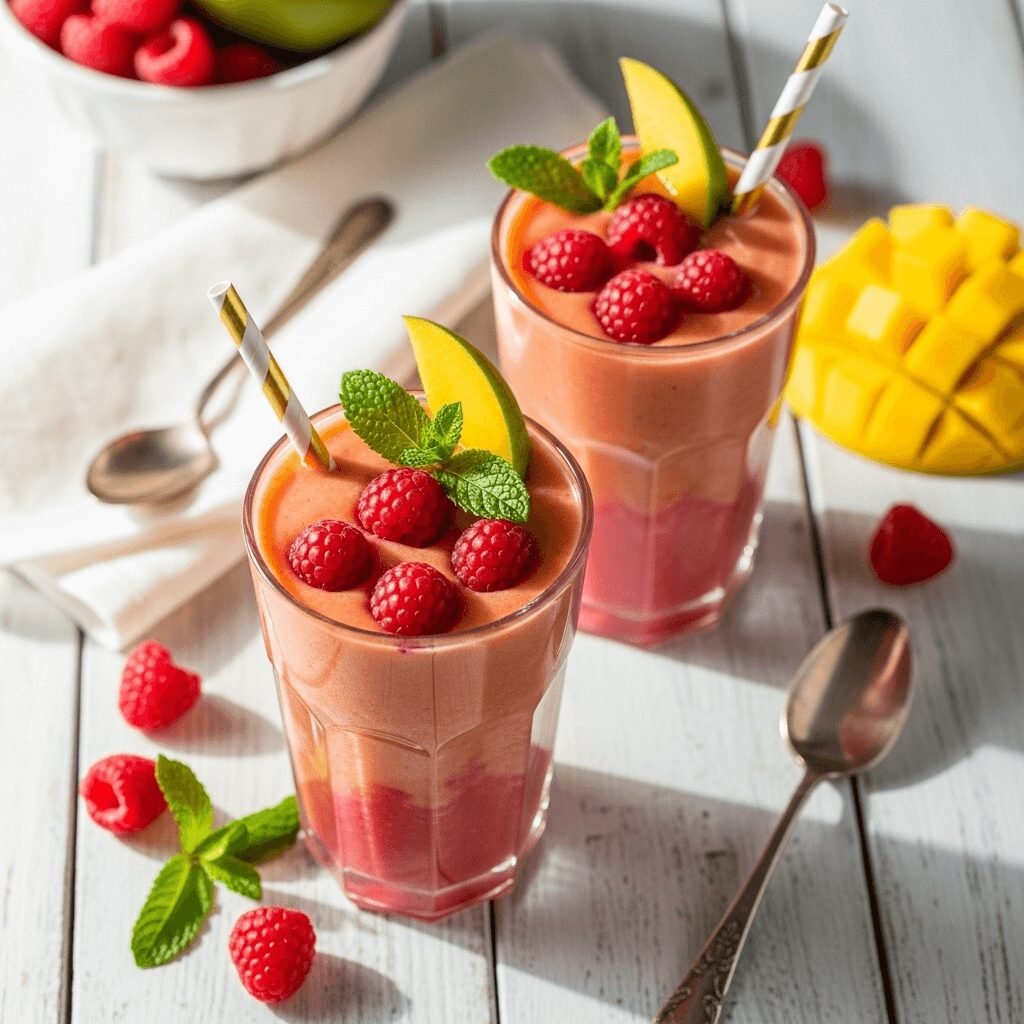
What makes this smoothie so special is its vibrant pink-orange color that practically screams summer, combined with a naturally sweet flavor that doesn’t require any refined sugar. Whether you’re sipping it on your porch on a warm Saturday morning or packing it in a to-go cup for your commute, this raspberry mango smoothie recipe delivers nutrition and deliciousness in every sip.
This recipe is incredibly versatile too. You can make it as a thick smoothie bowl topped with granola and coconut flakes, or blend it a bit thinner for a drinkable treat. It’s naturally gluten-free, can easily be made vegan or dairy-free, and is packed with vitamins, antioxidants, and fiber. Plus, it takes just 5 minutes from start to finish—no cooking required!
History / Background
Smoothies as we know them today have an interesting history that dates back to the early 1900s, but they didn’t become mainstream until the 1960s and 70s with the rise of health food culture in California. The invention of affordable home blenders made it possible for everyday families to create these blended fruit drinks at home.
The specific pairing of raspberries and mangoes is a more modern fusion that reflects our increasingly global palate. Mangoes, native to South Asia and cultivated for over 4,000 years, have become one of the most popular tropical fruits worldwide. Meanwhile, raspberries have been enjoyed in Europe and North America for centuries, prized for their delicate flavor and medicinal properties.
This particular combination gained popularity in the 2000s as the smoothie bowl trend took off on social media, especially Pinterest and Instagram. Food bloggers and health enthusiasts discovered that the contrasting colors—the deep pink-red of raspberries against the golden orange of mangoes—created a stunning visual that photographed beautifully. The flavor pairing was equally impressive: the tartness of raspberries cuts through the intense sweetness of mangoes, creating a perfectly balanced drink.
Today, this raspberry mango smoothie has become a staple in juice bars, health cafes, and home kitchens across America. It represents the perfect marriage of nutrition and indulgence, proving that healthy food can be absolutely delicious and visually stunning at the same time.
Why You’ll Love This Recipe
This raspberry mango smoothie is about to become your new favorite healthy habit, and here’s why: it’s ridiculously simple to make, requires just a handful of ingredients, and delivers maximum flavor with minimal effort. Unlike many smoothie recipes that require a dozen ingredients or expensive superfood powders, this one keeps things beautifully simple while still packing a serious nutritional punch.
Here’s what makes this smoothie recipe absolutely irresistible:
- Ready in 5 minutes – Perfect for hectic mornings when you need something nutritious fast
- Naturally sweet – No added sugars needed; the fruit provides all the sweetness
- Kid-approved – Even picky eaters love the tropical flavor and pretty color
- Freezer-friendly – Make smoothie packs ahead for even quicker prep
- Customizable – Easy to adjust thickness, sweetness, and add-ins to your preference
- Budget-friendly – Uses affordable frozen fruit that’s available year-round
- Nutrient-dense – Loaded with vitamin C, antioxidants, and fiber
- Versatile serving options – Enjoy as a drink, smoothie bowl, or even popsicles
- No refined sugar – Naturally sweetened by the fruit itself
- Allergy-friendly – Easily adaptable for vegan, dairy-free, and gluten-free diets
Whether you’re looking for a healthy breakfast option, a post-gym recovery drink, or just a delicious way to get more fruit into your day, this raspberry mango smoothie checks all the boxes.
Ingredient Notes
Let’s talk about what goes into this vibrant, delicious smoothie. Each ingredient plays an important role in creating the perfect texture and flavor balance.
Frozen Raspberries: I prefer using frozen raspberries because they’re available year-round, more affordable than fresh, and they help create that thick, frosty texture we love in smoothies. Frozen fruit is also picked at peak ripeness and flash-frozen, which actually preserves more nutrients than fresh fruit that’s been sitting in the produce aisle. If you only have fresh raspberries, just add a handful of ice cubes to get that cold, thick consistency.
Frozen Mango Chunks: Like the raspberries, frozen mango is convenient and creates the perfect smoothie texture. Mangoes are naturally very sweet and creamy, which gives this smoothie its luscious body. If you’re using fresh mango, you’ll need to peel and dice about 1 large ripe mango, and again, add ice. Look for pre-cut frozen mango chunks in the freezer aisle—they’re a huge time-saver.
Banana: This is the secret ingredient that makes the smoothie extra creamy and adds natural sweetness without any added sugar. Bananas also help bind everything together and create that smooth, drinkable consistency. For the best flavor, use a ripe banana with some brown spots. If you’re not a banana fan or want to keep it low-sugar, you can substitute with Greek yogurt or avocado (yes, really—it won’t taste like avocado, but it’ll add incredible creaminess!).
Milk or Liquid Base: You can use regular dairy milk, almond milk, coconut milk, oat milk, cashew milk, or even orange juice. Each liquid gives a slightly different flavor profile. Coconut milk adds tropical vibes, almond milk keeps it light and nutty, and orange juice amplifies the fruity flavor. For a protein boost, you can even use vanilla protein shake as your liquid base.
Honey or Maple Syrup (Optional): Most of the time, the fruit provides enough sweetness, but if your raspberries are particularly tart or you prefer a sweeter smoothie, add a drizzle of honey or maple syrup. Start with just a teaspoon and taste before adding more.
Greek Yogurt (Optional): Adding a scoop of Greek yogurt makes this smoothie more filling and adds a protein boost, making it more of a complete meal. Vanilla or plain Greek yogurt both work beautifully. For a dairy-free version, use coconut yogurt or skip this ingredient entirely.
Equipment Needed
The beauty of smoothie-making is that you don’t need fancy equipment. Here’s what you’ll need:
- High-Speed Blender: A good blender is essential for creating that smooth, lump-free texture. Brands like Vitamix, Ninja, or Nutribullet work wonderfully, but even a standard countertop blender will do the job. Just make sure it’s powerful enough to handle frozen fruit.
- Measuring Cups: For accurate measurements of your fruit and liquid
- Measuring Spoons: If you’re adding honey or other optional ingredients
- Drinking Glass or Smoothie Bowl: For serving your creation
- Straw: Optional, but makes drinking more fun
- Spatula: Helpful for scraping down the sides of the blender
Raspberry Mango Smoothie Recipe
This vibrant Raspberry Mango Smoothie combines frozen raspberries and tropical mango for a naturally sweet, refreshing drink that’s ready in just 5 minutes. Perfect for busy mornings or a healthy snack!
- Total Time: 5 minutes
- Yield: 2 servings 1x
Ingredients
- 1 cup frozen raspberries
- 1 cup frozen mango chunks
- 1 medium ripe banana (fresh or frozen)
- 1 cup milk of choice (dairy, almond, coconut, or oat milk)
- ½ cup Greek yogurt (optional, for extra creaminess and protein)
- 1–2 teaspoons honey or maple syrup (optional, for added sweetness)
- ½ cup ice cubes (only if using fresh fruit instead of frozen)
Instructions
- Prepare Your Ingredients: Gather all your ingredients and make sure your frozen fruit is ready to blend. If your banana is fresh, peel and break it into chunks. If you’re meal prepping, you can pre-portion these ingredients into freezer bags.
- Add Liquids First: Pour your milk (and yogurt if using) into the blender first. This helps the blades move more easily and prevents the frozen fruit from getting stuck at the bottom. This is a pro tip that ensures smoother blending every time!
- Add Frozen Fruit: Add the frozen raspberries, frozen mango chunks, and banana pieces on top of the liquid. If you’re using any optional sweetener, add it now.
- Blend Until Smooth: Start blending on low speed, then gradually increase to high. Blend for 30–60 seconds until completely smooth and creamy. You may need to stop and scrape down the sides with a spatula if any fruit gets stuck.
- Check Consistency: If your smoothie is too thick, add a splash more milk and blend again. If it’s too thin, add a few more frozen fruit pieces or ice cubes. The perfect consistency should be thick enough to drink through a straw but pourable.
- Taste and Adjust: Give it a quick taste. If you want it sweeter, add a drizzle of honey and blend for a few more seconds. Remember, you can always add more sweetness, but you can’t take it away!
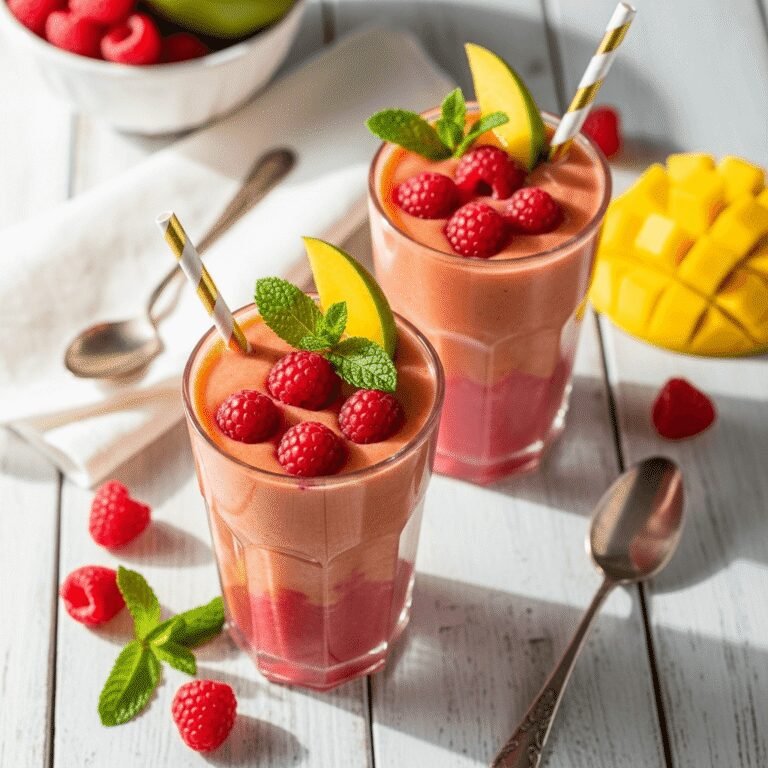
- Serve Immediately: Pour into glasses and enjoy right away for the best texture and flavor. You can garnish with fresh raspberries, a mango slice, or a sprig of mint for a pretty presentation that’s perfect for photos!
Notes
- For a Smoothie Bowl: Use less liquid (about ¾ cup) for a thicker consistency that can be eaten with a spoon. Top with granola, coconut flakes, chia seeds, and fresh fruit.
- Protein Boost: Add a scoop of vanilla protein powder or 2 tablespoons of peanut butter for a more filling meal replacement.
- Make It Greener: Sneak in a handful of fresh spinach for added nutrition—you won’t taste it, but you’ll get the benefits!
- Frozen Banana Tip: Keep peeled, sliced bananas in a freezer bag for smoothies. They create an extra-thick, milkshake-like texture.
- Freshness Matters: Smoothies are best enjoyed fresh, but you can store in the refrigerator for up to 24 hours. Just shake or stir before drinking as separation is natural.
- Prep Time: 5 minutes
- Cook Time: 0 minutes
Nutrition
- Serving Size: 1 smoothie (approx. 12 oz)
- Calories: 215
- Sugar: 32g
- Sodium: 65mg
- Fat: 2.5g
- Saturated Fat: 1g
- Unsaturated Fat: 1g
- Trans Fat: 0g
- Carbohydrates: 47g
- Fiber: 7g
- Protein: 6g
- Cholesterol: 5mg
Tips & Variations
The beauty of smoothie-making is how easily you can customize this recipe to suit your preferences, dietary needs, or whatever ingredients you have on hand.
Make It a Smoothie Bowl: Use only ¾ cup of liquid instead of a full cup to create a thick, spoonable consistency. Pour into a bowl and top with granola, sliced almonds, coconut flakes, chia seeds, hemp hearts, fresh berries, and sliced banana. It becomes an Instagram-worthy breakfast that’s both beautiful and nutritious!
Tropical Twist: Add ½ cup of frozen pineapple chunks or a splash of coconut milk for more tropical flavor. A squeeze of lime juice can also brighten up all those fruit flavors beautifully.
Protein Power: Transform this into a post-workout recovery drink by adding a scoop of vanilla or strawberry protein powder, a tablespoon of almond butter, or a handful of rolled oats. This makes it more filling and helps keep you satisfied for hours.
Green Smoothie Version: Add a generous handful of fresh spinach or kale. I promise you won’t taste it! The fruit completely masks the flavor, but you’ll get all those wonderful leafy green nutrients.
Berry Blast: Replace the mango with more berries—try strawberries, blueberries, or blackberries for an all-berry version. Each combination creates a slightly different flavor profile.
Chocolate Raspberry Mango: Add 1–2 tablespoons of cocoa powder for a chocolate twist that pairs surprisingly well with the fruit. It tastes like a healthy dessert!
Creamy Avocado Version: Replace the banana with ½ a ripe avocado for healthy fats and an ultra-creamy texture. This is perfect if you’re watching sugar intake or following a low-carb diet.
Citrus Boost: Add the juice of half an orange or a squeeze of lemon for bright, zesty flavor that really makes the berries pop.
Pro Chef Tips
Want to make your raspberry mango smoothie taste like it came from a professional juice bar? Here are some insider secrets:
Freeze Your Fruit in Portions: Pre-portion your smoothie ingredients into individual freezer bags or containers. Include the raspberries, mango, and banana all together. In the morning, just dump one bag into the blender with liquid—breakfast is ready in literally 60 seconds!
Layer Strategically: Always add your liquid first, then soft ingredients like yogurt and banana, and finally the frozen fruit on top. This order helps everything blend more smoothly without getting stuck or leaving chunks.
Use Frozen Banana: Frozen banana creates a much thicker, creamier smoothie than fresh. Peel ripe bananas, slice them, and freeze them in a single layer on a baking sheet before transferring to a freezer bag. This prevents them from clumping together.
Don’t Over-Blend: Stop blending as soon as everything is smooth. Over-blending can warm up your smoothie and create a foamy texture. You want it cold and creamy, not frothy and watery.
Balance Sweet and Tart: If your smoothie tastes too tart, add a bit more banana or a touch of honey. If it’s too sweet, add more raspberries or a squeeze of lemon juice. Taste and adjust as you go!
Temperature Matters: If your smoothie is too cold (happens with all frozen ingredients), let it sit for 2–3 minutes before drinking. If it’s not cold enough, add a handful of ice cubes and blend again.
Prevent Separation: Smoothies naturally separate as they sit. To minimize this, blend in a tiny pinch of xanthan gum (about ⅛ teaspoon) or use frozen fruit instead of fresh, which creates a thicker base that’s less likely to separate.
Common Mistakes to Avoid
Even though smoothies are super simple, there are a few pitfalls that can prevent yours from turning out perfectly:
Using Too Much Liquid: This is the #1 mistake! Adding too much milk makes your smoothie watery and thin. Start with less liquid than you think you need—you can always add more, but you can’t take it away. For a thick, scoopable consistency, use just ¾ cup liquid per 2 cups of frozen fruit.
Not Using Enough Frozen Ingredients: If everything is fresh (fruit and liquid), your smoothie will be warm and thin. You need frozen fruit or ice to create that thick, frosty texture we all love. Keep frozen fruit stocked in your freezer so you’re always ready to blend.
Blending for Too Long: Stop blending as soon as everything is smooth! Over-blending warms up the ingredients, deflates the volume, and can create a frothy, less appealing texture. Most smoothies only need 30–60 seconds of blending.
Using Unripe Fruit: Underripe mangoes and bananas lack sweetness and can taste starchy or bland. Always use ripe fruit with plenty of natural sugars for the best flavor. Look for bananas with brown speckles and mangoes that give slightly when pressed.
Ignoring the Order: Dumping everything in randomly can lead to chunks of frozen fruit that never get blended properly. Remember: liquids first, soft ingredients next, frozen fruit last.
Skipping the Taste Test: Always taste your smoothie before pouring it into glasses. This is your chance to adjust sweetness, thickness, or flavor. Add honey, more fruit, or a squeeze of citrus if needed—it only takes a few seconds and makes a huge difference!
Not Cleaning Your Blender Immediately: Smoothie residue dries quickly and becomes much harder to clean. Fill your blender with warm water and a drop of dish soap, blend for 10 seconds, rinse, and you’re done. So much easier than scrubbing dried-on fruit!
Storage & Meal Prep
Refrigerator Storage: If you have leftover smoothie, pour it into an airtight container or mason jar and refrigerate for up to 24 hours. Smoothies naturally separate as they sit, so give it a good shake or stir before drinking. The texture won’t be quite as thick and frosty as fresh, but the flavor will still be delicious.
Freezer Storage: You can freeze smoothies in ice cube trays, then transfer the cubes to a freezer bag. When you want a smoothie, blend the frozen cubes with a splash of fresh milk. Alternatively, freeze smoothies in popsicle molds for a healthy frozen treat that kids absolutely love!
Smoothie Prep Packs: This is my favorite meal prep method! Pre-portion all your smoothie ingredients (raspberries, mango, banana pieces) into individual freezer bags. Label each bag with the type of smoothie and the amount of liquid needed. In the morning, dump one bag into your blender, add liquid, blend, and go. You can prep 5–7 bags at once for the whole week.
Fresh Ingredients: Always add fresh ingredients like yogurt, honey, and liquid right before blending. Don’t add these to your freezer packs, as they don’t freeze well or can alter the texture.
Best Practices: For the absolute best texture and nutrition, smoothies are meant to be enjoyed fresh. The longer they sit, the more they separate and oxidize, which can affect both appearance and nutrient content. If you must store one, drink it within 24 hours for optimal quality.
Make-Ahead & Freezer Notes
Smoothie Bags: As mentioned above, you can prep smoothie bags up to 3 months in advance. Just portion your fruit into freezer-safe bags, squeeze out excess air, and freeze flat for easy stacking. When you’re ready to blend, you’ll have everything measured and ready to go.
Frozen Smoothie Cubes: Blend a double or triple batch of smoothie, pour into ice cube trays, and freeze. These cubes are perfect for adding to future smoothies (they add flavor and thickness without watering it down like regular ice), or you can blend them with a splash of milk when you want a quick snack.
Popsicle Option: Pour your smoothie into popsicle molds and freeze for 4–6 hours. These make amazing healthy treats for kids (and adults!) on hot days. Add fresh fruit pieces to the molds before pouring in the smoothie for an extra pretty presentation.
Best Reheating Method: Wait—don’t reheat a smoothie! These are meant to be enjoyed cold. If you’ve stored one in the refrigerator and it seems too cold, let it sit at room temperature for 5 minutes, or if you’ve frozen it, let it thaw in the fridge overnight. You can also blend thawed smoothie with a little fresh fruit to refresh the texture.
Freezer Life: Properly stored smoothie packs will maintain quality for up to 3 months in the freezer. After that, they’re still safe to eat but may develop freezer burn or lose some flavor intensity.
Serving Suggestions
This raspberry mango smoothie is delicious on its own, but here are some ideas for making it part of a complete meal or special occasion:
For Breakfast: Pair your smoothie with whole grain toast topped with almond butter and banana slices, a breakfast burrito, or a simple egg scramble. The smoothie provides the fruit serving while the other foods add protein and fiber for a balanced meal.
Brunch Spread: Serve these smoothies at your next brunch gathering alongside pancakes, waffles, quiche, or a yogurt parfait bar. The vibrant pink color looks beautiful in clear glasses and adds a fresh, healthy element to the table.
Post-Workout: Enjoy this smoothie within 30 minutes after exercise for optimal recovery. The natural sugars replenish glycogen stores, while the protein (if you’ve added yogurt or protein powder) helps repair muscles.
Afternoon Snack: When that 3 p.m. slump hits, skip the vending machine and blend up a smoothie instead. It’s naturally energizing from the fruit sugars and much healthier than processed snacks.
Smoothie Bowl Bar: Set up a DIY smoothie bowl station for a fun family breakfast or kids’ party activity. Make a big batch of this smoothie (blended extra thick), pour into bowls, and set out toppings like granola, coconut flakes, fresh berries, banana slices, chia seeds, cacao nibs, and chopped nuts. Everyone can customize their own creation!
With Light Meals: This smoothie pairs beautifully with lighter fare like salads, wraps, or grain bowls. It adds refreshing flavor without being too heavy.
Dessert Alternative: Serve in pretty glasses with a garnish of fresh fruit and mint for a healthy dessert option that still feels special and indulgent.
FAQs Section
Can I use fresh fruit instead of frozen?
Absolutely! Just add ½ to 1 cup of ice cubes to get that thick, cold texture. Keep in mind that frozen fruit creates a thicker, creamier smoothie naturally, so fresh fruit will give you a slightly thinner consistency even with ice.
Is this smoothie good for weight loss?
Yes! This smoothie is naturally low in calories (around 215 per serving) and packed with fiber that helps keep you full. However, if you’re using it as a meal replacement, consider adding protein powder or Greek yogurt to make it more satisfying and balanced. Without added protein, this smoothie is better as a snack than a complete meal.
Can I make this smoothie without banana?
Definitely! The banana adds creaminess and natural sweetness, but you can substitute it with ½ cup Greek yogurt, ½ an avocado, or ½ cup frozen cauliflower (yes, really—you won’t taste it!). Each substitute changes the texture slightly but still creates a delicious smoothie.
How do I make this smoothie vegan?
Use plant-based milk (almond, oat, coconut, or soy), skip the Greek yogurt or use coconut yogurt instead, and use maple syrup instead of honey for sweetening. It’s that simple!
Why is my smoothie too thick/too thin?
Adjust the liquid amount! If it’s too thick to blend, add milk 2 tablespoons at a time until it reaches your desired consistency. If it’s too thin, add more frozen fruit or a handful of ice cubes and blend again. You can also add a frozen banana or a spoonful of Greek yogurt to thicken it.
Can I add vegetables to this smoothie?
Yes! Spinach and kale are the easiest to sneak in—add a generous handful to the blender before blending. The fruit completely masks the taste, but you’ll get all those extra nutrients. Frozen cauliflower and zucchini also work well for adding creaminess and nutrition without affecting flavor.
How long will this smoothie last in the fridge?
Up to 24 hours in an airtight container, but it’s really best enjoyed fresh. Smoothies naturally separate as they sit, so you’ll need to shake or stir it well before drinking. The texture won’t be quite as smooth and frosty as when freshly made.
Can kids drink this smoothie?
Absolutely! This smoothie is kid-friendly, naturally sweet, and packed with vitamins. The fun color makes it extra appealing to little ones. You can even pour it into popsicle molds for a healthy frozen treat they’ll love.
Conclusion
There you have it—the ultimate guide to making the most delicious, vibrant Raspberry Mango Smoothie! This recipe proves that healthy eating doesn’t have to be complicated or time-consuming. With just a handful of simple ingredients and 5 minutes of your time, you can create a nutritious, delicious drink that tastes like a tropical vacation in a glass.
Whether you’re blending this up for a quick breakfast before rushing out the door, refueling after a workout, or simply craving something sweet and healthy, this raspberry mango smoothie delivers every single time. The combination of tart raspberries and sweet, creamy mango creates a flavor that’s balanced, refreshing, and absolutely crave-worthy.
I love how versatile this recipe is—you can enjoy it as a simple smoothie, transform it into a beautiful smoothie bowl, freeze it into popsicles, or customize it with your favorite add-ins. It’s naturally gluten-free, easily made vegan, and packed with vitamins, antioxidants, and fiber that your body will thank you for.
Now it’s your turn! I’d love to hear how your Raspberry Mango Smoothie turns out. Did you make it as written, or did you put your own spin on it? What toppings did you use if you made it into a smoothie bowl? Drop a comment below and let me know! And if you loved this recipe, please share it on Pinterest so your friends can enjoy it too. Don’t forget to follow me for more delicious, healthy recipes that make clean eating easy and enjoyable!
Here’s to healthy habits that taste amazing—happy blending! 🥤