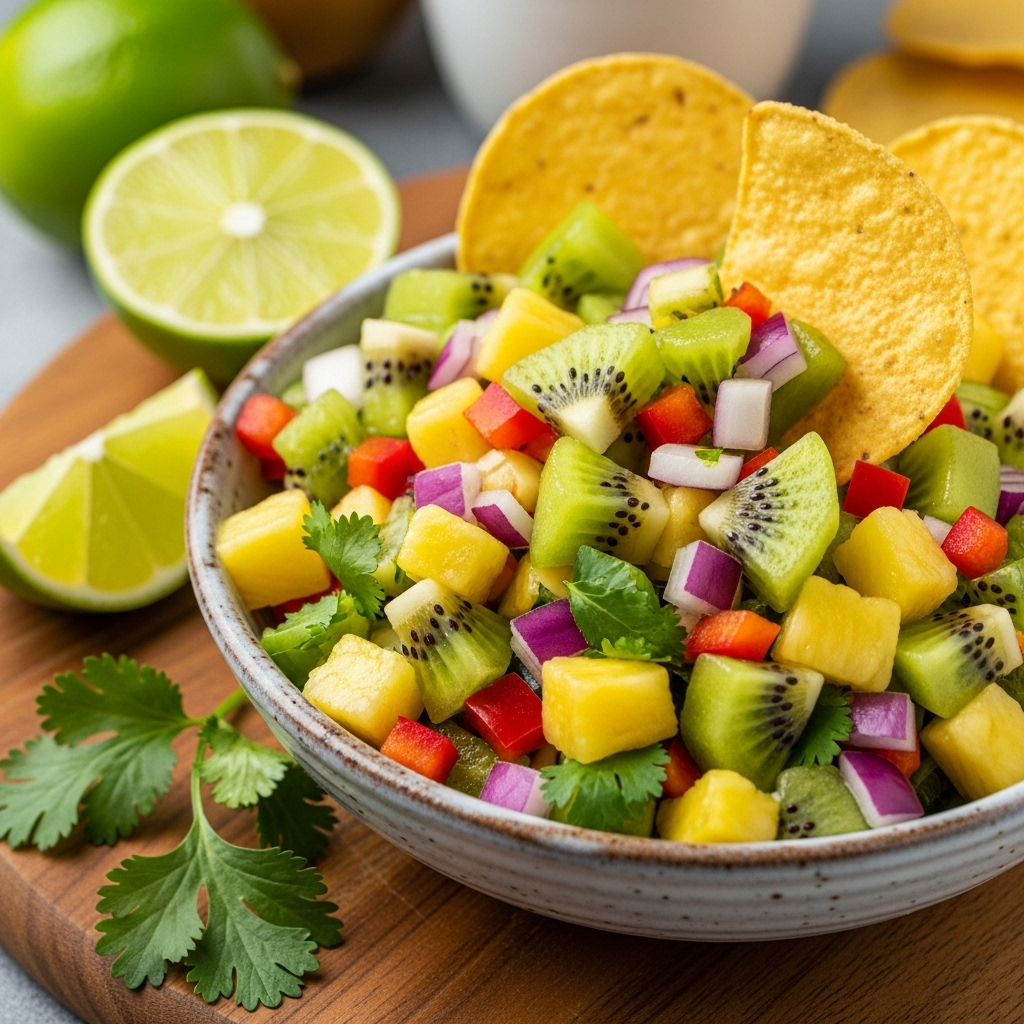
Tropical Kiwi Pineapple Salsa Recipe – Sweet, Tangy & Irresistibly Fresh

Get ready to transport your taste buds straight to a tropical paradise with this vibrant kiwi pineapple salsa recipe! This stunning, sweet-and-tangy salsa combines the juicy brightness of fresh pineapple with the unique tartness of kiwi, creating an explosion of tropical flavors that’s unlike any salsa you’ve tried before.
This tropical fruit salsa is the perfect balance of sweet, tangy, and slightly spicy, with beautiful pops of color that make it as gorgeous to look at as it is delicious to eat. It’s the kind of recipe that instantly elevates any meal from ordinary to extraordinary—whether you’re serving it with cinnamon sugar chips as a dessert appetizer, spooning it over grilled fish or chicken, or adding it to tacos for a fresh, fruity twist.
What makes this easy kiwi salsa so special is its incredible versatility. Serve it at summer BBQs and pool parties, bring it to potlucks where it’s guaranteed to be the star of the show, or make it for a casual weeknight dinner when you want something light and refreshing. The best part? It comes together in just 15 minutes with no cooking required—just fresh fruit, a sharp knife, and a few simple seasonings. This is the recipe that will have everyone asking, “Can you send me the recipe?” before they’ve even finished their first bite!
History / Background
While traditional salsas have deep Mexican roots dating back to Aztec civilization, fruit-based salsas like this kiwi pineapple version are a more modern innovation that emerged from the fusion food movement of the late 20th century. As chefs and home cooks began experimenting with combining different culinary traditions, tropical fruit salsas became increasingly popular, especially in coastal regions of the United States, Hawaii, and the Caribbean.
The combination of kiwi and pineapple specifically reflects the global nature of modern cuisine. Pineapple is native to South America and has been cultivated throughout tropical regions for centuries, playing an important role in Hawaiian and Caribbean cooking. Kiwi, on the other hand, originated in China (where it was called yang tao) and was later cultivated commercially in New Zealand in the early 1900s, eventually becoming synonymous with that country.
This fresh kiwi pineapple salsa represents the beautiful evolution of salsa from its traditional tomato-based roots to embrace the sweet, tropical flavors that have become beloved in modern American fusion cuisine. The trend of fruit salsas gained significant momentum in the 1990s and 2000s when restaurants began pairing them with grilled seafood, and health-conscious home cooks discovered they were a delicious way to incorporate more fresh fruit into meals.
Today, tropical fruit salsas like this one have earned their place as a staple at summer gatherings, luaus, and any occasion where fresh, vibrant flavors are celebrated. They’ve become particularly popular on Pinterest and food blogs because they’re photogenic, incredibly easy to make, and offer a refreshing alternative to traditional savory salsas.
Why You’ll Love This Recipe
This kiwi pineapple salsa is about to become your new obsession, and here’s why it deserves a permanent spot in your recipe rotation!
The combination of sweet pineapple and tart kiwi creates a flavor profile that’s absolutely addictive—it’s like sunshine in a bowl. Every bite delivers that perfect balance of sweet, tangy, and fresh that keeps you reaching for more.
Here’s what makes this recipe absolutely irresistible:
- Lightning Fast – Ready in just 15 minutes from start to finish with zero cooking involved
- Naturally Healthy – Packed with vitamin C, fiber, and antioxidants from fresh tropical fruit
- Stunning Presentation – The vibrant greens, yellows, and reds make it Instagram and Pinterest-worthy
- Incredibly Versatile – Works as an appetizer, topping, side dish, or even a healthy dessert
- Kid-Approved – The natural sweetness appeals to children while being nutritious
- Budget-Friendly – Uses affordable fruits available year-round at most grocery stores
- Perfect for Entertaining – Always gets rave reviews and recipe requests at gatherings
- Customizable Heat Level – Easily adjust the spiciness to your preference
- No Special Skills Required – If you can chop fruit, you can make this salsa
- Refreshing & Light – Perfect for warm weather when you want something cool and crisp
- Naturally Vegan & Gluten-Free – Accommodates most dietary restrictions without modification
- Tastes Even Better After Resting – The flavors develop beautifully as they meld together
Ingredient Notes
The beauty of this tropical salsa lies in selecting the right fruit and complementary ingredients. Here’s what you need to know:
Fresh Pineapple – The star of the show! Fresh pineapple is absolutely essential here—canned pineapple is too soft and lacks the bright, tangy flavor you need. Look for pineapple that’s golden yellow (not green), feels heavy for its size, and has a sweet aroma at the base. The flesh should be firm but yield slightly to pressure. You can buy pre-cut pineapple chunks to save time, but whole pineapple will be fresher and more flavorful.
Kiwi Fruit – These fuzzy little gems add gorgeous green color and a unique tart-sweet flavor that balances the pineapple perfectly. Choose kiwis that yield to gentle pressure but aren’t mushy. The flesh should be vibrant green with those distinctive tiny black seeds. You can use regular green kiwis or golden kiwis (which are slightly sweeter and less tart).
Red Bell Pepper – Adds a subtle sweetness, beautiful color contrast, and a slight crunch. Red bell peppers are sweeter than green, which complements the fruit better. You can substitute with orange or yellow bell pepper for a different color palette.
Red Onion – Provides that essential savory bite that prevents the salsa from being too sweet. Red onion is milder and prettier than white or yellow onion. For an even gentler flavor, soak the diced onion in cold water for 10 minutes before adding.
Jalapeño Pepper – This is what transforms the salsa from simply sweet to complex and exciting. The jalapeño adds just enough heat to balance the fruit’s sweetness without overwhelming it. Remove seeds and membranes for mild heat, or leave them in if you prefer more kick.
Fresh Cilantro – The bright, citrusy notes of cilantro tie all the tropical flavors together beautifully. If you’re not a cilantro fan (about 10-15% of people have a genetic aversion to it), substitute with fresh mint or basil for a different but equally delicious flavor.
Lime Juice – Freshly squeezed lime juice is crucial—it adds brightness, prevents the fruit from browning, and enhances all the other flavors. Never use bottled lime juice, as it tastes artificial and flat.
Honey – A touch of honey rounds out the flavors and adds a lovely subtle sweetness that complements the fruit. You can substitute with agave nectar for a vegan option, or use a bit of sugar if needed.
Salt – A pinch of salt might seem odd in a fruit salsa, but it’s transformative! It enhances all the natural flavors and creates better balance. Use fine sea salt or kosher salt.
Optional Additions – Diced mango, fresh mint leaves, diced cucumber, pomegranate seeds, or a pinch of chili powder can all be wonderful additions!
Equipment Needed
The minimal equipment needed is part of what makes this recipe so appealing:
- Sharp Chef’s Knife – Essential for cleanly cutting the fruit without crushing it
- Cutting Board – A large one gives you plenty of workspace
- Large Mixing Bowl – For combining all the ingredients
- Small Bowl – For whisking together the dressing
- Measuring Cups & Spoons – For accurate measurements
- Citrus Juicer (optional but helpful) – Makes extracting lime juice easier
- Whisk or Fork – For mixing the dressing
- Wooden Spoon or Silicone Spatula – For gently folding everything together
- Airtight Storage Container – For refrigerating leftovers
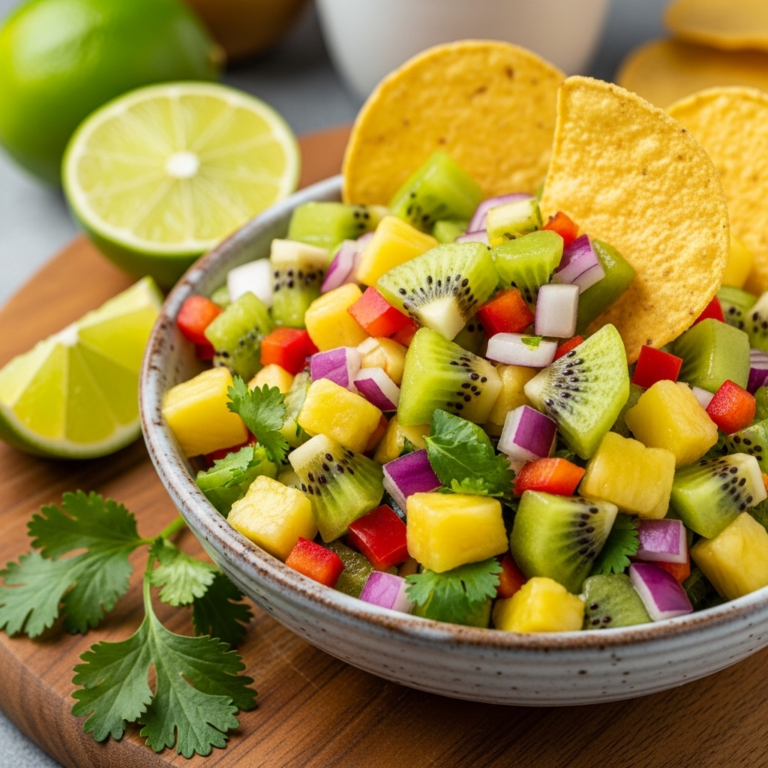
Tropical Kiwi Pineapple Salsa Recipe
This vibrant kiwi pineapple salsa combines sweet tropical fruit with a hint of heat for the perfect balance of flavors. Fresh, colorful, and incredibly versatile—serve it with chips, over grilled fish or chicken, or as a refreshing side dish!
- Total Time: 15 minutes
- Yield: 8 servings (about 4 cups) 1x
Ingredients
For the Salsa:
- 2 cups fresh pineapple, diced into ½-inch pieces
- 4 medium kiwis, peeled and diced
- 1 medium red bell pepper, finely diced
- ¼ cup red onion, finely diced
- 1 jalapeño pepper, seeded and minced
- ¼ cup fresh cilantro, chopped
For the Dressing:
- 3 tablespoons fresh lime juice (about 2 limes)
- 1 tablespoon honey (or agave nectar)
- ¼ teaspoon sea salt
- Pinch of black pepper
Instructions
- Prepare the Pineapple: If using a whole pineapple, cut off the top and bottom, stand it upright, and slice away the skin in downward strips. Cut the pineapple into quarters lengthwise, remove the tough core from each quarter, then dice the flesh into ½-inch pieces. You should have about 2 cups of diced pineapple. If using pre-cut pineapple, simply dice any larger pieces to ensure uniform size.
- Prepare the Kiwis: Using a sharp paring knife or vegetable peeler, remove the fuzzy skin from the kiwis. Cut each kiwi in half lengthwise, then slice into half-moons before dicing into bite-sized pieces roughly the same size as your pineapple chunks. The kiwis will be softer than the pineapple, so handle them gently.
- Dice the Bell Pepper: Core and seed the red bell pepper, then dice it into small pieces (about ¼-inch). The smaller dice on the pepper helps distribute its flavor and color throughout the salsa without overpowering the fruit.
- Prepare the Aromatics: Finely dice the red onion and jalapeño pepper. For the jalapeño, cut it in half lengthwise and use a spoon to scrape out the seeds and white membranes (this is where most of the heat lives). Mince the jalapeño very finely so the heat distributes evenly. If you like spicy salsa, leave some or all of the seeds in.
- Chop the Cilantro: Roughly chop the fresh cilantro leaves and tender stems. Don’t worry about making it perfectly uniform—a rustic chop works beautifully here.
- Make the Dressing: In a small bowl, whisk together the fresh lime juice, honey, salt, and black pepper until the honey is fully dissolved and incorporated. The honey can be stubborn, so whisk vigorously for about 30 seconds. Taste and adjust—if your fruit isn’t very sweet, you might want a touch more honey.
- Combine Everything: In a large mixing bowl, gently combine the diced pineapple, kiwi, red bell pepper, red onion, jalapeño, and cilantro. Pour the dressing over the fruit mixture and use a silicone spatula or wooden spoon to fold everything together gently. Be careful not to mash the kiwi, which is softer than the other ingredients.
- Rest and Develop Flavors: Cover the bowl with plastic wrap or transfer to an airtight container and refrigerate for at least 30 minutes before serving. This resting time allows the flavors to meld together beautifully and the fruit to release a bit of juice, creating a light, flavorful syrup.
- Final Touches: Before serving, give the salsa a gentle stir and taste one more time. Adjust the seasoning if needed—you might want an extra squeeze of lime for brightness or a pinch more salt to enhance the flavors.
- Serve and Enjoy: Transfer to a pretty serving bowl and serve with cinnamon sugar tortilla chips, over grilled fish or chicken, alongside tacos, or however you prefer! The salsa is best enjoyed fresh but will keep refrigerated for up to 2 days.
Notes
- For the best texture and flavor, use fruit that’s ripe but still firm. Overripe fruit will turn mushy.
- The salsa will release liquid as it sits. This is completely normal—just give it a stir before serving.
- If making this for a dessert salsa, you can omit the jalapeño and onion entirely for a purely sweet version.
- Leftover salsa liquid makes an incredible addition to smoothies or cocktails!
- For a beautiful presentation, reserve a few kiwi slices and pineapple chunks to garnish the top of the bowl.
- The heat level can be adjusted by using more or less jalapeño, or substituting with a milder pepper.
- Prep Time: 15 minutes
- Cook Time: 0 minutes
Nutrition
- Serving Size: ½ cup
- Calories: 52
- Sugar: 9g
- Sodium: 76mg
- Fat: 0g
- Saturated Fat: 0g
- Unsaturated Fat: 0g
- Trans Fat: 0g
- Carbohydrates: 13g
- Fiber: 2g
- Protein: 0g
- Cholesterol: 0mg
Tips & Variations
The wonderful thing about this tropical salsa is how easily you can customize it to suit different occasions and preferences!
Spicy Tropical Salsa: Add an extra jalapeño or include a serrano pepper for more heat. You can also add a pinch of red pepper flakes or cayenne pepper for an extra kick.
Mango Madness: Add 1 cup of diced fresh mango for even more tropical sweetness and a gorgeous orange color. Mango pairs beautifully with both kiwi and pineapple.
Cucumber Crunch: Mix in ½ cup of diced cucumber for extra crunch and a cooling element that’s perfect for hot days.
Berry Blast: Add ½ cup of diced strawberries or fresh blueberries for a berry-tropical fusion that’s absolutely divine.
Coconut Cream Version: Stir in 2 tablespoons of coconut cream for a richer, more dessert-like salsa that’s incredible over pound cake or vanilla ice cream.
Minty Fresh: Replace the cilantro with fresh mint leaves for a refreshing twist that’s particularly good as a dessert salsa.
Citrus Twist: Add the zest of one lime along with the juice for extra citrus punch, or try using a combination of lime and orange juice.
Savory Boost: Add a tablespoon of finely chopped fresh ginger or a clove of minced garlic for more savory depth.
Pomegranate Jewels: Fold in ¼ cup of pomegranate arils for beautiful ruby-red bursts of flavor and stunning presentation.
Avocado Addition: Gently fold in one diced avocado just before serving for creamy richness (note: this won’t keep as long).
Pro Chef Tips
Want to take this salsa from delicious to absolutely exceptional? Here are professional secrets:
Uniform Cutting is Key: Take the time to dice all your fruit to similar sizes (roughly ½-inch pieces). This ensures even flavor distribution in every bite and makes the salsa look professionally prepared. The only exception is the onion and jalapeño, which should be diced smaller so their flavors distribute evenly without overwhelming bites.
Master the Art of Pineapple Selection: The secret to great pineapple salsa starts at the grocery store. Smell the base of the pineapple—it should smell sweet and tropical, not fermented. The color should be golden yellow, not green. Gently tug one of the center leaves at the top—if it comes out easily, the pineapple is ripe. A green pineapple will never ripen properly at home, so choose wisely!
Kiwi Peeling Hack: The easiest way to peel kiwis is to cut off both ends, then slide a spoon between the flesh and the skin, working your way around the fruit. The kiwi will pop right out perfectly intact. Alternatively, you can cut them in half and scoop out the flesh with a spoon.
Balance Sweet and Tart: Taste your fruit before making the salsa. If your pineapple is very sweet, you might want to add extra lime juice or reduce the honey. If it’s quite tart, add a touch more honey. The goal is harmony, not overpowering sweetness.
Let the Dressing Dissolve Completely: When making the dressing, make sure the honey is completely dissolved into the lime juice before adding to the fruit. Undissolved honey will create sticky clumps instead of evenly coating the fruit. Whisk vigorously or even warm the lime juice slightly to help the honey incorporate.
Gentle Folding Technique: Kiwis are much softer than pineapples and bell peppers. When combining ingredients, use a folding motion with a silicone spatula rather than stirring vigorously. This keeps the kiwi pieces intact and prevents them from turning to mush.
Strategic Salting: The small amount of salt in this recipe is transformative—it enhances the natural sweetness of the fruit and brightens all the flavors. However, add it in the dressing rather than directly on the fruit to prevent the salt from drawing out too much liquid.
Temperature Matters: This salsa tastes best when it’s cold. Serve it straight from the refrigerator for the most refreshing experience. If you’re serving it at an outdoor event, consider placing the serving bowl over a larger bowl filled with ice to keep it chilled.
Common Mistakes to Avoid
Even simple recipes can go wrong without proper technique. Here are the pitfalls to watch for:
Using Overripe or Underripe Fruit: This is the biggest mistake! Overripe fruit turns mushy and ferments quickly, while underripe fruit lacks flavor and can be tough. Your pineapple should smell sweet and yield slightly to pressure. Kiwis should give gently when squeezed but not feel squishy.
Cutting Pieces Too Large or Uneven: If your fruit chunks are too big, you won’t get a good mix of flavors in each bite. If they’re uneven, some pieces will be perfect while others are too large. Aim for consistent ½-inch pieces for the best results.
Skipping the Rest Time: While you technically can eat this salsa immediately, it really does need at least 30 minutes to rest. During this time, the flavors meld together, the fruit releases some juice creating a light syrup, and the onion and jalapeño flavors mellow and distribute evenly.
Using Bottled Lime Juice: Fresh lime juice is absolutely essential here. Bottled lime juice has a tinny, artificial flavor that will ruin the bright, fresh taste of your tropical salsa. Always juice fresh limes!
Not Adjusting for Fruit Sweetness: Natural fruit varies dramatically in sweetness depending on ripeness and variety. Always taste your salsa and adjust the honey and lime juice accordingly. If it’s too tart, add a bit more honey. If it’s too sweet, add more lime juice.
Making It Too Far in Advance: While some salsas improve over several days, this fruit salsa is best within 24 hours. The fruit begins to break down and release too much liquid after that, and the kiwi in particular can become mushy.
Storage & Meal Prep
Here’s everything you need to know about storing and preparing this salsa:
Refrigerator Storage: Store the salsa in an airtight container in the refrigerator for up to 2 days. The salsa will remain safe to eat but the texture and appearance will decline over time as the fruit softens and releases more liquid.
Liquid Accumulation: As the salsa sits, the fruit will naturally release juice, creating a sweet syrup at the bottom of the container. This is completely normal and actually quite delicious! You can either stir it back into the salsa or drain it off before serving. Save this flavorful liquid to add to smoothies, cocktails, or sparkling water for a refreshing drink.
Texture Changes: The kiwi and pineapple will soften slightly as the salsa sits, especially if salt was added early. For the crispest texture, make and serve the salsa within a few hours. If making ahead, you can dice all the fruit and store it separately, then combine with the dressing 1-2 hours before serving.
Color Preservation: The lime juice in the dressing helps prevent the fruit from browning, but after 24 hours you might notice some color changes. This doesn’t affect food safety, just appearance.
Not Recommended for Freezing: Due to the high water content in fresh fruit, this salsa does not freeze well. The fruit will become mushy and watery when thawed, losing its appealing texture completely.
Make-Ahead & Freezer Notes
Make-Ahead Instructions:
This salsa is perfect for making a few hours ahead, allowing the flavors to develop while you focus on other party preparations!
- Same Day (Ideal Method): Make the complete salsa 2-4 hours before serving for the perfect balance of fresh texture and developed flavors. The fruit will still be crisp, but the flavors will have melded beautifully.
- Night Before (Partial Prep): Dice all the fruit and vegetables and store them separately in airtight containers in the refrigerator. Make the dressing and store it separately as well. Combine everything 2-3 hours before serving for optimal freshness and texture.
- Morning Of: You can make the complete salsa in the morning for an evening event. It will be slightly softer but still delicious. Just give it a good stir and drain any excess liquid before serving.
Freezer Notes:
Unfortunately, this fresh tropical salsa is not suitable for freezing. The high water content in pineapple and kiwi means they’ll turn to mush when thawed. The texture will be completely different from fresh salsa—watery and unappealingly soft.
If you have leftover fruit you want to preserve, consider freezing the diced fruit separately to use in smoothies later, but don’t freeze the prepared salsa.
Serving Suggestions
This versatile tropical salsa shines in so many different ways! Here are some delicious serving ideas:
Sweet Serving Ideas:
- Serve with cinnamon sugar tortilla chips for a sweet treat
- Spoon over vanilla ice cream or frozen yogurt for an instant tropical sundae
- Top pound cake, angel food cake, or cheesecake for an elegant dessert
- Layer into parfaits with Greek yogurt and granola
- Use as a topping for pancakes, waffles, or French toast
Savory Applications:
- Serve alongside grilled fish (especially mahi-mahi, salmon, or tilapia)
- Top grilled chicken breasts or pork chops for a tropical twist
- Add to fish tacos or shrimp tacos for fresh flavor
- Spoon over seared scallops or grilled shrimp
- Use as a topping for pulled pork or carnitas
As an Appetizer:
- Serve with regular tortilla chips for a unique party dip
- Pair with coconut shrimp for a tropical appetizer duo
- Serve alongside a cheese board featuring mild cheeses like brie or cream cheese
- Use as a bruschetta topping on crostini
Main Dish Pairings:
- Serve alongside jerk chicken or jerk pork
- Pair with teriyaki-glazed salmon
- Accompany coconut curry dishes
- Serve with grilled halloumi or tofu for vegetarian meals
Beverage Pairings:
- Piña coladas or other tropical cocktails
- Margaritas (especially pineapple or mango margaritas)
- Fresh fruit agua fresca
- Sparkling water with lime
- White wine (especially Sauvignon Blanc or Riesling)
- Light lagers or wheat beers
FAQs Section
Can I make kiwi pineapple salsa without jalapeño?
Absolutely! The jalapeño adds a nice kick, but it’s completely optional. For a purely sweet salsa (perfect for dessert applications), simply omit the jalapeño and red onion entirely. You can also substitute the jalapeño with diced red bell pepper if you want the color and crunch without any heat.
How do I pick a ripe pineapple for salsa?
Look for these signs of ripeness: The pineapple should be golden yellow in color (green pineapples aren’t ripe), smell sweet and tropical at the base (not fermented or vinegary), feel heavy for its size (indicating juiciness), and have leaves that pull out easily from the center. Avoid pineapples with soft spots, dark areas, or a fermented smell. Remember, pineapples don’t continue ripening after harvest, so choose a ripe one at the store!
Can I use canned pineapple instead of fresh?
While you technically can use canned pineapple, fresh is strongly recommended for the best flavor and texture. Canned pineapple is softer, lacks the bright, tangy flavor of fresh, and can be too sweet (especially if packed in syrup). If you must use canned, choose pineapple packed in its own juice (not syrup), drain it very well, and reduce or omit the honey in the recipe.
How long does homemade kiwi pineapple salsa last?
This fresh fruit salsa will keep in an airtight container in the refrigerator for up to 2 days, though it’s best enjoyed within the first 24 hours. After that, the fruit begins to break down, become mushy, and release too much liquid. The kiwi in particular softens quickly. For best results, make the salsa the same day you plan to serve it.
What can I serve with tropical fruit salsa?
So many things! For a sweet treat, serve it with cinnamon sugar tortilla chips, over ice cream, or on top of cheesecake. For savory applications, it’s fantastic with grilled fish (especially mahi-mahi or salmon), chicken, pork, or seafood. Use it to top tacos, serve it alongside tortilla chips, or pair it with coconut shrimp. It’s incredibly versatile!
Can I add other fruits to this salsa?
Definitely! This recipe is very flexible. Diced mango, strawberries, papaya, or even fresh peaches all work beautifully. You can also add pomegranate seeds for color and crunch, or diced cucumber for extra freshness. Just maintain the same general proportions—about 3-4 cups of fruit total.
Is kiwi pineapple salsa healthy?
Yes! This salsa is incredibly nutritious. It’s packed with vitamin C from the kiwi and pineapple, contains digestive enzymes (bromelain from pineapple and actinidin from kiwi), provides fiber for digestive health, and is naturally low in calories (only about 52 calories per ½ cup serving). It’s also naturally vegan, gluten-free, dairy-free, and contains no processed ingredients—just fresh, whole fruit!
Conclusion
And there you have it—the ultimate tropical kiwi pineapple salsa recipe that’s about to revolutionize the way you think about salsa! This vibrant, refreshing creation proves that sometimes the best recipes are the simplest ones. With just a handful of fresh ingredients and 15 minutes of your time, you can create something that looks like it came from a fancy resort restaurant but tastes even better.
The beauty of this easy kiwi salsa is its incredible versatility. Whether you’re spooning it over grilled fish for an elegant weeknight dinner, serving it with cinnamon chips at a summer pool party, or using it to jazz up your taco Tuesday, this tropical salsa delivers every single time. Plus, it’s naturally healthy, bursting with vitamin C and tropical goodness that makes you feel good about every delicious bite.
I absolutely love hearing from readers who’ve tried this recipe! Did you add your own creative twist? Serve it in a fun way? Have a favorite pairing? Drop a comment below and share your experience—I read every single one and love seeing how you make this recipe your own.
If this tropical salsa brought a little sunshine to your kitchen, please pin it to your favorite Pinterest board so you can find it again easily (and so other home cooks can discover it too!). And if you’re feeling extra generous, leave a rating and review—it helps others know what to expect and means the world to me.
Now grab some gorgeous fresh fruit and get ready to make the most delicious, colorful, tropical salsa you’ve ever tasted. Your taste buds are about to go on vacation!