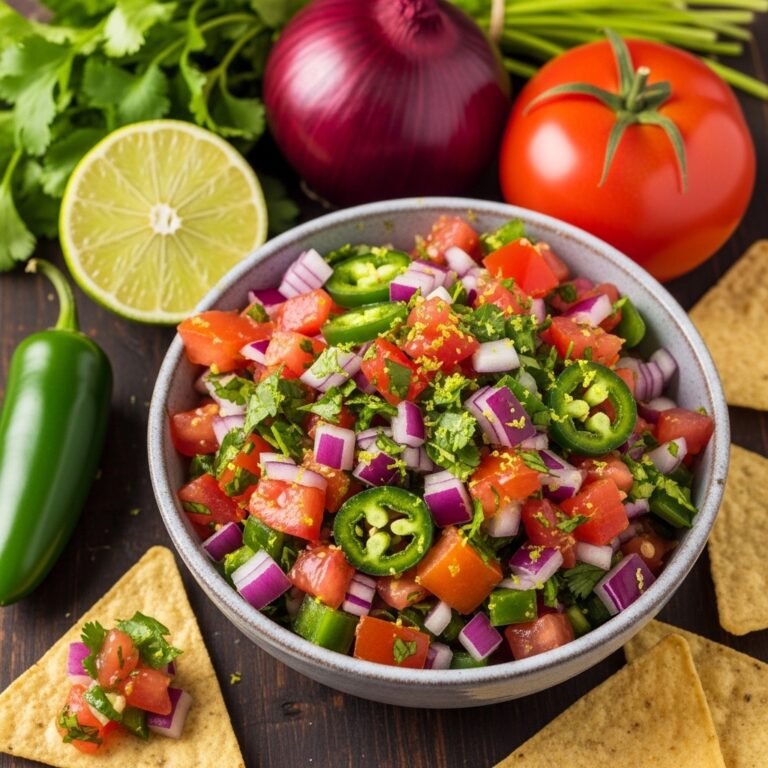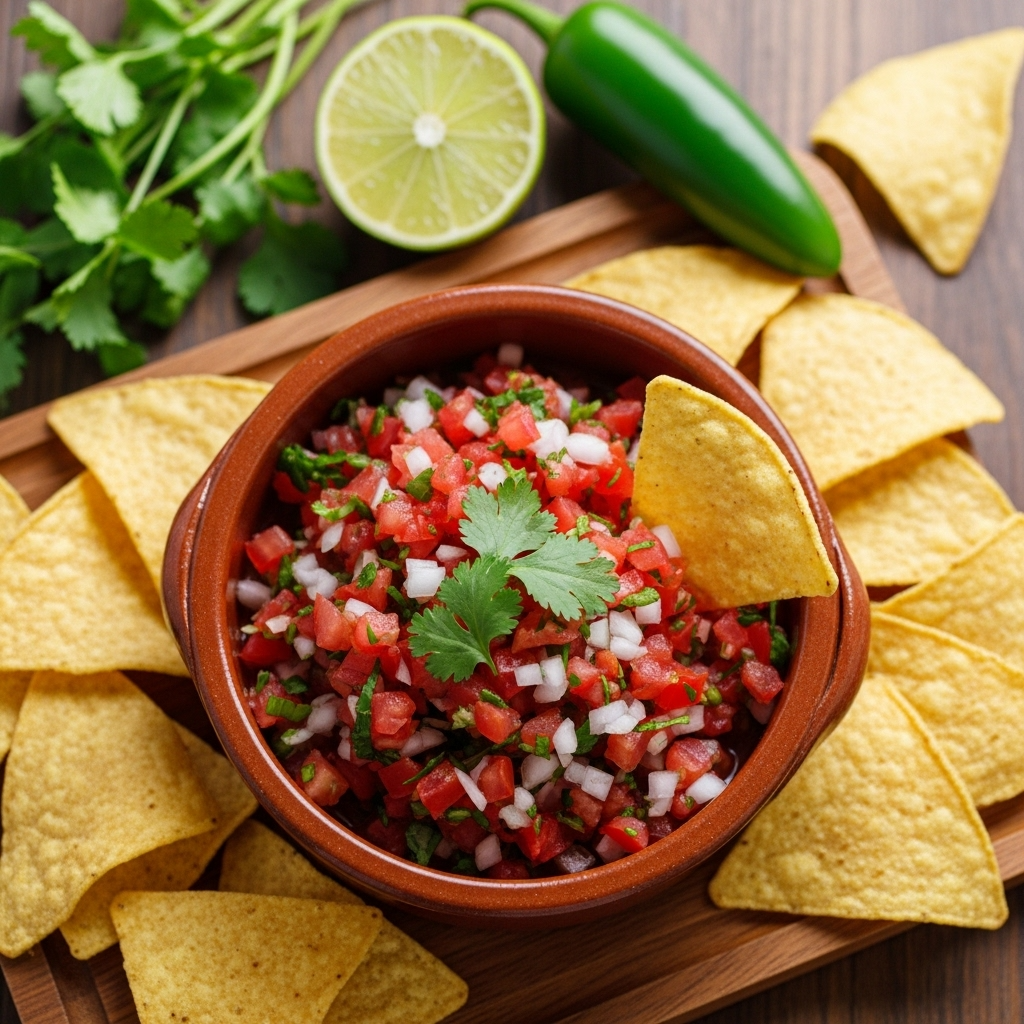
Fresh Restaurant-Style Salsa Recipe (Better Than Store-Bought!)

There’s nothing quite like the vibrant, fresh taste of homemade restaurant-style salsa to elevate your next gathering, taco night, or casual snacking session. This authentic Mexican salsa recipe captures that perfect balance of tangy tomatoes, zesty lime, aromatic cilantro, and just the right kick of heat that keeps you coming back for more. Unlike jarred salsas that can taste flat and overly processed, this homemade version bursts with genuine flavor that tastes like it came straight from your favorite Mexican restaurant.
This restaurant-style salsa is incredibly versatile and perfect for serving at summer barbecues, game day parties, Cinco de Mayo celebrations, or simply as a healthy afternoon snack with tortilla chips. Whether you’re hosting a crowd or meal-prepping for the week, this fresh salsa comes together in just minutes with simple ingredients you probably already have in your kitchen. The best part? You control the heat level, the chunkiness, and the freshness—making it completely customizable to your family’s preferences.
History / Background
Salsa, which literally means “sauce” in Spanish, has been a cornerstone of Mexican cuisine for thousands of years, dating back to the Aztec, Mayan, and Inca civilizations. The ancient peoples of Mesoamerica were combining tomatoes, chili peppers, and ground squash seeds long before the Spanish conquest. When Spanish conquistadors arrived in the early 16th century, they encountered this vibrant condiment and gave it the name we know today.
Traditional Mexican salsas vary dramatically by region, with each area of Mexico boasting its own signature style. Salsa roja (red salsa) from central Mexico tends to be smoother and cooked, while salsa verde from the northern regions features tomatillos and a brighter, tangier flavor profile. The fresh, chunky salsa we Americans know as “restaurant-style” is technically called “pico de gallo” or “salsa fresca” in Mexico, and it’s believed to have originated in the northern Mexican states.
The popularity of salsa in the United States exploded in the 1980s and 1990s, eventually outselling ketchup as America’s favorite condiment by the mid-1990s. Mexican restaurants across the country began serving this fresh, chunky version with complimentary tortilla chips, creating the beloved tradition we associate with dining out at our favorite Mexican spots. Today, making restaurant-style salsa at home has become a point of pride for home cooks who want to recreate that authentic taste without leaving their kitchens.
Why You’ll Love This Recipe
This homemade restaurant-style salsa is about to become your go-to recipe for every occasion. It’s fresh, vibrant, and tastes exponentially better than anything you can buy in a jar. The beauty of this recipe lies in its simplicity—you’re working with whole, fresh ingredients that shine through in every bite, creating layers of flavor that commercial salsas simply can’t match.
Here’s why this recipe is a total game-changer:
- Ready in 10 minutes – Literally faster than a trip to the grocery store
- Budget-friendly – Costs a fraction of restaurant or store-bought versions
- Customizable heat level – Perfect for mild-lovers and spice enthusiasts alike
- No cooking required – Just chop, pulse, and enjoy
- Healthy and fresh – Packed with vegetables, vitamins, and zero preservatives
- Makes a big batch – Perfect for parties, meal prep, or weekly snacking
- Impresses guests – Everyone will think you’re a culinary genius
- Versatile use – Great with chips, tacos, grilled meats, eggs, and more
- Kid-approved – Even picky eaters love this fresh flavor
Ingredient Notes
Let me walk you through each ingredient and why it matters for achieving that perfect restaurant-quality salsa.
Canned Whole Tomatoes: Using high-quality canned whole tomatoes (like San Marzano or fire-roasted varieties) gives you consistent flavor year-round, unlike fresh tomatoes that can be watery or flavorless depending on the season. The canning process concentrates the tomato flavor beautifully. Drain them well to avoid watery salsa. If you prefer fresh tomatoes during peak summer season, Roma tomatoes work wonderfully—just remove the seeds and excess juice.
Fresh Cilantro: This herb is essential for authentic Mexican flavor. Use the leaves and tender stems for maximum flavor. If you’re among the small percentage of people with the genetic variation that makes cilantro taste like soap, substitute with fresh parsley or simply omit it.
White or Yellow Onion: Raw onion provides that sharp, pungent bite that’s characteristic of restaurant salsa. White onions are traditional and slightly sharper, while yellow onions are a bit sweeter. Red onions work too but will add a purple tint. For milder onion flavor, soak diced onions in cold water for 10 minutes, then drain.
Jalapeño Peppers: These provide the perfect level of heat. The seeds and membranes contain most of the capsaicin, so remove them for milder salsa or leave them in for extra kick. For more heat, try serrano peppers; for less, use a poblano pepper.
Fresh Lime Juice: Always use fresh-squeezed lime juice, never bottled. The bright acidity balances the richness of the tomatoes and enhances all the other flavors. One large lime typically yields about two tablespoons of juice.
Garlic: Fresh garlic cloves add aromatic depth. Garlic powder won’t give you the same fresh, punchy flavor.
Ground Cumin: This warm, earthy spice is the secret ingredient that gives salsa that authentic Mexican restaurant flavor. Just a pinch transforms the entire dish.
Salt: Essential for bringing out all the flavors. Start with less and adjust to taste—you can always add more.
Equipment Needed
You don’t need fancy equipment to make restaurant-quality salsa. Here’s what you’ll need:
- Food processor or blender: A food processor gives you the best control over texture, but a standard blender works too. Pulse carefully to avoid over-processing into soup.
- Sharp knife: For chopping cilantro and preparing ingredients
- Cutting board: Preferably one designated for produce
- Measuring cups and spoons: For accurate proportions
- Can opener: For your canned tomatoes
- Mixing bowl: If you prefer to hand-chop everything for a chunkier texture
- Storage containers: Glass jars or airtight containers for refrigerating
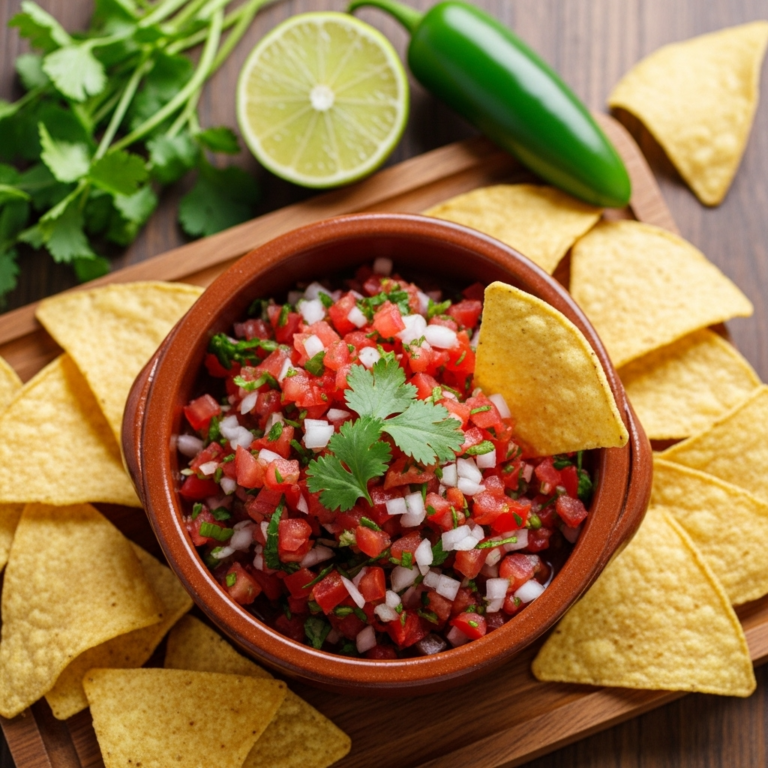
Restaurant-Style Salsa Recipe
This fresh restaurant-style salsa tastes just like your favorite Mexican restaurant’s house salsa. Made with canned tomatoes, fresh cilantro, jalapeños, and lime juice, it’s perfectly balanced, customizable, and ready in just 10 minutes. Serve with tortilla chips or use it to top tacos, grilled chicken, eggs, and more.
- Total Time: 10 minutes
- Yield: 6 cups (about 12 servings) 1x
Ingredients
- 1 (28-ounce) can whole tomatoes with juice
- 1 (10-ounce) can diced tomatoes with green chiles (like Ro-Tel)
- 1/4 cup fresh cilantro leaves and stems, roughly chopped
- 1/2 medium white or yellow onion, roughly chopped
- 1-2 jalapeño peppers, stems removed (remove seeds for milder salsa)
- 2-3 cloves fresh garlic, peeled
- 2 tablespoons fresh lime juice (about 1 large lime)
- 1 teaspoon ground cumin
- 1 teaspoon salt (or to taste)
- 1/4 teaspoon black pepper
Instructions
- Drain the tomatoes: Open your can of whole tomatoes and pour off about half the juice into the sink. You want some liquid for blending, but not so much that your salsa becomes watery. Set aside.
- Prepare your vegetables: Roughly chop the onion into large chunks—no need to dice finely since the food processor will do the work. Remove the stems from the jalapeños. If you want mild salsa, slice them in half and scrape out the seeds and white membranes. For spicier salsa, leave the seeds in. Peel your garlic cloves. Roughly chop the cilantro, including the tender stems.
- Add ingredients to food processor: Place the drained whole tomatoes, the can of diced tomatoes with green chiles (with all its liquid), chopped onion, jalapeños, garlic cloves, cilantro, lime juice, cumin, salt, and black pepper into your food processor.
- Pulse to desired consistency: Pulse the mixture 5-10 times, using short 1-2 second pulses, until you reach your preferred consistency. For chunkier salsa, pulse fewer times. For smoother salsa, pulse more. Avoid running the processor continuously or you’ll end up with salsa soup. The goal is a slightly chunky texture with visible pieces of tomato and onion.
- Taste and adjust: Transfer to a bowl and taste your salsa. Add more salt if needed, more lime juice for brightness, or another jalapeño for heat. Remember, flavors will meld and intensify as it sits, so don’t over-season initially.
- Rest and serve: For best flavor, cover and refrigerate for at least 30 minutes before serving to allow the flavors to marry together. Serve with your favorite tortilla chips and watch it disappear!
Notes
- For the freshest flavor, make this salsa the day you plan to serve it, though it keeps well for up to 5 days refrigerated.
- The heat level can vary depending on your jalapeños. Start with one pepper, taste, and add more if desired.
- If your salsa seems too thick, add a tablespoon or two of water. If it’s too thin, drain off some liquid or add another fresh tomato.
- For a smokier flavor, use fire-roasted canned tomatoes.
- This recipe doubles easily for large gatherings.
- Prep Time: 10 minutes
- Cook Time: 0 minutes
Nutrition
- Serving Size: 1/2 cup
- Calories: 25
- Sugar: 3g
- Sodium: 240mg
- Fat: 0.2g
- Saturated Fat: 0g
- Unsaturated Fat: 0g
- Trans Fat: 0g
- Carbohydrates: 5g
- Fiber: 1g
- Protein: 1g
- Cholesterol: 0mg
Tips & Variations
Fruit Salsa Twist: Add 1/2 cup of diced mango, pineapple, or peach for a sweet and spicy variation that’s perfect with grilled fish or shrimp.
Smoky Chipotle Version: Add 1-2 chipotle peppers in adobo sauce for a deep, smoky heat that’s absolutely addictive.
Roasted Salsa: For a deeper flavor, roast your fresh tomatoes, onions, jalapeños, and garlic under the broiler until charred before blending.
Extra Chunky: Dice everything by hand instead of using a food processor for traditional pico de gallo texture.
Corn and Black Bean: Stir in 1/2 cup each of cooked corn kernels and black beans for a heartier, Southwestern-style salsa.
Lower Sodium: Use no-salt-added canned tomatoes and adjust salt to your preference.
Avocado Salsa: Gently fold in one diced avocado just before serving for creamy richness.
Spice it Up: Add a habanero pepper or use serrano peppers instead of jalapeños for serious heat.
Pro Chef Tips
Drain your tomatoes properly: This is the number one secret to restaurant-quality salsa that isn’t watery. Always drain about half the liquid from your canned tomatoes, and if using fresh tomatoes, remove the seeds and gel.
Pulse, don’t puree: The biggest mistake home cooks make is over-processing. Use short pulses and check the consistency frequently. You want texture, not tomato soup.
Let it rest: Salsa tastes significantly better after resting for at least 30 minutes in the refrigerator. The flavors need time to meld together. If you can make it a few hours ahead or even the night before, you’ll be rewarded with even more developed flavors.
Balance is everything: Great salsa is about harmony between acid (lime), salt, heat (jalapeño), and freshness (cilantro). Taste as you go and adjust these elements to achieve perfect balance.
Use quality canned tomatoes: Not all canned tomatoes are created equal. Brands like San Marzano, Muir Glen, or Cento produce superior flavor. The few extra cents are worth it.
Fresh cilantro stems: Don’t waste time picking every leaf off the stems. The tender stems are packed with flavor and blend right in.
Room temperature serving: While you should store salsa cold, let it sit at room temperature for 15-20 minutes before serving for the best flavor expression.
Common Mistakes to Avoid
Over-processing into liquid: The most common error is turning your salsa into a smoothie. Always pulse in short bursts and stop before it becomes completely smooth. You want a chunky, textured salsa with visible pieces.
Using bottled lime juice: Fresh lime juice is essential. Bottled versions taste flat and artificial, and they’ll ruin your salsa’s fresh flavor. Always squeeze fresh limes.
Not adjusting seasoning: Every batch of salsa needs different amounts of salt, lime, and heat depending on your tomatoes and peppers. Always taste and adjust before serving. Under-seasoned salsa is boring and forgettable.
Skipping the resting time: Serving immediately after blending means you’re missing out on flavor development. Raw onions and garlic need time to mellow, and all the flavors need to marry together.
Using old spices: Ground cumin loses potency quickly. If your cumin has been sitting in the cabinet for years, it won’t add that essential Mexican restaurant flavor. Replace it with fresh cumin for best results.
Storage & Meal Prep
Refrigerator Storage: Store your salsa in an airtight container or glass jar in the refrigerator for up to 5-7 days. The flavor is best within the first 3 days, but it remains safe to eat for up to a week. Glass containers are preferable as they won’t absorb odors or stain.
Separation is Normal: Don’t be alarmed if liquid separates and settles at the bottom—this is completely normal. Simply stir well before serving. If there’s excessive liquid, you can drain off a tablespoon or two.
Meal Prep Tips: This salsa is fantastic for meal prep. Make a big batch on Sunday and use it throughout the week on eggs, grilled chicken, fish tacos, burrito bowls, or as a healthy snack. The flavors actually improve after a day or two in the fridge.
Extending Freshness: Always use a clean spoon when scooping salsa to prevent introducing bacteria. The fresher your initial ingredients, the longer your salsa will last.
Make-Ahead & Freezer Notes
Make-Ahead: This salsa is perfect for making ahead! You can prepare it up to 2 days in advance, and many argue it tastes even better the next day once the flavors have fully melded. For parties, making it the night before is ideal.
Freezing: Yes, you can freeze salsa! While the texture will be slightly softer after thawing (the tomatoes and onions release some water), the flavor remains excellent. Freeze in portions using freezer-safe containers or heavy-duty freezer bags, leaving about an inch of headspace for expansion. It will keep frozen for up to 3 months.
Thawing: Transfer frozen salsa to the refrigerator and let it thaw overnight. Once thawed, stir well and drain off any excess liquid. The texture will be less chunky than fresh salsa, making it perfect for use in cooked dishes like enchiladas, tacos, or mixed into soups rather than serving with chips.
Best Uses for Frozen Salsa: Use thawed salsa in recipes where it will be cooked or mixed into other dishes—think taco filling, salsa chicken in the crockpot, or stirred into rice. The texture change makes it less ideal for chip-dipping but perfect for cooking applications.
Serving Suggestions
Restaurant-style salsa is incredibly versatile. Here are some delicious ways to enjoy it:
Classic Pairings: Serve with your favorite tortilla chips—white corn, blue corn, or lime-flavored chips all work beautifully. Add a bowl of guacamole and some queso dip for the ultimate appetizer spread.
Taco Night: Use as a topping for beef tacos, chicken tacos, fish tacos, or vegetarian black bean tacos. It adds the perfect fresh element.
Breakfast Boost: Spoon over scrambled eggs, breakfast burritos, huevos rancheros, or chilaquiles for a bright, flavorful morning.
Grilled Proteins: Serve alongside grilled chicken, steak, fish, or shrimp. The freshness cuts through rich, grilled flavors perfectly.
Bowl Toppings: Add to burrito bowls, rice bowls, or grain bowls for a healthy, flavor-packed meal.
Quesadilla Companion: Serve as a dipping sauce for cheese quesadillas or chicken quesadillas.
Side Dishes: Pair with Mexican rice, refried beans, elote (Mexican street corn), or a simple side salad.
Beverages: Serve with ice-cold Mexican beer, margaritas (frozen or on the rocks), agua fresca, or Mexican Coke for an authentic experience.
FAQs Section
Can I use fresh tomatoes instead of canned?
Absolutely! Use 2-3 pounds of ripe Roma tomatoes. Remove the seeds and excess juice to prevent watery salsa. Keep in mind that fresh tomatoes are very seasonal—they’re amazing in summer but can be flavorless in winter, which is why many recipes call for canned tomatoes for consistent year-round results.
How can I make my salsa less watery?
Drain your canned tomatoes well, removing about half the liquid. If using fresh tomatoes, seed them first. You can also refrigerate your finished salsa and then drain off any liquid that accumulates at the bottom before serving. Adding a fresh diced tomato can also help absorb excess moisture.
How long does homemade salsa last?
When stored properly in an airtight container in the refrigerator, homemade salsa lasts 5-7 days. The flavor is peak within the first 3 days. Always use clean utensils when scooping to extend shelf life.
Can I make this salsa without a food processor?
Yes! You can dice all the ingredients by hand for a chunkier, pico de gallo-style salsa. It takes more time but creates a beautiful, traditional texture. Alternatively, use a blender, but pulse very carefully to avoid over-blending.
My salsa is too spicy—how can I fix it?
Add more tomatoes (canned or fresh) to dilute the heat. A squeeze of extra lime juice and a pinch of sugar can also help balance spiciness. For future batches, remove all the seeds and membranes from your jalapeños, or use just half a pepper.
What’s the difference between salsa and pico de gallo?
Pico de gallo is always made with fresh, hand-chopped ingredients and has a chunkier texture. Salsa can be smooth or chunky, cooked or fresh, and often includes canned tomatoes. This recipe is a hybrid—using canned tomatoes with a food processor but achieving that fresh, restaurant-style flavor.
Can I adjust the cilantro if I don’t like it?
Definitely! Cilantro is divisive—about 10-14% of people have a genetic variation that makes it taste soapy. You can reduce the amount, omit it entirely, or substitute with fresh parsley for a different but still delicious fresh herb flavor.
Conclusion
This homemade restaurant-style salsa is truly a game-changer for anyone who loves fresh, authentic Mexican flavors. With just 10 minutes of hands-on time and simple ingredients, you can create something that tastes infinitely better than store-bought versions and rivals your favorite restaurant’s recipe. The beauty of making salsa at home is complete control—adjust the heat, the chunkiness, and the seasoning to exactly match your family’s preferences.
Once you make this recipe, you’ll never want to go back to jarred salsa again. The bright, fresh flavors and perfect balance of tangy lime, aromatic cilantro, and just-right heat will have everyone asking for the recipe. Whether you’re serving it at your next party, meal-prepping for the week, or simply enjoying a healthy snack, this versatile salsa delivers every single time.
I’d love to hear how your salsa turns out! Did you make it spicier? Add any creative variations? Drop a comment below and let me know. And if you loved this recipe, please share it on Pinterest so other home cooks can discover it too. Don’t forget to save it to your favorite recipe board for easy access whenever that salsa craving hits. Happy cooking, friends!