Smoked Paprika Hummus Recipe: Smoky, Creamy, and Absolutely Irresistible

Smoked paprika hummus is a gloriously creamy, richly smoky Middle Eastern dip that transforms classic chickpea hummus with the addition of Spanish smoked paprika—creating a gorgeous rust-colored spread that’s both visually stunning and incredibly flavorful! This easy smoked paprika hummus features an ultra-smooth, velvety texture with deep, complex flavors from tahini, lemon, garlic, and that signature smoky warmth from pimentón (smoked paprika). The combination of protein-rich chickpeas with heart-healthy tahini and aromatic spices creates the ultimate versatile dip, spread, or sandwich filling that’s both nutritious and absolutely delicious. This homemade smoked paprika hummus recipe is perfect for countless occasions: serve it as an appetizer with warm pita bread and fresh vegetables at parties, spread it on sandwiches and wraps for Mediterranean flair, use it as a base for grain bowls and mezze platters, pair it with falafel and shawarma for authentic Middle Eastern meals, dollop it on salads and roasted vegetables for protein and creaminess, or simply keep it in your fridge as a healthy snack with veggie sticks and crackers. The beauty of this smoky hummus lies in its delightful simplicity—it requires just seven ingredients, comes together in 10 minutes with a food processor, delivers restaurant-quality flavor at a fraction of the cost, and offers the plant-based protein and fiber from chickpeas. Whether you’re a hummus enthusiast who loves trying new flavors, someone seeking healthy dips and spreads, a meal prep devotee looking for versatile staples, or simply anyone who believes smoked paprika makes everything better, this smoked paprika hummus recipe delivers incredible taste, beautiful presentation, perfect texture, and pure Mediterranean-inspired deliciousness!
History / Background
To understand smoked paprika hummus, we must first explore the rich histories of its two key components: hummus itself and smoked paprika (pimentón). This modern fusion represents a beautiful marriage of Middle Eastern and Spanish culinary traditions.
Hummus (which means “chickpea” in Arabic) has ancient roots in the Middle East, with chickpeas being cultivated in the region for over 10,000 years. While the exact origin of hummus as we know it today is debated among Middle Eastern countries—with Lebanon, Israel, Palestine, Syria, and others all claiming ownership—what’s certain is that hummus has been a staple food throughout the Levant for centuries. The earliest written recipes for something resembling modern hummus appear in 13th-century Egyptian cookbooks.
Traditional hummus consists of cooked chickpeas blended with tahini (sesame seed paste), lemon juice, garlic, and salt. The smooth, creamy consistency comes from proper technique—removing chickpea skins, using ice water while blending, and adding plenty of tahini. In its homelands, hummus is a complete food culture unto itself, with specialized hummus restaurants (hummusia) serving it warm, drizzled with olive oil, and accompanied by fresh vegetables and bread.
Smoked paprika (pimentón) has an entirely different geographic origin—it comes from the La Vera region of Spain, where it’s been produced since the 16th century. After Spanish explorers brought peppers back from the Americas, Spanish monks began drying them over oak wood fires, creating a unique smoky flavor. This smoking process can take up to two weeks and gives pimentón its distinctive deep red color and complex, smoky-sweet taste. Pimentón de La Vera has protected designation of origin status in Europe.
The fusion of Middle Eastern hummus with Spanish smoked paprika represents the culinary creativity and globalization of the late 20th and early 21st centuries. As international travel increased, immigration patterns shifted, and food culture became more interconnected, creative cooks began experimenting with cross-cultural ingredient combinations.
The specific pairing of hummus with smoked paprika likely emerged in the 1990s and 2000s as Mediterranean and Spanish tapas-style dining became trendy in Western countries. Food bloggers, chefs, and home cooks discovered that smoked paprika’s warmth and complexity elevated traditional hummus, creating a more sophisticated flavor profile that appealed to contemporary palates seeking bold, interesting tastes.
Food photography and social media, particularly Pinterest and Instagram, accelerated the popularity of smoked paprika hummus in the 2010s. The gorgeous rust-orange color created by stirring smoked paprika into creamy hummus made it incredibly photogenic. The swirled presentation with paprika dusted on top, drizzled with olive oil, became an iconic look in food styling.
Different regions have embraced variations: some add roasted red peppers for extra smokiness and sweetness, others incorporate chipotle for heat, some blend in sun-dried tomatoes, and many garnish with chickpeas, pine nuts, or fresh herbs. This adaptability has helped smoked paprika hummus remain popular across dietary preferences—it’s naturally vegan, gluten-free, high-protein, and packed with fiber.
Today, smoked paprika hummus appears on restaurant menus, in grocery stores, and in countless home kitchens. While it may not have centuries of traditional history, it represents the best of modern fusion cooking—honoring the authentic roots of hummus while adding creative Spanish flair that creates something exciting and new.
Why You’ll Love This Recipe
This smoked paprika hummus recipe shows you exactly how to achieve that perfect balance of creamy, smoky, tangy, and savory that makes this dip absolutely addictive! While making hummus might seem straightforward, there are actually specific techniques that create restaurant-quality results: removing chickpea skins for ultra-smooth texture, using ice-cold water for maximum creaminess, incorporating plenty of tahini for richness, and blending in the right order for optimal consistency.
What makes this particular approach to the easy smoked paprika hummus special is the attention to both traditional hummus-making techniques and the proper integration of smoky paprika flavor. We’re not just sprinkling paprika on top—we’re blending it throughout for deep, pervasive smokiness, while also using it as a gorgeous garnish. The result is homemade smoky hummus that’s silky-smooth, deeply flavorful, and absolutely restaurant-quality!
Here’s why this homemade smoked paprika hummus will become your go-to dip:
- Ready in 10 Minutes – One of the fastest homemade dips ever
- Only 7 Ingredients – Simple pantry staples you likely have
- Incredibly Smooth – Restaurant-quality creamy texture
- Naturally Vegan – Perfect for plant-based diets
- Gluten-Free – Safe for gluten-sensitive guests
- High in Protein – About 7g protein per serving from chickpeas
- Packed with Fiber – Excellent for digestive health
- Budget-Friendly – Costs pennies compared to store-bought
- Meal Prep Perfect – Keeps for 5-7 days refrigerated
- Versatile – Use as dip, spread, salad topping, or bowl base
- Beautiful Presentation – Gorgeous rust-orange color impresses
- Customizable – Adjust smokiness, garlic, and lemon to taste
Ingredient Notes
This hummus uses simple ingredients where quality matters!
Canned Chickpeas: The protein-rich base! Chickpeas (garbanzo beans) provide the creamy foundation and plant-based protein. Canned vs. dried: Canned chickpeas are convenient and work perfectly; if using dried, cook until very soft. Amount: One 15-ounce can (1½ cups cooked). Quality tip: Reserve the chickpea liquid (aquafaba)—you might need it for thinning. Substitution: White beans (cannellini) create slightly different but delicious hummus.
Tahini: The rich, nutty element! Tahini (sesame seed paste) provides creaminess, richness, and authentic Middle Eastern flavor. Quality is crucial: Stir well before using as oil separates. Better brands (Soom, Seed + Mill) make noticeably better hummus. Amount: ⅓-½ cup (more tahini = richer, creamier hummus). Substitution: Natural peanut butter or almond butter works but changes flavor significantly; cashew butter is the closest alternative.
Fresh Lemon Juice: The bright acidity! Freshly squeezed lemon juice adds essential tang and brightness. Fresh is essential: Bottled lemon juice tastes flat and artificial. Amount: 3-4 tablespoons (1 large lemon). Purpose: Balances richness and prevents “too tahini-heavy” flavor. Substitution: Fresh lime juice works (slightly different flavor).
Garlic: The pungent kick! Fresh garlic adds savory depth and aromatic complexity. Amount: 1-2 cloves (adjust to taste—raw garlic is strong!). Preparation: Minced, grated, or whole (blends smooth). Fresh preferred: Fresh garlic has cleaner, brighter flavor. Substitution: Roasted garlic (milder, sweeter); garlic powder (½ teaspoon) as last resort.
Smoked Paprika: The signature smoky flavor! Spanish smoked paprika (pimentón) provides that gorgeous rust color and deep, smoky warmth. Quality matters: Spanish pimentón (especially from La Vera region) has superior flavor to generic smoked paprika. Amount: 1-2 teaspoons blended in, plus more for garnish. Types: Sweet (dulce), bittersweet (agridulce), or hot (picante)—sweet is most common. Substitution: Regular paprika (loses smoky flavor); chipotle powder (different but delicious smokiness).
Olive Oil: The silky richness! Extra virgin olive oil adds fruity notes, helps with blending, and creates gorgeous drizzle on top. Amount: 2-3 tablespoons in hummus, plus more for serving. Quality: Good olive oil enhances flavor significantly. Purpose: Creates smooth consistency and rich mouthfeel.
Salt: Essential seasoning! Salt enhances all flavors and brings everything together.
Optional Add-ins: Cumin (earthy warmth), cayenne (heat), ice water (extra creaminess)
Equipment Needed
This recipe requires one key appliance!
- Food processor or high-speed blender (essential for smooth texture)
- Can opener (for chickpeas)
- Measuring cups and spoons
- Citrus juicer (handheld or electric)
- Rubber spatula (for scraping sides)
- Storage container (airtight)
Optional: Fine mesh strainer (for removing chickpea skins)
Print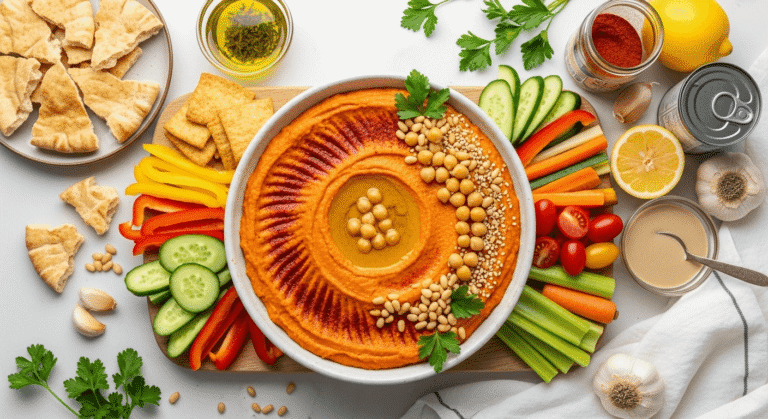
Smoked Paprika Hummus Recipe
Smoked paprika hummus made with chickpeas, tahini, lemon juice, garlic, and Spanish smoked paprika. Ultra-creamy, smoky, and ready in 10 minutes!
- Total Time: 10 minutes
- Yield: About 2 cups (serves 8-10) 1x
Ingredients
- 1 (15-ounce) can chickpeas, drained and rinsed (reserve ¼ cup liquid)
- ⅓ cup tahini, well-stirred
- 3-4 tablespoons fresh lemon juice (1 large lemon)
- 1-2 cloves garlic, peeled
- 1½ teaspoons smoked paprika (Spanish pimentón), divided
- ½ teaspoon salt (adjust to taste)
- 2-3 tablespoons extra virgin olive oil, plus more for drizzling
- 2-4 tablespoons ice-cold water or reserved chickpea liquid (for consistency)
- Optional: ¼ teaspoon ground cumin
- Optional: pinch of cayenne pepper for heat
For Serving:
- Extra virgin olive oil (for drizzling)
- Smoked paprika (for dusting)
- Optional garnishes: whole chickpeas, pine nuts, fresh parsley
Instructions
Prep the Chickpeas (Optional but Recommended):
- Remove Skins (Optional): For ultra-smooth hummus, remove chickpea skins. After draining, gently rub chickpeas between your hands or in a kitchen towel—skins will slip off easily. This step is optional but creates noticeably smoother texture. (If you’re short on time, skip this—your hummus will still be delicious!)
Blend the Hummus:
- Process Tahini and Lemon: Add tahini (⅓ cup) and fresh lemon juice (3 tablespoons to start) to food processor. Process for 1-2 minutes until mixture becomes thick, creamy, and pale. Scrape down sides. This step is crucial—it “whips” the tahini and creates the creamy base.
- Add Aromatics: Add garlic cloves (start with 1), 1 teaspoon smoked paprika, salt (½ teaspoon), and cumin if using. Process for 30 seconds until combined.
- Add Chickpeas: Add drained chickpeas to the processor. Process for 1-2 minutes, scraping down sides as needed, until mostly smooth but still slightly grainy.
- Add Oil and Water: With processor running, drizzle in olive oil (2 tablespoons) and ice-cold water (2 tablespoons to start). Process for 2-3 minutes until completely smooth and creamy. The longer you process, the smoother it becomes!
- Check Consistency: Stop and check texture. Hummus should be smooth, creamy, and thick but pourable. If too thick, add more ice water (1 tablespoon at a time) and process until desired consistency. If too thin, add more chickpeas or tahini.
- Taste and Adjust: This is crucial! Taste the hummus and adjust seasonings:
- Need more smokiness? Add another ½ teaspoon smoked paprika
- Need more tang? Add more lemon juice (½ tablespoon at a time)
- Need more garlic? Add another clove
- Need more salt? Add pinches until flavors pop
- Want more tahini richness? Add another tablespoon
Serve:
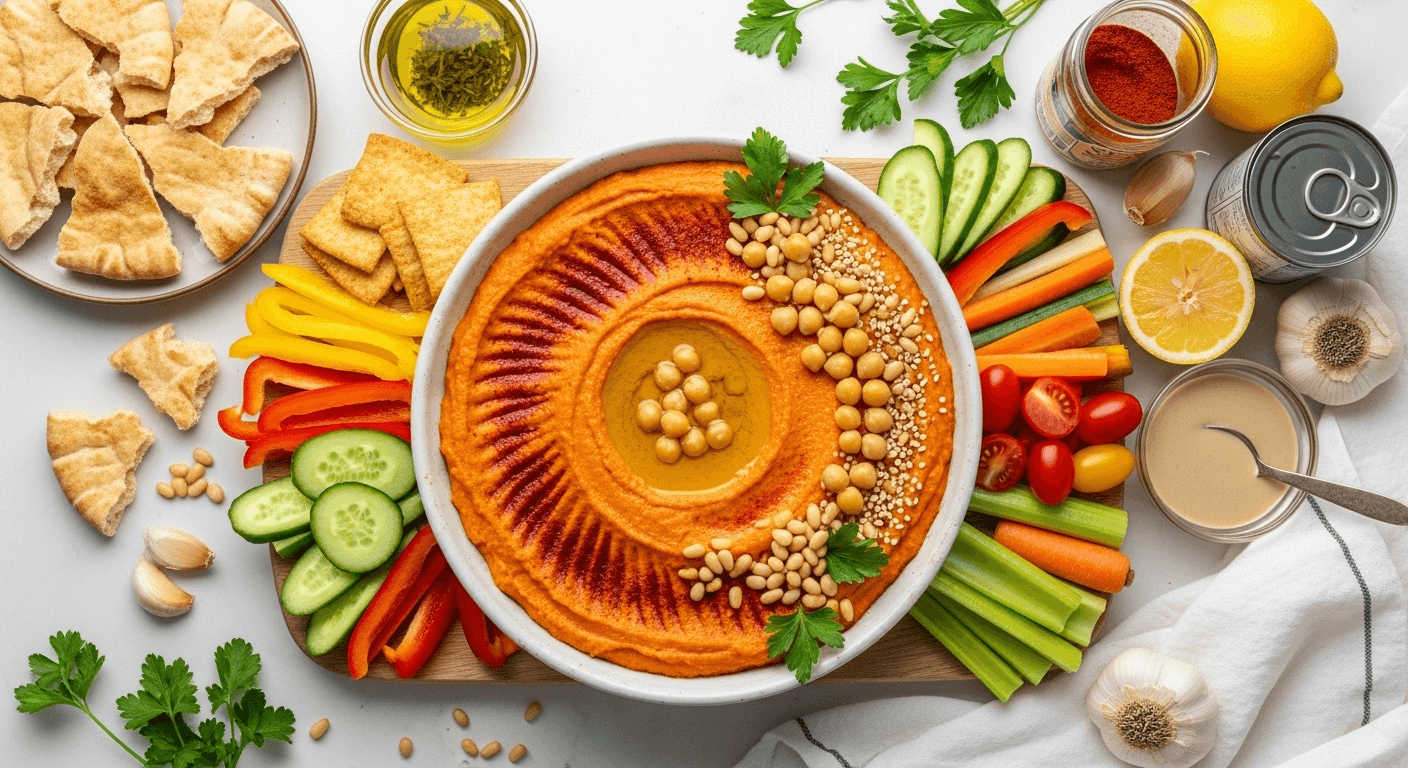
- Transfer and Swirl: Spoon hummus into a shallow serving bowl. Using the back of a spoon, create decorative swirls on the surface.
- Garnish: Drizzle generously with extra virgin olive oil, dust with remaining ½ teaspoon smoked paprika, and add optional garnishes (whole chickpeas, pine nuts, fresh parsley).
- Serve: Serve immediately with warm pita bread, vegetables, or crackers. Or cover and refrigerate—it actually tastes even better after resting!
Notes
- Tahini Quality: Good tahini makes good hummus—invest in quality tahini for best results.
- Ice Water Trick: Ice-cold water helps create extra-creamy texture.
- Skinless Chickpeas: Removing skins creates ultra-smooth texture but is optional.
- Processing Time: Don’t rush—process for 3-5 minutes total for smoothest texture.
- Adjust Consistency: Add water for thinner dip; less water for thicker spread.
- Make Ahead: Tastes better after sitting 30 minutes to overnight as flavors meld.
- Storage: Keeps 5-7 days refrigerated in airtight container.
- Prep Time: 10 minutes
- Cook Time: 0 minutes
Nutrition
- Serving Size: ¼ cup
- Calories: 120
- Sugar: 1g
- Sodium: 180mg
- Fat: 7G
- Saturated Fat: 1G
- Unsaturated Fat: 6G
- Trans Fat: 11G
- Fiber: 3G
- Protein: 7G
- Cholesterol: 0mg
Tips & Variations
Roasted Red Pepper Smoked Hummus: Add ½ cup roasted red peppers for extra smokiness and sweetness.
Spicy Smoked Hummus: Add ¼-½ teaspoon cayenne pepper or chipotle powder for heat.
Sun-Dried Tomato Smoked: Blend in ¼ cup sun-dried tomatoes (oil-packed, drained) for Mediterranean flair.
Roasted Garlic Version: Replace raw garlic with 4-5 roasted garlic cloves for sweet, mellow garlic flavor.
Extra Smoky: Use hot (picante) smoked paprika or add ½ teaspoon liquid smoke.
Cumin-Spiced: Increase cumin to 1 teaspoon for more traditional Middle Eastern spicing.
Beet Smoked Hummus: Add ½ cup roasted beets for gorgeous deep red color and earthy sweetness.
Jalapeño Smoked: Add 1-2 seeded jalapeños for fresh heat with smokiness.
Herbed Version: Blend in fresh parsley, cilantro, or dill for herb-forward flavor.
Oil-Free: Omit olive oil and use only chickpea liquid/water for lowest-fat version.
Pro Chef Tips
The Tahini-Lemon Emulsion: Professional Middle Eastern chefs always blend tahini with lemon juice first before adding other ingredients. This creates an emulsion that becomes thick, creamy, and pale—this is the secret to ultra-smooth hummus. Don’t skip or rush this step; processing tahini and lemon for 1-2 minutes transforms the texture entirely.
Ice Water is Magic: High-end restaurants use ice-cold water (not room temperature) when thinning hummus. The cold temperature helps create a creamier, fluffier texture while preventing the hummus from becoming warm during prolonged processing. Keep a small bowl of ice water nearby and add it gradually as needed.
Process Longer Than You Think: Home cooks often under-process hummus, leaving it grainy. Professional kitchens process for 3-5 minutes total, scraping down sides multiple times, to achieve that signature silky-smooth texture. The longer you process (within reason), the smoother and creamier it becomes. Be patient!
Quality Tahini Makes or Breaks It: Restaurants use premium tahini (like Soom or Seed + Mill) because cheap tahini tastes bitter and separates poorly. Quality tahini is creamy, smooth, and nutty rather than bitter. This is where to invest—one jar makes many batches of hummus and the difference is dramatic.
The Garnish Matters: High-end establishments treat hummus garnish seriously. They create decorative swirls with a spoon, drizzle quality olive oil generously (it pools in the swirls), dust smoked paprika artistically, and add thoughtful garnishes like whole chickpeas, toasted pine nuts, and fresh herbs. Presentation elevates the entire experience.
Room Temperature Ingredients Blend Better: Professional cooks often let refrigerated tahini and chickpeas come to room temperature before blending (or warm chickpeas slightly). Room temperature ingredients blend more smoothly and require less processing time, creating silkier texture.
The Resting Period: Like many dips with raw garlic and spices, hummus tastes significantly better after resting 30 minutes to overnight. The garlic mellows, smoked paprika infuses throughout, and flavors meld harmoniously. Always make ahead when possible for optimal flavor development.
Common Mistakes to Avoid
Not Processing Long Enough: The most common mistake! Many home cooks process for just 30-60 seconds, creating grainy, chunky hummus. You need 3-5 minutes of total processing time, scraping down sides periodically, to achieve restaurant-quality smooth texture. Be patient and let the food processor work its magic—the transformation happens gradually.
Using Old or Separated Tahini: Tahini separates naturally (oil rises to top). Using tahini without stirring it thoroughly first creates inconsistent texture and flavor—some bites are oily, others are thick and pasty. Always stir the entire jar of tahini before measuring to ensure uniform consistency. Old, rancid tahini ruins hummus with bitter, off flavors.
Adding All Liquid at Once: Dumping all the water or chickpea liquid in at once often makes hummus too thin, and you can’t fix it easily. Add liquid gradually (1-2 tablespoons at a time) while processing, checking consistency frequently. It’s easier to thin hummus than to thicken it. Stop when you reach your preferred consistency.
Skipping the Tahini-Lemon Step: Many people throw all ingredients in at once, but professional Middle Eastern cooks always process tahini with lemon juice first. This crucial step creates an emulsion that becomes thick and creamy—it’s the foundation of smooth hummus. Skipping this step results in separated, less creamy texture.
Using Bottled Lemon Juice: Bottled lemon juice tastes flat, artificial, and preservative-heavy compared to fresh. It creates dull-tasting hummus that lacks brightness. Always squeeze fresh lemons—the 2 minutes it takes makes a dramatic difference in flavor. Fresh citrus is what makes hummus taste vibrant and alive.
Not Tasting and Adjusting: Every brand of tahini has different intensity, every lemon varies in acidity, and everyone’s garlic and salt preferences differ. Blindly following measurements without tasting creates mediocre hummus. Professional cooks taste and adjust multiple times—make it perfect for YOUR palate. Seasoning properly is what separates good from great.
Storage & Meal Prep
Refrigerator Storage: Store smoked paprika hummus in an airtight container in the refrigerator for 5-7 days. Make sure the container seals tightly to prevent the hummus from absorbing refrigerator odors and to maintain freshness. Glass jars or plastic containers with tight lids work perfectly.
Prevent Surface Drying: Hummus can develop a dry skin on top during storage. To prevent this, smooth the top surface and drizzle a thin layer of olive oil over it before sealing the container. The oil creates a protective barrier that keeps it moist.
Liquid Separation: Some liquid (from the chickpeas or added water) may pool on top during storage—this is normal! Simply stir it back in before serving. If there’s excessive liquid, you can pour a little off.
Flavor Development: Smoked paprika hummus actually tastes BETTER after sitting 12-24 hours as flavors meld and deepen. The garlic mellows, smoked paprika infuses throughout, and everything harmonizes beautifully. Make it a day ahead for parties and meals for optimal flavor!
Meal Prep Perfect: Make a big batch on Sunday and use it throughout the week as a sandwich spread, salad topping, veggie dip, grain bowl base, or snack with crackers. Its versatility makes it ideal for meal prep!
Signs of Spoilage: Discard if the hummus develops an off smell (sour or fermented), shows any signs of mold, separates excessively, or tastes off. Properly stored, it’s safe for 5-7 days.
Make-Ahead & Freezer Notes
Make-Ahead Excellence: Smoked paprika hummus is THE perfect make-ahead dip! In fact, it’s significantly better when made 24 hours in advance. The extended resting time allows the garlic to mellow, the smoked paprika to infuse deeply, and all flavors to meld harmoniously. Make it the day before parties or meal prep sessions.
Advance Preparation Timeline: You can make this hummus up to 7 days ahead and store refrigerated. The best flavor window is 24-72 hours after making, when flavors have fully developed but it’s still at peak freshness.
Freezing Works Great: Unlike yogurt-based dips, hummus freezes beautifully! Freeze in airtight containers or freezer bags for up to 3 months. Thaw overnight in the refrigerator, then stir well (add a splash of water or olive oil if needed to restore consistency). The texture may be slightly less smooth after freezing but is still delicious.
Portion Freezing: For convenience, freeze in individual portions (½ or 1 cup amounts) so you can thaw only what you need. Ice cube trays work great for small portions!
Refreshing After Storage: If hummus seems thick or stiff after refrigeration or freezing, stir in 1-2 tablespoons warm water or olive oil to restore creamy consistency.
Serving Suggestions
As a Dip:
- Warm pita bread or pita chips
- Fresh vegetables (carrots, cucumbers, bell peppers, cherry tomatoes, celery, radishes)
- Crackers (especially water crackers or multigrain)
- Pretzels or breadsticks
- Tortilla chips
- Naan or flatbread
As a Spread:
- Sandwiches and wraps (especially falafel wraps, veggie sandwiches)
- Burgers (veggie, turkey, lamb)
- Toast or bagels
- Flatbread pizzas (as base sauce)
As a Bowl Base or Topping:
- Grain bowls and Buddha bowls
- Falafel plates
- Shawarma bowls
- Roasted vegetable platters
- Salad topping (adds protein and creaminess)
Mediterranean Mezze Platter:
- Hummus, tzatziki, baba ganoush, olives, dolmas, feta, pita
Complete Meal Ideas:
- Falafel bowl with hummus, tabbouleh, and pickled vegetables
- Mediterranean mezze board for entertaining
- Veggie sandwich with hummus, roasted vegetables, and sprouts
- Grain bowl with quinoa, roasted chickpeas, vegetables, and hummus
Beverage Pairings:
- Mint tea (hot or iced)
- Sparkling water with lemon
- White wine (Sauvignon Blanc, Pinot Grigio)
- Beer (wheat beer or pilsner)
FAQs Section
Q: Can you make hummus without a food processor?
A: It’s very difficult to achieve smooth hummus without a food processor or high-speed blender. A regular blender can work but may require more liquid and won’t get as smooth. Immersion blenders don’t work well. If you absolutely must, you can mash very soft chickpeas by hand, but texture will be chunky rather than creamy.
Q: How do you make hummus extra smooth and creamy?
A: Four secrets: (1) Remove chickpea skins (optional but effective), (2) Process tahini with lemon juice first for 1-2 minutes, (3) Use ice-cold water and add gradually, (4) Process for 3-5 minutes total—longer processing creates smoother texture. Quality tahini also makes a huge difference!
Q: Can you use dried chickpeas instead of canned?
A: Absolutely! Cook 1 cup dried chickpeas until very soft (almost falling apart), then use as you would canned. Homemade cooked chickpeas often create even creamier hummus. Save the cooking liquid (it works better than canned chickpea liquid for thinning). Just takes more time.
Q: Why is my hummus bitter?
A: Usually from old or rancid tahini, too much raw garlic, or over-processing lemon pith. Check your tahini’s freshness (smell and taste it—should be nutty, not bitter). Reduce garlic or use roasted garlic. Juice lemons carefully to avoid pith. Add a pinch of sugar or honey to balance bitterness if needed.
Q: Can you make hummus without tahini?
A: Tahini provides essential creaminess, richness, and authentic flavor. Without it, you have “chickpea dip” rather than true hummus. Substitutions like peanut butter or almond butter work but create very different flavors. Cashew butter is the closest alternative. For traditional hummus, tahini is essential.
Q: How long does homemade hummus last?
A: Properly stored in an airtight container, homemade hummus lasts 5-7 days refrigerated. It freezes beautifully for up to 3 months. Actually tastes better after 24 hours as flavors develop and meld together, so don’t worry about making it ahead!
Q: Why is store-bought hummus so much smoother than homemade?
A: Commercial hummus is processed with industrial equipment for 10+ minutes and often includes stabilizers. You can get very close at home by: removing chickpea skins, processing for 3-5 minutes, using ice water, and ensuring your food processor is powerful. Quality tahini also helps significantly.
Conclusion
And there you have it—everything you need to make the most delicious, ultra-creamy, perfectly smoky smoked paprika hummus that rivals anything from your favorite Middle Eastern restaurant! While hummus uses simple ingredients, the techniques, tips, and culinary wisdom we’ve covered transform those basics into something truly transcendent. From understanding why processing tahini with lemon first is crucial to knowing that longer blending creates smoother texture, you now have all the knowledge to make this homemade smoky hummus that will have everyone begging for your recipe.
This easy smoked paprika hummus proves that the best dips often require the simplest ingredients and the most attention to technique. With chickpeas, tahini, lemon juice, garlic, and that gorgeous smoked paprika, you can create a dip that’s perfect for entertaining, meal prep, healthy snacking, or simply elevating everyday meals. This homemade smoked paprika hummus is fresher, creamier, and infinitely better than anything store-bought!
Whether you’re making this smoked paprika hummus recipe for parties, mezze platters, meal prep, healthy snacks, Mediterranean dinners, or simply because you’re craving that perfect combination of smoky and creamy, this recipe delivers every single time. It’s smooth, flavorful, nutritious, versatile, beautiful, and genuinely restaurant-quality—everything a go-to recipe should be!
Now it’s your turn to blend up your own perfectly smooth, gorgeously smoky hummus! I’d love to hear about your experience—did you achieve that ultra-creamy texture? What did you serve it with? Have you tried any flavor variations? Share your thoughts, creative serving ideas, and stunning photos in the comments below! Your feedback and ideas inspire other readers and help build our healthy cooking community.
Don’t forget to save this smoked paprika hummus recipe to your Pinterest boards—pin it to “Healthy Dips,” “Mediterranean Recipes,” “Vegan Appetizers,” or “Meal Prep Ideas” so you can find it whenever you need a crowd-pleasing dip. If you know someone who loves hummus, needs healthy recipes, or wants to master homemade dips, share this article with them. And when you make your perfectly creamy, beautifully smoky hummus, snap a photo and tag me on social media—I absolutely love seeing your delicious creations!
Now go make this amazing hummus and get ready to experience homemade perfection!