Quick Tzatziki Recipe: Cool, Creamy, and Perfectly Refreshing
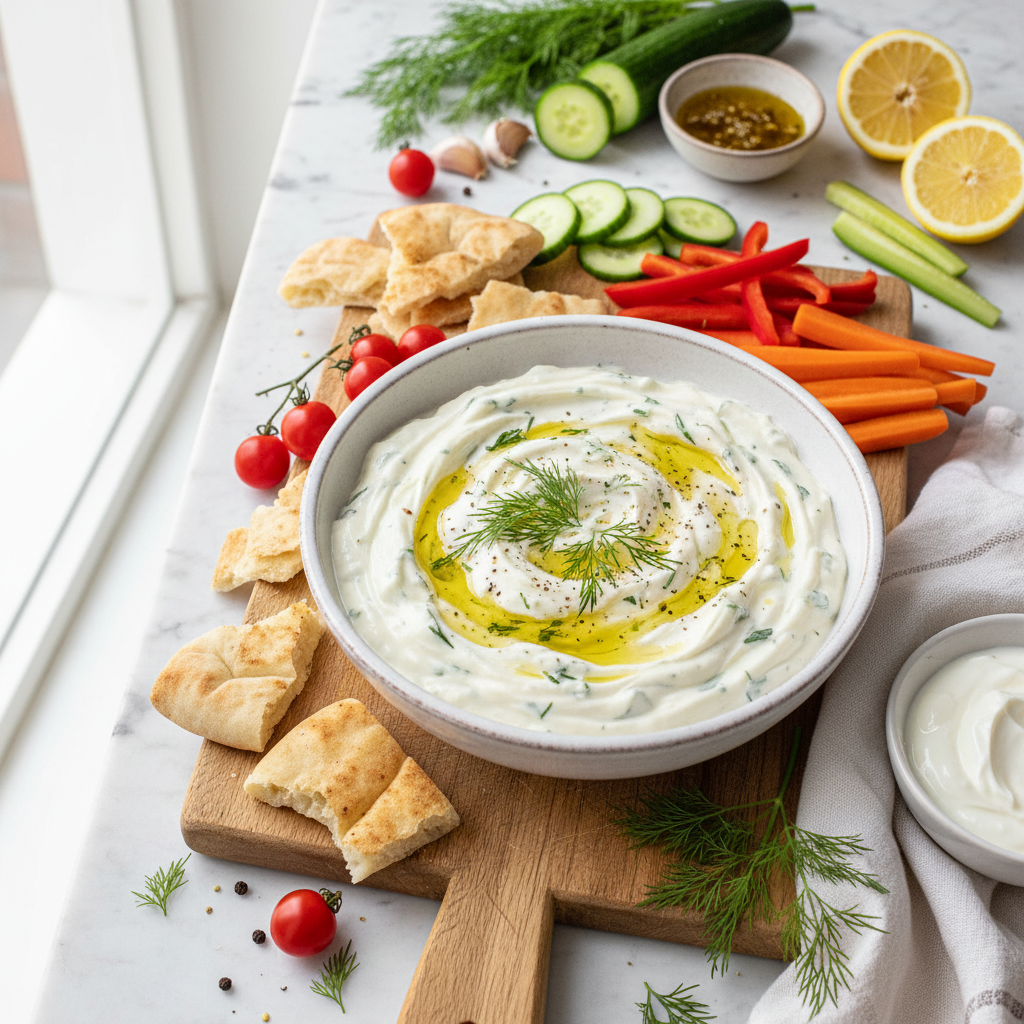
Quick tzatziki is a refreshingly cool, ultra-creamy Greek yogurt cucumber sauce that combines thick yogurt with crisp cucumber, fresh garlic, bright lemon, and aromatic dill in just 10 minutes—creating the perfect Mediterranean dip, spread, or sauce! This easy Greek tzatziki sauce features a beautiful pale green color with flecks of cucumber and herbs, delivering that signature tangy, garlicky, cooling flavor that’s become beloved worldwide. The combination of strained yogurt with grated cucumber creates the ultimate refreshing condiment that’s both healthy and incredibly versatile. This homemade tzatziki recipe is perfect for countless occasions: serve it as a dip with pita bread and fresh vegetables at parties, use it as a sauce for Greek gyros and souvlaki, spread it on sandwiches and wraps for Mediterranean flair, dollop it over grilled meats and fish for cooling contrast, pair it with falafel and kebabs for authentic Greek flavor, or simply keep it in your fridge as a healthy snack with veggie sticks. The beauty of this authentic tzatziki sauce lies in its remarkable simplicity—it requires just six ingredients, comes together in 10 minutes with zero cooking, delivers restaurant-quality Greek flavor, and actually tastes better when made ahead. Whether you’re a Mediterranean food lover who craves authentic Greek flavors, someone looking for healthy dips and sauces, a meal prep enthusiast seeking versatile condiments, or simply anyone who appreciates cool, refreshing flavors, this quick tzatziki recipe delivers incredible taste, beautiful texture, perfect balance, and pure Mediterranean deliciousness that makes it an essential recipe in every kitchen!
History / Background
Tzatziki (pronounced “tsah-ZEE-kee” or “dzah-dzee-KEE”) is one of Greece’s most beloved and iconic sauces, with a history that stretches back centuries and deep roots in Mediterranean and Middle Eastern culinary traditions. This cooling yogurt-cucumber sauce represents the essence of Greek cuisine—simple ingredients transformed through technique into something greater than the sum of its parts.
The origins of tzatziki trace back to the Ottoman Empire, where yogurt-based sauces were common throughout the cuisine. Similar cucumber-yogurt preparations exist across Turkey (cacık), Bulgaria (tarator), Lebanon (laban bi khyar), Iran (mast-o-khiar), and India (raita). Each culture adapted the basic concept—yogurt with cucumber and herbs—to their regional tastes and available ingredients.
The word “tzatziki” likely derives from the Turkish “cacık,” reflecting the cultural exchange during Ottoman rule over Greece. However, Greeks made the sauce distinctly their own by using specific ingredients and techniques: thick Greek yogurt (traditionally strained sheep’s milk yogurt), plenty of garlic, fresh dill (though mint is also traditional in some regions), and olive oil.
In traditional Greek cuisine, tzatziki serves multiple purposes beyond just a dip or sauce. It’s a meze (appetizer) served with bread before meals, a cooling accompaniment to grilled meats that provides temperature and flavor contrast, and a versatile condiment that appears at nearly every Greek meal. The sauce embodies the Greek philosophy of food—fresh, simple, healthy, and flavorful.
The preparation method is crucial to authentic tzatziki. Traditional Greek cooks insist on several key techniques: using thick, strained yogurt (often hung overnight to remove excess liquid), grating cucumber and squeezing out the water (to prevent watery sauce), and allowing the flavors to meld for at least an hour before serving. These techniques, passed down through generations, ensure the perfect creamy consistency and concentrated flavor.
Different regions of Greece have their own tzatziki variations. Some areas use mint instead of dill, others add more or less garlic, and coastal regions might include extra lemon. Crete is known for particularly garlicky tzatziki, while islands might use wild herbs. This regional diversity shows how even simple recipes evolve based on local tastes and ingredients.
Tzatziki gained international fame as Greek cuisine became popular worldwide in the mid-to-late 20th century. Greek restaurants opened across America and Europe, introducing diners to gyros, souvlaki, and of course, tzatziki. The sauce’s cooling, refreshing quality and healthy profile (yogurt-based rather than mayo-based) appealed to modern tastes.
The rise of Mediterranean diet awareness in the 1990s and 2000s further boosted tzatziki’s popularity. As people learned about the health benefits of yogurt, olive oil, and fresh vegetables, tzatziki became a symbol of healthy, delicious eating. Food bloggers and home cooks embraced it as an easy, impressive recipe that made them feel like accomplished cooks.
Today, tzatziki appears on grocery store shelves worldwide, but nothing compares to homemade. Store-bought versions often contain stabilizers, preservatives, and lack the fresh garlic and herb flavor that makes authentic tzatziki special. Making it at home takes just 10 minutes and tastes infinitely better—plus, you control the garlic level, which is important to many people!
Whether you’re serving it at a backyard Greek-themed party, using it to elevate weeknight grilled chicken, or simply enjoying it as a healthy snack, tzatziki connects you to centuries of Mediterranean culinary tradition. It’s proof that the simplest recipes, when made with quality ingredients and proper technique, can be absolutely transcendent.
Why You’ll Love This Recipe
This quick tzatziki recipe shows you exactly how to achieve that perfect balance of creamy, tangy, garlicky, and refreshing that makes this Greek sauce so addictively delicious! While making tzatziki might seem straightforward, there are actually specific techniques that separate watery, bland versions from thick, flavorful restaurant-quality sauce: properly draining the cucumber to prevent wateriness, using authentic Greek yogurt for the right texture, balancing the garlic so it’s present but not overwhelming, and allowing time for flavors to meld.
What makes this particular approach to the easy Greek tzatziki sauce special is the attention to proper technique while keeping it quick and accessible. We’re using readily available ingredients and simple methods to create an authentic tzatziki sauce that tastes like it came from a Greek taverna. The result is a homemade tzatziki recipe that’s thick, creamy, perfectly balanced, and absolutely delicious!
Here’s why this authentic tzatziki sauce will become your kitchen staple:
- Ready in 10 Minutes – Faster than running to the store
- Only 6 Ingredients – Simple pantry and fridge staples
- No Cooking Required – Just mix and chill
- Incredibly Healthy – Protein-rich, probiotic, low-calorie
- Naturally Gluten-Free – Safe for gluten-sensitive diets
- Vegetarian-Friendly – Perfect for plant-based meals
- Budget-Friendly – Costs pennies to make
- Tastes Better Homemade – Fresher than store-bought
- Versatile – Use as dip, sauce, spread, or dressing
- Meal Prep Friendly – Keeps for 5-7 days
- Authentic Greek Flavor – Restaurant-quality at home
- Crowd-Pleaser – Everyone loves this sauce!
Ingredient Notes
This sauce uses simple ingredients where freshness matters!
Greek Yogurt: The creamy foundation! Full-fat Greek yogurt (whole milk) provides the richest, thickest texture and best flavor. 2% Greek yogurt works wonderfully and is lighter. Non-fat Greek yogurt is the leanest option. Type is crucial: Must be authentic strained Greek yogurt, not regular yogurt with thickeners. Fage, Chobani, or similar brands work perfectly. Amount: 2 cups for good batch. Substitution: Regular yogurt won’t work without straining; Icelandic skyr is thicker and tangier but works; for dairy-free, use coconut or almond Greek-style yogurt (texture differs).
Cucumber: The refreshing element! English cucumber (seedless, thin skin) is ideal—no need to peel. Regular cucumbers work but should be peeled and seeded. Preparation is key: Grate and squeeze out excess water or the sauce becomes watery. Amount: 1 medium cucumber (about 1-1½ cups grated). Why important: Provides cooling refreshment and texture. Substitution: Must use cucumber—no real substitute for this flavor.
Fresh Garlic: The pungent kick! Fresh garlic adds that signature sharp, savory depth. Amount: 2-3 cloves (adjust to taste). Preparation: Finely mince, grate on microplane, or press through garlic press for best distribution. Why fresh: Fresh garlic has bright, clean flavor; garlic powder is too dull. Substitution: Garlic powder (½ teaspoon) in a pinch, but fresh is vastly superior.
Fresh Dill: The aromatic herb! Fresh dill provides that classic Greek flavor with slightly sweet, anise-like notes. Amount: 2-3 tablespoons chopped. Fresh is essential: Dried dill doesn’t provide the same vibrant flavor. Substitution: Fresh mint (also traditional in some Greek regions); combination of dill and mint; fresh parsley in a pinch.
Lemon Juice: The bright acidity! Fresh lemon juice adds tang and brightness. Amount: 1-2 tablespoons. Fresh preferred: Fresh tastes brighter, though bottled works if needed. Purpose: Balances richness and adds zing. Substitution: White wine vinegar or red wine vinegar (more traditional Greek method).
Olive Oil: The silky richness! Extra virgin olive oil adds fruity notes and creates silkier texture. Amount: 1-2 tablespoons—optional but recommended. Quality: Good olive oil enhances flavor. Purpose: Adds richness and helps flavors meld. Substitution: Can be omitted for lower fat.
Salt and Pepper: Essential seasonings! Salt enhances all flavors; pepper adds subtle warmth.
Equipment Needed
This recipe requires minimal equipment!
- Large mixing bowl
- Box grater or food processor (for grating cucumber)
- Cheesecloth, clean kitchen towel, or paper towels (for squeezing cucumber)
- Microplane or garlic press (for garlic)
- Sharp knife and cutting board (for herbs)
- Measuring cups and spoons
- Whisk or spoon (for mixing)
- Storage container (airtight)
That’s it! Simple kitchen tools you already have.
Print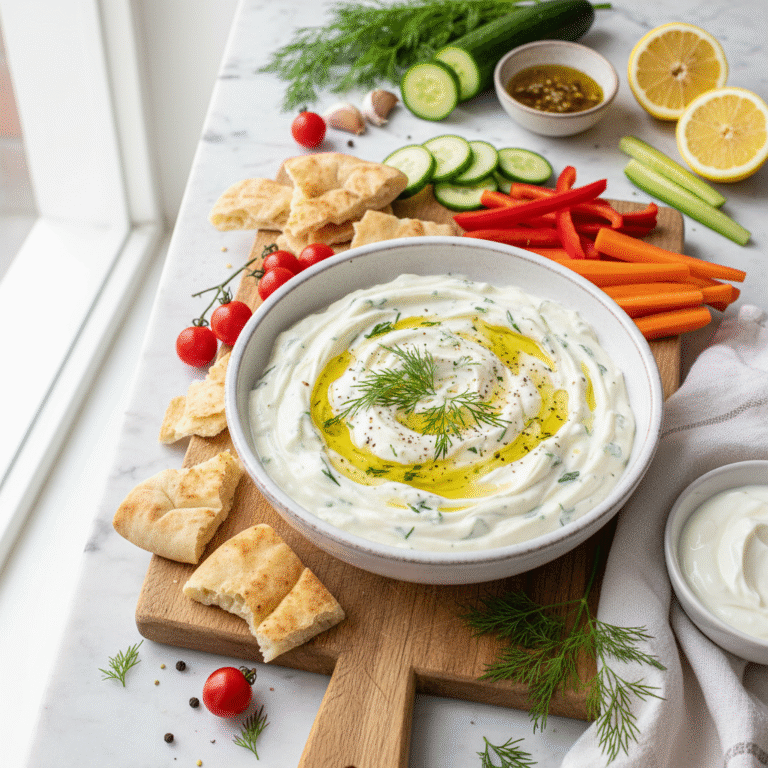
Quick Tzatziki Recipe
Quick tzatziki made with Greek yogurt, cucumber, garlic, dill, and lemon. Creamy, refreshing, and authentically Greek in just 10 minutes!
- Total Time: 10 minutes
- Yield: About 2½ cups (serves 8-10 as a dip) 1x
Ingredients
- 2 cups plain Greek yogurt (full-fat or 2%)
- 1 medium English cucumber (or 1 regular cucumber, peeled and seeded)
- 2-3 cloves garlic, minced or grated
- 2 tablespoons fresh dill, finely chopped
- 1-2 tablespoons fresh lemon juice
- 1-2 tablespoons extra virgin olive oil (optional)
- ½ teaspoon salt (adjust to taste)
- ¼ teaspoon black pepper
- Optional: 1 tablespoon fresh mint, chopped
Instructions
Prepare the Cucumber:
- Grate Cucumber: Using a box grater (large holes), grate the cucumber into a bowl. If using regular cucumber, peel and seed it first. English cucumber can be grated with skin on.
- Remove Excess Water: This is THE most important step! Place grated cucumber in the center of a clean kitchen towel, cheesecloth, or several layers of paper towels. Gather the edges and twist tightly, squeezing out as much liquid as possible. You should extract at least ¼ cup of water—the more you remove, the thicker your tzatziki will be. Set squeezed cucumber aside.
Mix the Tzatziki:
- Combine Base: In a large mixing bowl, add the Greek yogurt (2 cups).
- Add Cucumber: Add the squeezed, drained cucumber to the yogurt.
- Add Garlic: Add minced or grated garlic (start with 2 cloves—you can add more later if desired).
- Add Herbs and Lemon: Add chopped fresh dill (2 tablespoons), fresh lemon juice (1 tablespoon to start), and olive oil if using (1-2 tablespoons).
- Season: Add salt (½ teaspoon) and black pepper (¼ teaspoon).
- Mix Thoroughly: Stir everything together until completely combined and uniform. The mixture should be thick and creamy with cucumber and herb pieces throughout.
- Taste and Adjust: This is crucial! Taste the tzatziki and adjust seasonings:
- Need more garlic? Add another clove (minced/grated)
- Need more tang? Add more lemon juice (½ tablespoon at a time)
- Need more salt? Add a pinch at a time
- Need more dill? Add another tablespoon
- Too thick? Thin with a little olive oil or water
- Rest for Best Flavor: Cover and refrigerate for at least 30 minutes before serving if time allows. This resting period allows the garlic and herbs to infuse into the yogurt, creating more cohesive, developed flavor. (If you’re in a rush, you can serve immediately, but it’s better after resting!)
- Stir Before Serving: Give it a good stir, then transfer to a serving bowl. Drizzle with a little extra olive oil and sprinkle with fresh dill for presentation.
Notes
- Squeeze the Cucumber! Cannot stress this enough—if you skip this step, your tzatziki will be watery and disappointing.
- Greek Yogurt Only: Regular yogurt is too thin—you need authentic strained Greek yogurt.
- Garlic Level: Start conservative (2 cloves) and add more to taste. Raw garlic intensifies as it sits.
- Fresh Herbs Essential: Dried dill doesn’t work—the fresh herbs make this sauce special.
- Make Ahead: Actually tastes BETTER after sitting 2-24 hours as flavors develop.
- Storage: Keeps 5-7 days refrigerated in airtight container.
- Prep Time: 10 minutes
- Cook Time: 0 minutes
Nutrition
- Serving Size: ¼ cup
- Calories: 45
- Sugar: 2g
- Sodium: 95mg
- Fat: 2g
- Saturated Fat: 1g
- Unsaturated Fat: 1g
- Trans Fat: 0g
- Carbohydrates: 3g
- Fiber: 0g
- Protein: 4g
- Cholesterol: 5mg
Tips & Variations
Mint Tzatziki: Replace half the dill with fresh mint for a more minty, refreshing version (traditional in some Greek regions).
Extra Garlicky: Double the garlic (4-6 cloves) for garlic lovers—just know it intensifies as it sits!
Cucumber-Heavy: Use 1½-2 cucumbers for chunkier, more cucumber-forward tzatziki.
Spicy Tzatziki: Add ¼ teaspoon cayenne pepper or red pepper flakes for subtle heat.
Lemon-Forward: Increase lemon juice to 2-3 tablespoons and add ½ teaspoon lemon zest for brighter citrus flavor.
Creamy Feta Tzatziki: Crumble in 2-3 tablespoons feta cheese for extra tang and saltiness.
Thicker Version: Use only 1½ cups yogurt or strain your yogurt overnight for ultra-thick, labneh-like consistency.
Herb Blend: Combine dill, mint, and parsley (1 tablespoon each) for complex herb flavor.
Smoother Texture: Finely mince cucumber instead of grating for more uniform, less chunky texture.
Lower Fat: Use non-fat Greek yogurt and omit olive oil for lighter version (still delicious!).
Pro Chef Tips
The Cucumber Squeeze is Non-Negotiable: Professional Greek cooks know that properly draining cucumber is what separates watery, disappointing tzatziki from thick, authentic restaurant-quality sauce. Squeeze harder than you think necessary—you want to extract ¼-½ cup of liquid. The effort is worth it! Some chefs even salt the grated cucumber, let it sit 10 minutes, then squeeze—the salt draws out even more water.
Grate the Garlic, Don’t Chop: Restaurant chefs use a microplane to grate garlic into a fine paste that distributes evenly throughout the yogurt. Chopped garlic creates pockets of intense garlic flavor rather than even distribution. If you don’t have a microplane, use a garlic press or mince as finely as humanly possible.
The Resting Principle: Professional kitchens make tzatziki hours or even a day ahead because they know raw garlic mellows and flavors meld over time. Fresh tzatziki tastes good; tzatziki that’s rested overnight tastes GREAT. The garlic becomes less harsh, herbs infuse more deeply, and everything harmonizes. Always make ahead if possible!
Salt Balancing: Chefs taste and adjust salt multiple times—once when mixing, once after resting, and once before serving. Salt requirements change as the sauce sits because cucumber releases additional moisture. Don’t be afraid to add more salt right before serving if needed—it should taste vibrant, not flat.
Olive Oil Matters: High-end Greek restaurants use quality extra virgin olive oil in their tzatziki, and it makes a noticeable difference. The fruity, peppery notes of good olive oil complement the yogurt and herbs beautifully. This isn’t where to use cheap oil—use something you’d drizzle on salad.
Thick Yogurt is Everything: Professional cooks sometimes strain their Greek yogurt even further by placing it in cheesecloth over a bowl in the refrigerator for 2-4 hours. This creates ultra-thick, luxurious tzatziki reminiscent of labneh. If you have time and want restaurant-quality thickness, try this technique.
The Fresh Herb Rule: Chefs use only fresh herbs in tzatziki and chop them right before mixing to preserve aromatic oils. Dill that’s been chopped and sitting releases oils that dissipate, so chop it fresh for maximum flavor. Never, ever use dried dill—it tastes musty and ruins the sauce.
Common Mistakes to Avoid
Not Squeezing the Cucumber Enough: The single biggest mistake! Grated cucumber holds massive amounts of water. If you don’t squeeze thoroughly, your tzatziki will be watery, thin, and disappointing within an hour as the cucumber continues releasing liquid. Squeeze, squeeze, squeeze—extract at least ¼ cup of water. Your arm should be tired from squeezing!
Using Regular Yogurt Instead of Greek: Regular yogurt is too thin and watery for tzatziki. You need thick, strained Greek yogurt for proper consistency. If you only have regular yogurt, you must strain it overnight through cheesecloth to remove whey before making tzatziki. There’s no shortcut here—Greek yogurt is essential.
Adding Too Much Garlic Initially: Raw garlic intensifies significantly as tzatziki sits. What tastes perfectly garlicky when fresh-made can become overpoweringly harsh after 24 hours. Start conservative (2 cloves) and add more to taste. You can always add more garlic; you can’t take it away once it’s in.
Using Dried Dill: Dried dill tastes musty, flat, and completely different from fresh. It doesn’t rehydrate properly in yogurt and leaves little hard bits. Fresh dill is essential to authentic tzatziki flavor—dried simply doesn’t work. If you can’t find fresh dill, use fresh mint or parsley instead.
Skipping the Resting Time: Serving tzatziki immediately after mixing means the garlic is harsh, herbs haven’t infused, and flavors are disjointed rather than harmonious. The 30-minute minimum resting time is crucial for flavor development. If you’re in a rush, at least give it 15 minutes—but longer is always better.
Not Tasting and Adjusting: Every cucumber is different in moisture content, every brand of yogurt varies in thickness and tang, and everyone’s garlic and salt preferences differ. You must taste and adjust seasonings. Professional cooks taste multiple times and adjust—don’t just follow measurements blindly. Make it perfect for YOUR taste!
Storage & Meal Prep
Refrigerator Storage: Store quick tzatziki in an airtight container in the refrigerator for 5-7 days. Make sure the container seals tightly to prevent the sauce from absorbing refrigerator odors and to maintain freshness. Glass jars or plastic containers with tight lids work perfectly.
Liquid Separation: Some liquid may separate and pool on top during storage—this is normal! Simply stir it back in before serving. If there’s excessive liquid, pour it off, but a little is fine to stir back in.
Flavor Development: Tzatziki actually tastes BETTER after 12-24 hours as flavors meld and deepen. Make it a day ahead for parties and meals for optimal flavor—this is a gift of meal prep! The garlic mellows, herbs infuse, and everything harmonizes beautifully.
Meal Prep Perfect: Make a batch on Sunday and use it throughout the week as a healthy snack with vegetables, a sauce for grilled meats, a spread for sandwiches and wraps, or a dip for pita chips. Versatility makes it ideal for meal prep!
Signs of Spoilage: Discard if the tzatziki develops an off smell (sour beyond normal yogurt tang), shows any signs of mold, separates excessively, or tastes off. Properly stored, it’s safe for 5-7 days.
Make-Ahead & Freezer Notes
Make-Ahead Excellence: Tzatziki is THE perfect make-ahead sauce! In fact, it’s better when made 12-24 hours in advance. The extended resting time allows garlic to mellow, herbs to infuse their flavors deeply, and everything to harmonize. Make it the day before parties, dinners, or meal prep sessions.
Advance Preparation Timeline: You can make tzatziki up to 7 days ahead and store refrigerated. The best flavor window is 24-72 hours after making, when flavors have fully developed but herbs are still vibrant and fresh.
Freezing NOT Recommended: Unfortunately, tzatziki does not freeze well. Yogurt separates and becomes grainy and watery when frozen and thawed—the texture is completely ruined. The cucumber also becomes mushy and releases water. Since tzatziki keeps for a week refrigerated, there’s no real need to freeze it anyway!
Component Prep: If you want to prep ahead, you can grate and squeeze the cucumber up to 24 hours ahead (store in airtight container), mince the garlic (store in olive oil), and chop the herbs (store wrapped in damp paper towel). Then mix everything fresh when ready.
Serving Suggestions
As a Dip:
- Fresh vegetables (carrots, cucumbers, bell peppers, cherry tomatoes, celery)
- Warm pita bread or pita chips
- Crackers, pretzels, or breadsticks
- Potato chips or veggie chips
- Grilled flatbread
As a Sauce:
- Greek gyros (lamb, chicken, or beef)
- Souvlaki skewers
- Grilled chicken, lamb, or fish
- Falafel balls or patties
- Grilled vegetables
- Baked or fried fish
As a Spread:
- Sandwiches and wraps (especially Mediterranean-style)
- Burgers (lamb burgers especially!)
- Flatbread pizzas
- Toast or bagels
As a Dressing:
- Greek salads
- Grain bowls and Buddha bowls
- Roasted vegetable salads
- Pasta salads
Complete Meal Ideas:
- Greek mezze platter with hummus, olives, feta, and pita
- Grilled chicken with Greek salad and tzatziki
- Lamb kebabs with rice pilaf and tzatziki
- Falafel platter with tabbouleh and tzatziki
- Mediterranean wrap with grilled vegetables and tzatziki
FAQs Section
Q: Can you make tzatziki without Greek yogurt?
A: Greek yogurt’s thick texture is essential for proper tzatziki consistency. Regular yogurt is too thin and watery. If you only have regular yogurt, strain it overnight through cheesecloth over a bowl in the refrigerator to remove whey, creating Greek yogurt consistency. Otherwise, the sauce will be disappointingly thin.
Q: How long does homemade tzatziki last in the fridge?
A: Properly stored in an airtight container, homemade tzatziki lasts 5-7 days refrigerated. The yogurt is the limiting factor. Actually, it tastes better after 24-48 hours as flavors develop, so don’t worry about making it ahead—it improves with time!
Q: Why is my tzatziki watery?
A: Almost always because the cucumber wasn’t squeezed enough! Grated cucumber holds massive amounts of water. You must squeeze thoroughly using a kitchen towel or cheesecloth until you’ve extracted ¼-½ cup liquid. If your tzatziki is already watery, strain it through cheesecloth for 30-60 minutes to remove excess liquid.
Q: Can you use dried dill instead of fresh?
A: Unfortunately, no—dried dill tastes completely different (musty and flat) and doesn’t rehydrate properly in yogurt. Fresh dill is essential for authentic flavor. If you absolutely can’t find fresh dill, substitute fresh mint or fresh parsley instead. Fresh herbs are non-negotiable; just change the herb type.
Q: Is tzatziki the same as raita?
A: They’re similar but different! Both are yogurt-cucumber sauces, but tzatziki (Greek) uses Greek yogurt, garlic, dill, and lemon, while raita (Indian) uses regular yogurt with cumin, cilantro, and sometimes mint. Tzatziki is thicker and garlickier; raita is thinner and spicier. Different cultural interpretations of the same concept.
Q: Can you make tzatziki dairy-free?
A: Yes! Use dairy-free Greek-style yogurt made from coconut, almond, or soy. Brands like Kite Hill or Silk make thick, tangy alternatives. The flavor will be slightly different (coconut adds sweetness), but it works. Make sure to choose unsweetened, plain varieties.
Q: How do you prevent tzatziki from being too garlicky?
A: Start with less garlic (1-2 cloves) and add more to taste. Raw garlic intensifies as it sits—what tastes perfect fresh can become overwhelming after 24 hours. Some cooks grate garlic very finely so it distributes evenly rather than creating pockets of intense garlic. Always taste and adjust!
Conclusion
And there you have it—everything you need to make the most delicious, authentically creamy, perfectly balanced quick tzatziki that tastes like it came straight from a Greek taverna! While this sauce might seem simple with just six ingredients, the techniques, tips, and Greek wisdom we’ve covered transform those basic components into something truly special. From understanding why squeezing the cucumber is sacred to knowing that resting time improves flavor, you now have all the knowledge to make tzatziki that would make any Greek grandmother proud.
This easy Greek tzatziki sauce proves that the best recipes often require the simplest ingredients and the most care. With Greek yogurt, cucumber, garlic, dill, lemon, and 10 minutes, you can create a sauce that’s perfect for elevating everyday meals, impressing dinner guests, meal prepping healthy snacks, or simply enjoying the fresh, cool flavors of the Mediterranean. This homemade tzatziki recipe connects you to centuries of Greek culinary tradition!
Whether you’re making this authentic tzatziki sauce for Greek-themed dinners, summer grilling, healthy snacking, meal prep, sandwich spreads, or simply because you love Mediterranean flavors, this recipe delivers every single time. It’s creamy, refreshing, garlicky, versatile, healthy, and genuinely better than anything store-bought—everything a kitchen staple should be!
Now it’s your turn to whip up your own perfectly creamy, beautifully balanced tzatziki! I’d love to hear about your experience—did you squeeze that cucumber thoroughly? What did you serve it with? Have you tried any variations? Share your thoughts, creative uses, and gorgeous photos in the comments below! Your feedback and ideas inspire other readers and help build our Mediterranean cooking community.
Don’t forget to save this quick tzatziki recipe to your Pinterest boards—pin it to “Greek Recipes,” “Healthy Dips,” “Mediterranean Food,” or “Meal Prep Ideas” so you can find it whenever you need fresh, healthy flavor. If you know someone who loves Greek food, needs healthy recipes, or wants to expand their sauce repertoire, share this article with them. And when you make your perfectly thick, incredibly fresh tzatziki, snap a photo and tag me on social media—I absolutely love seeing your delicious creations!
Now go make this amazing sauce and get ready to add Mediterranean magic to everything!